2026 BYD Atto 1 review
At $19,990 driveaway, the BYD Atto 1 Essential is Australia’s joint-cheapest new car and drives far better than that price suggests, which makes the pricier Premium a tough sell right now.

Rob Leigh
Pros
- Joint-cheapest new car in Australia right now
- Nimble, fun handling and a ride that copes with rough roads
- Far more cabin space than its size suggests
Cons
- Climate controls buried in a fiddly touchscreen
- Naggy driver assists and no blind-spot monitoring
- Strictly a four-seater, with no rear wiper
Our verdict
The BYD Atto 1 has made an electric car the cheapest way into a new car in Australia. It suits a first car or the second car in a family driveway, and it drives far better than a $20,000 car has any right to. The catch is an interface that makes simple jobs harder than they should be and driver assists that nag more than they help.
What does the Atto 1 cost in Australia?
There are two grades. The Essential has a list price of $23,990 before on-roads, which usually works out to around $27,000 driveaway. Until 15 December, though, BYD is selling it for $19,990 driveaway nationally with cars needing to be delivered by 31 December. That puts it level with the petrol MG3 Vibe as the cheapest new car you can buy and it’s the first time an EV has held that title.
The Premium lists at $27,990 before on-roads or around $31,000 driveaway depending on your state. For that you get a bigger 43.2kWh battery, a 115kW motor and 310km of claimed range, plus 16-inch alloys, LED headlights, heated power front seats, a wireless charger, front parking sensors and a 360-degree camera.
All useful stuff, but while the deal runs, the gap between the two grades is more than $11,000. Unless you regularly cover longer distances or can’t easily charge at home, you’d be crazy to choose the Premium over the Essential right now. Once the offer ends and the gap shrinks back to $4000, the Premium’s extra range and performance make a much stronger case.
| Specifications | Essential | Premium |
| Driveaway price | $19,990 | $31,362 (VIC) |
| Price excluding on-roads | $23,990 | $27,990 |
| Powertrain | Electric | Electric |
| Power | Torque | 65kW | 175Nm | 115kW | 220Nm |
| Transmission | 1 speed | 1 speed |
| Drivetrain | FWD | FWD |
| 0-100km/h | 11.1 sec | 9.1 sec |
| Electric range (WLTP) | 220km | 310km |
| Battery | DC charging | 30kWh | 65kW | 43.2kWh | 85kW |
| ANCAP | Five stars (2025) | Five stars (2025) |
| Warranty | 6 years | 150,000km | 6 years | 150,000km |
View BYD Atto 1 driveaway pricing and specifications →
What does the Atto 1 look like?
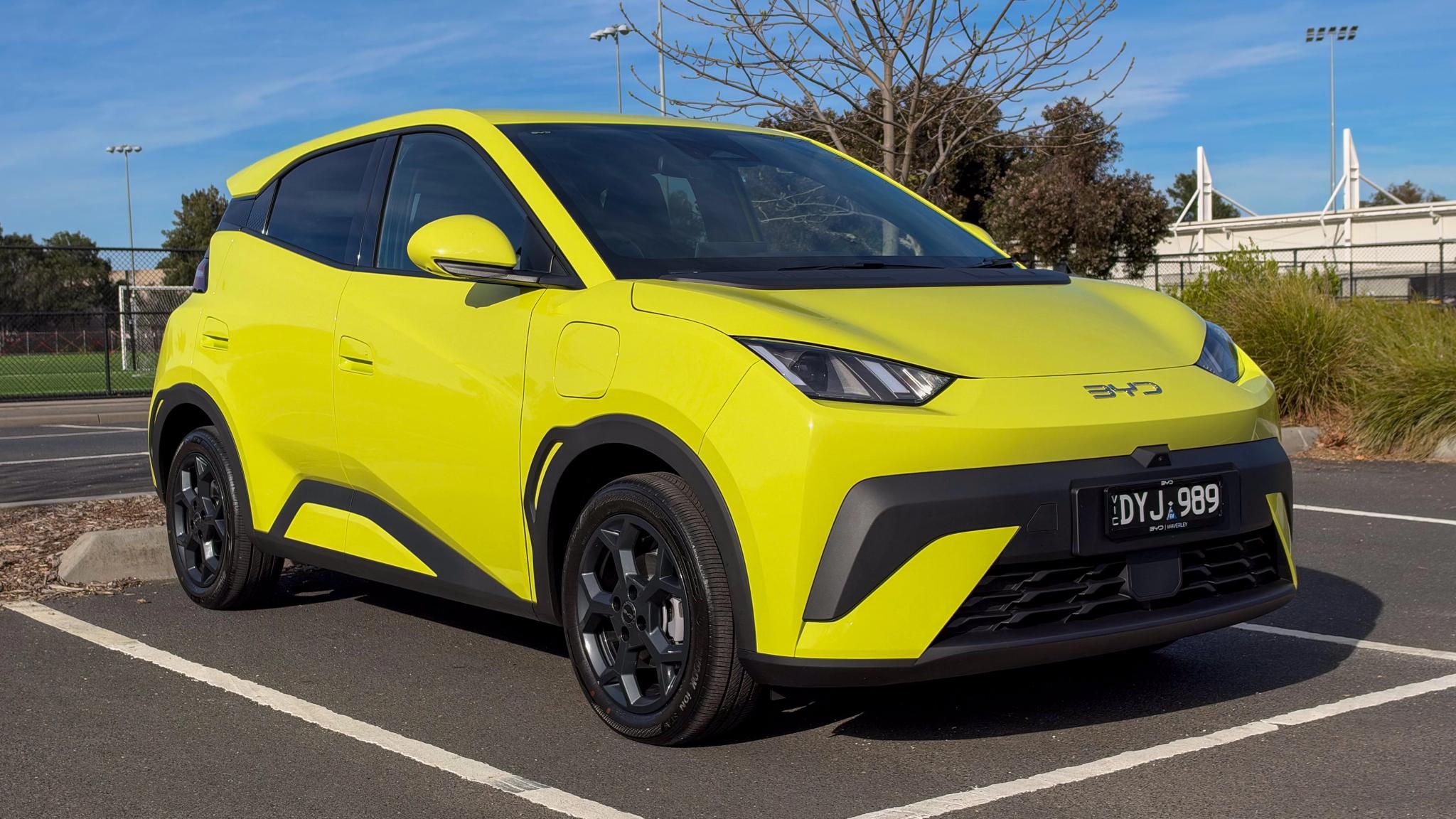
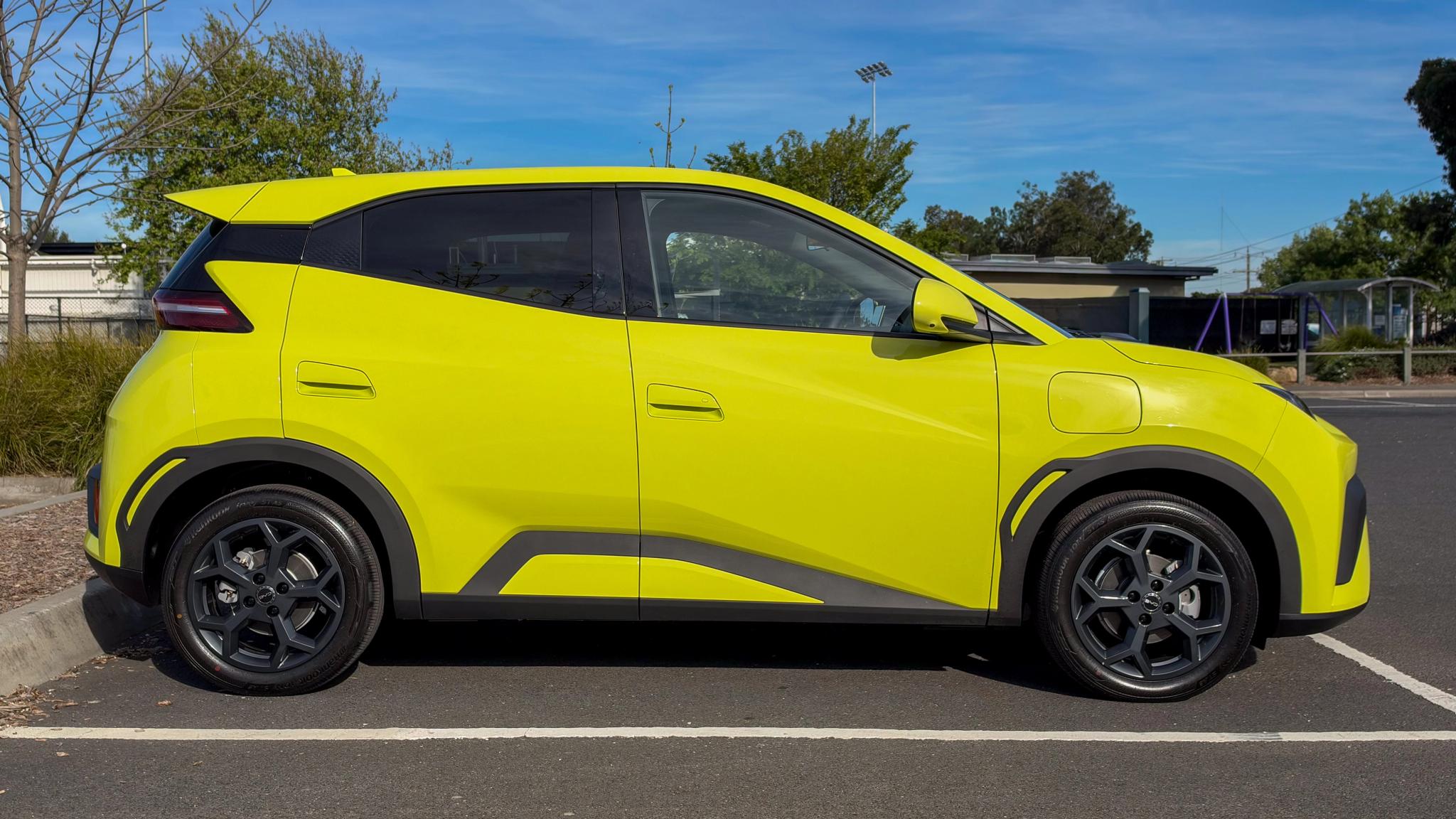
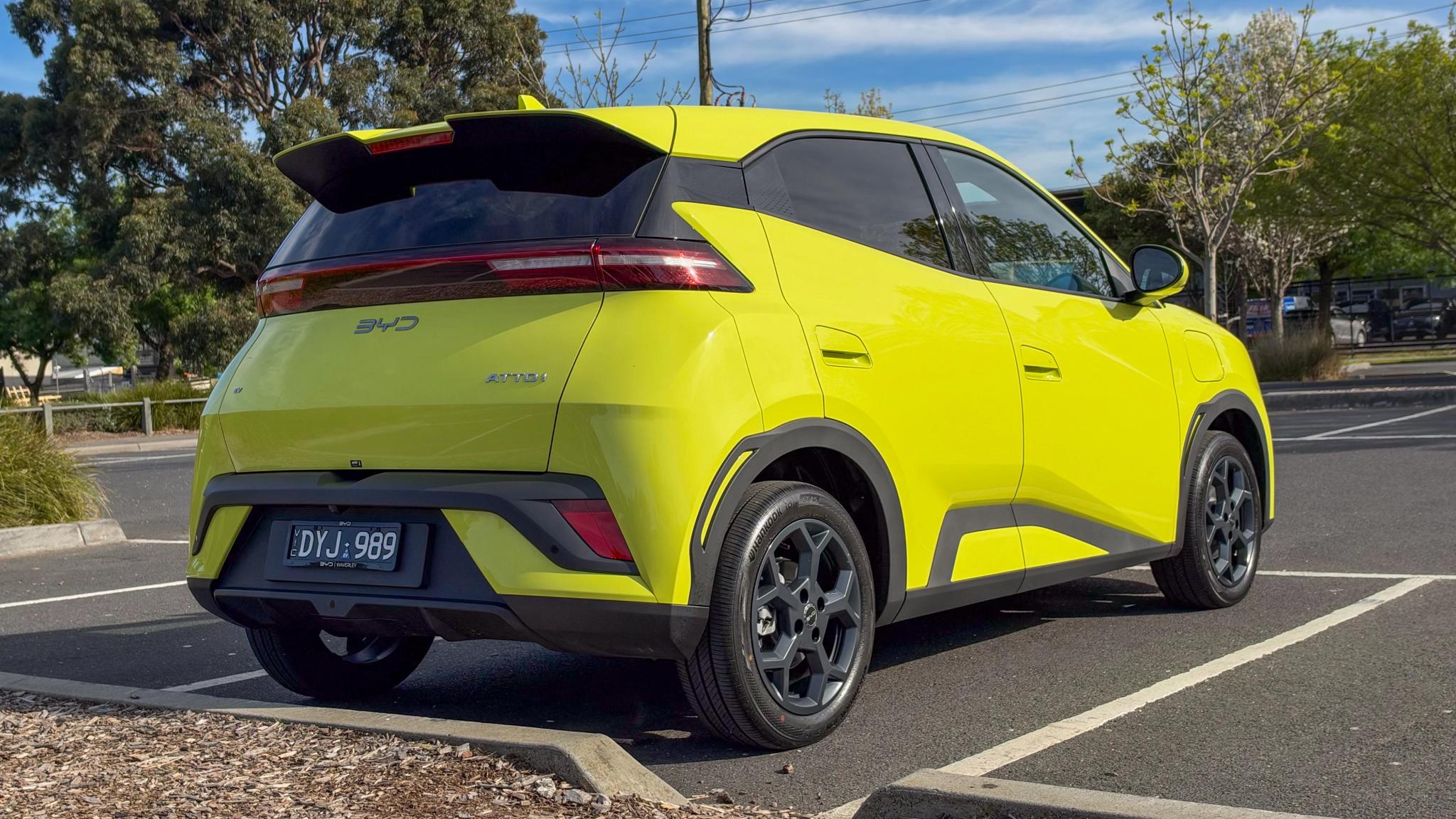
At 3990mm long, the Atto 1 is a genuine city car, only slightly longer than a Toyota Yaris. It has stubby overhangs, slim swept-back headlights and a waist that looks pulled in at the middle, which gives it a cheeky, slightly cartoonish stance.
Colour matters more than usual here. The brighter shades suit its personality, while white and black make it look more like an appliance.
The Essential rides on 15-inch steel wheels, but they’re hidden behind aero covers that look surprisingly good. The Premium upgrades to 16-inch alloys and swaps the Essential’s halogen headlights for LEDs. One odd omission on both is a rear wiper, which you’ll miss the first time the back window gets coated in road grime.
What is the Atto 1 like inside?
It’s a pretty basic cabin, but everything feels well put together. Nothing rattles or creaks, though hard plastic covers the tops of the doors and the dashboard, right where your arm and hands rest most often.
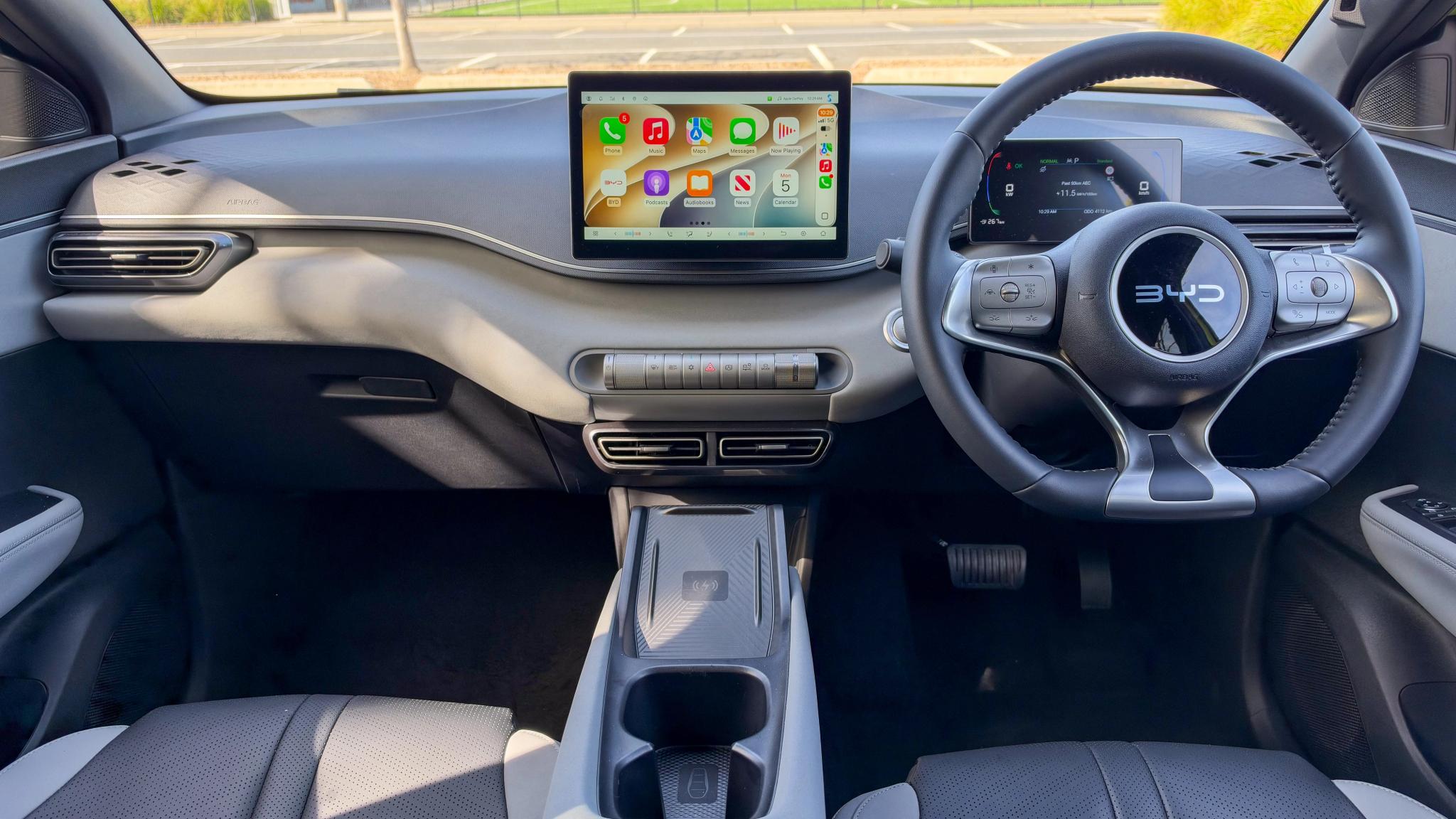
The 10.1-inch touchscreen is bright and quick to respond, and wireless Apple CarPlay and Android Auto are standard on both grades. The problem is that BYD has shrunk the interface from its bigger cars without making the icons any bigger, so hitting the right target on the move is fiddly.
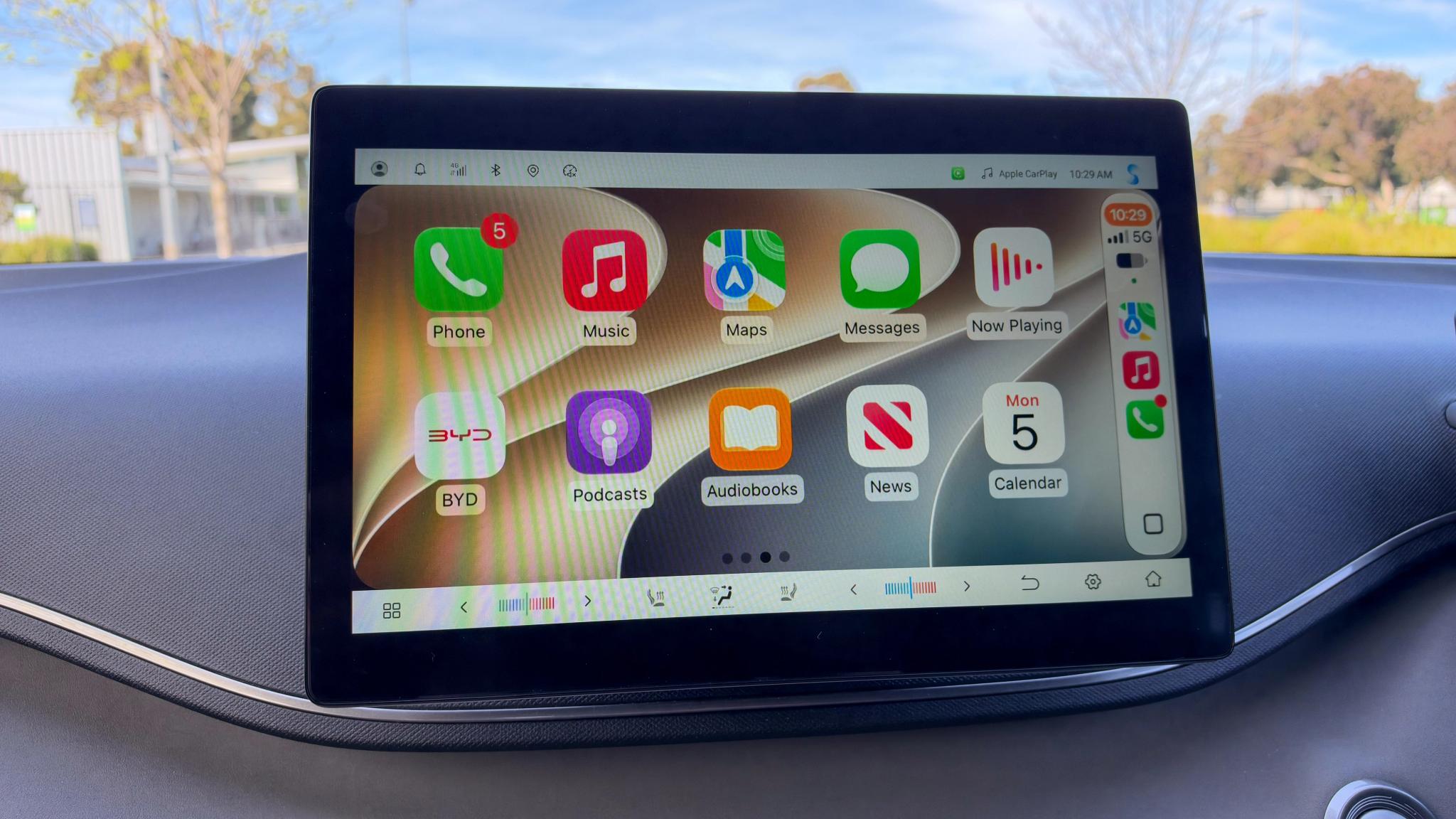
The climate controls are the worst part. Temperature and fan settings live mostly on the screen, the row of rotary switches below it doesn’t help as much as it should, and the Premium’s heated seats are buried several taps deep in a menu. Warming up your backside shouldn’t need a tutorial in any car.
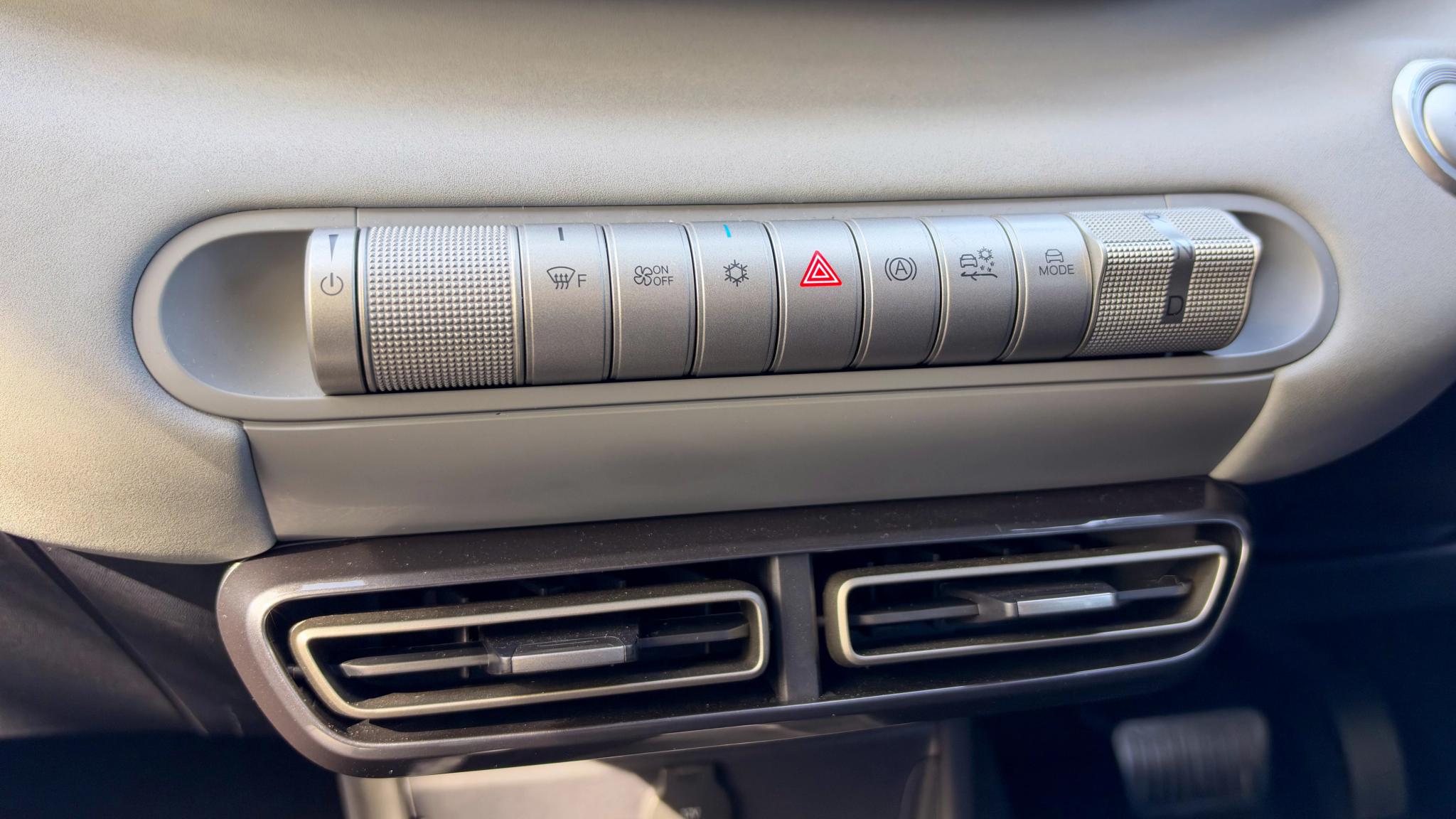
The 7.0-inch driver display covers the basics without fuss. The gear selector, a small toggle next to the start button with Park on a separate button, is quirky but you’ll adapt within a day. The four-speaker stereo is weak in both grades, so audiophiles should budget for an upgrade.
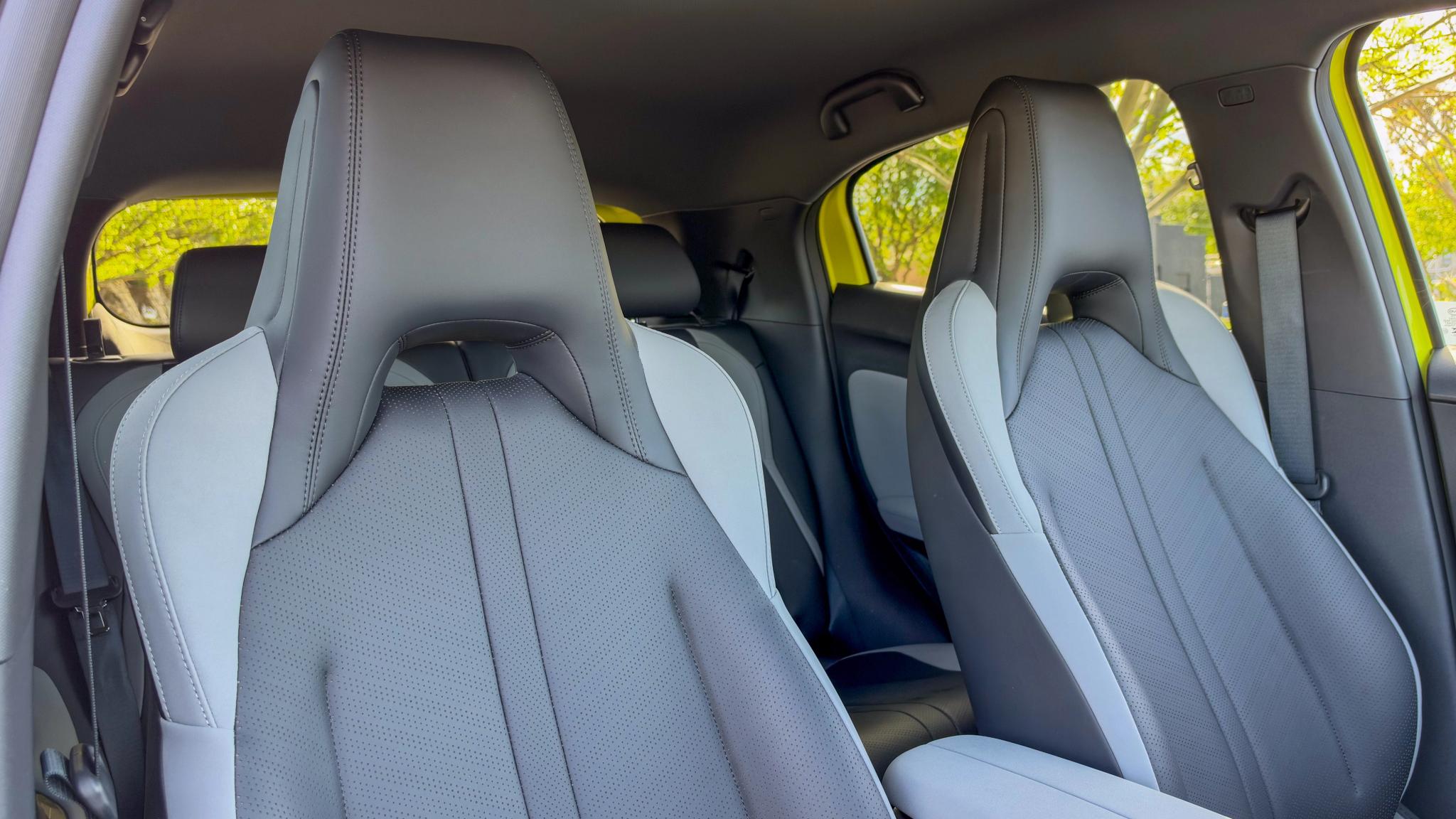
The front seats are comfortable, the driving position is good and outward visibility is excellent. Both grades get leatherette trim, though only the Premium adds power adjustment and heating. You can also lock and unlock the car with an NFC card that lives in your wallet.
How practical is the Atto 1?
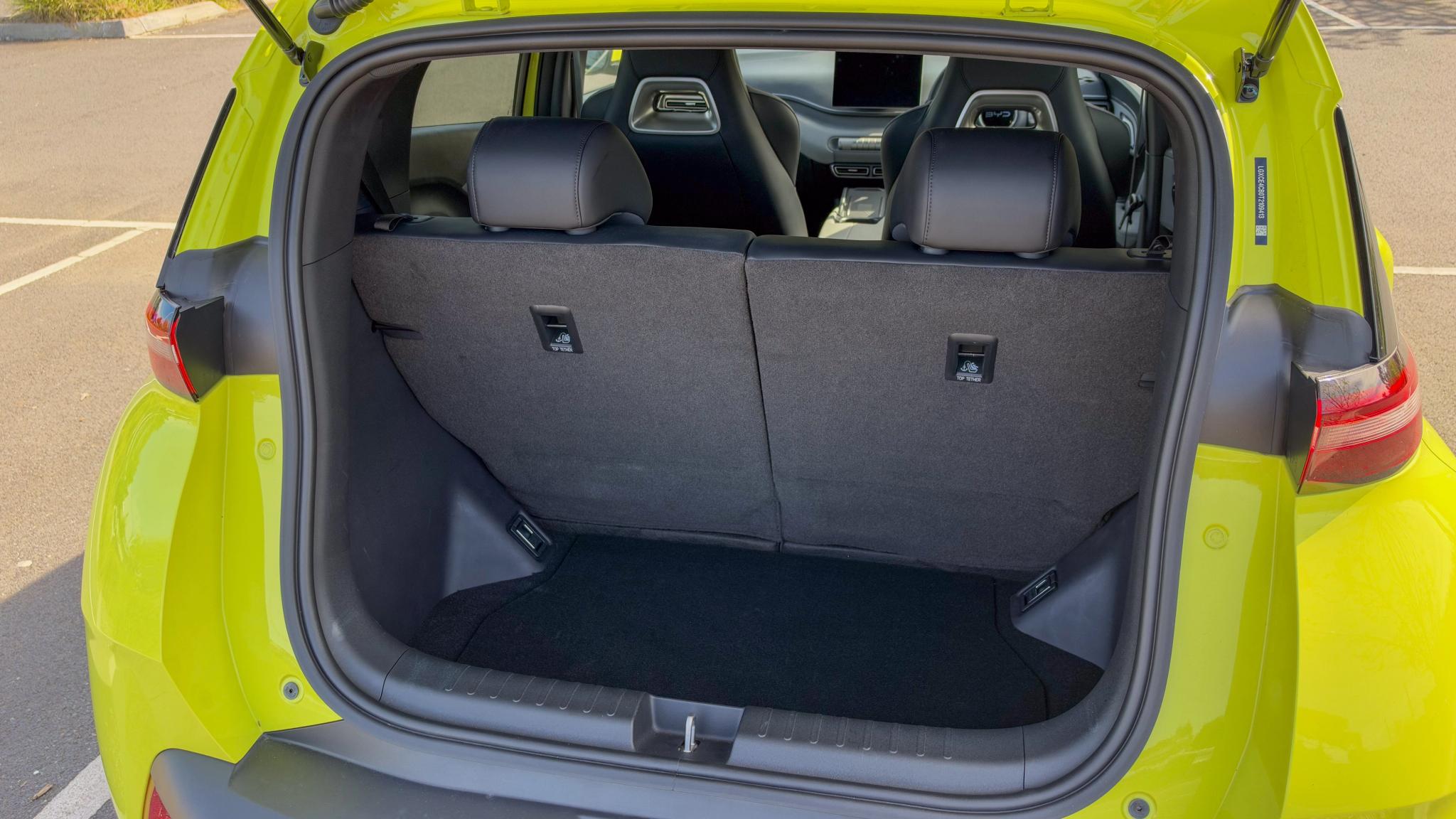
There’s more space inside than you’d think. Adults can sit behind adults without their knees touching the seatbacks and the flat floor helps the rear feel airier than a car this short should.
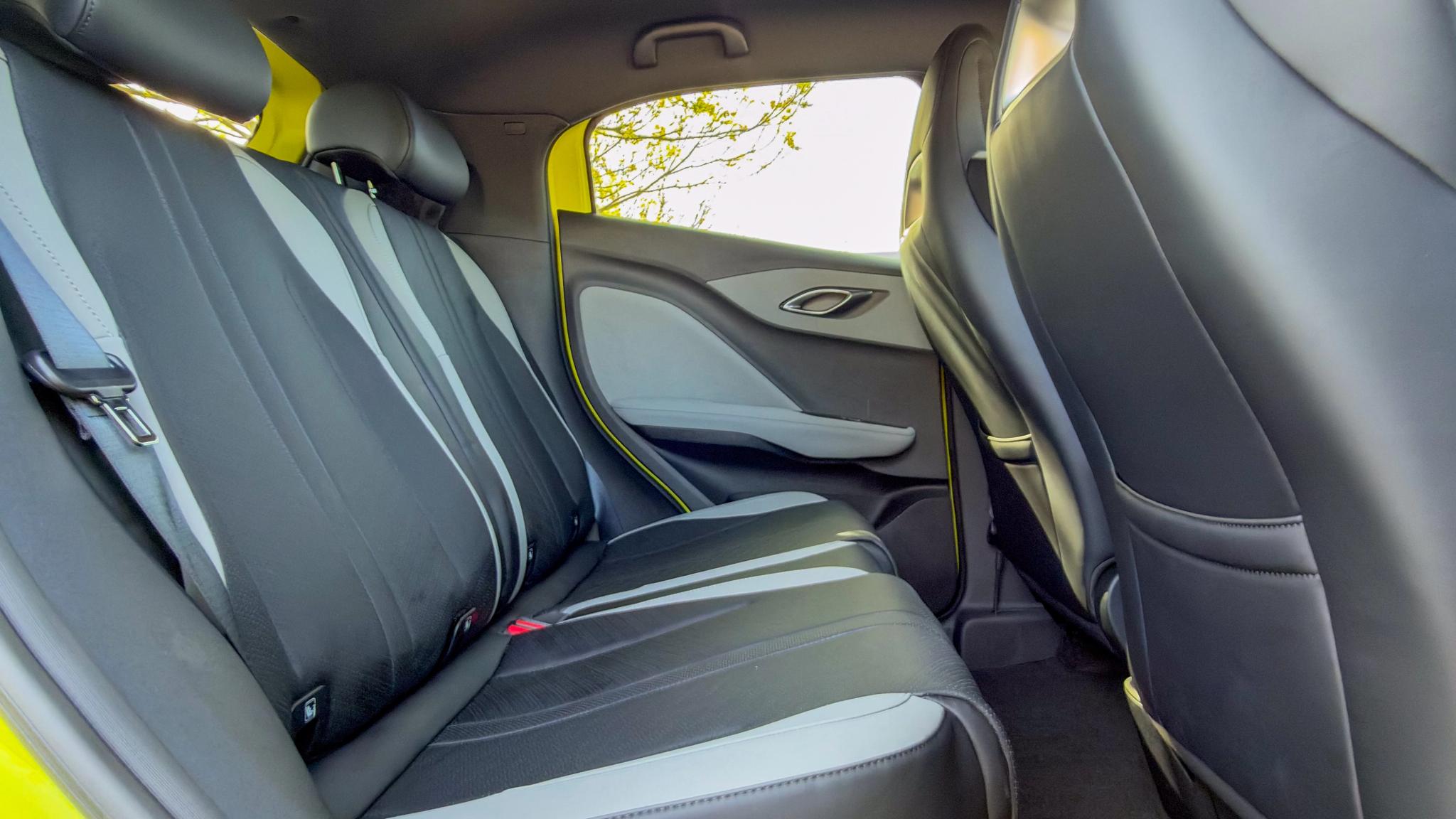
It is, however, strictly a four-seater. Two child seats fit comfortably, but a family with three kids needs to look elsewhere. Rear passengers also miss out on air vents and charging ports.
The 308-litre boot is bigger than it looks and has a handy storage well under the floor, expanding to 1037 litres with the 50:50 split rear seats folded. That’s plenty for the weekly shop or a pram, though not always both at once.
There’s no spare tyre, just a repair kit, but that’s normal for small city EVs where every bit of space under the floor is already taken.
Up front, there are open trays for phones, keys and drinks, but apart from the glovebox there’s nowhere to hide valuables from passing eyes.
What is the Atto 1 like to drive?
This is where the Atto 1 really surprised me. It’s genuinely fun, nimble and light on its feet, with steering that has more feel and accuracy than a budget city car usually bothers with.
What impressed me most was the ride. It soaks up broken suburban roads, speed humps and patchwork bitumen better than some more expensive EVs, and only gets a little busy when sharp bumps arrive one after another.
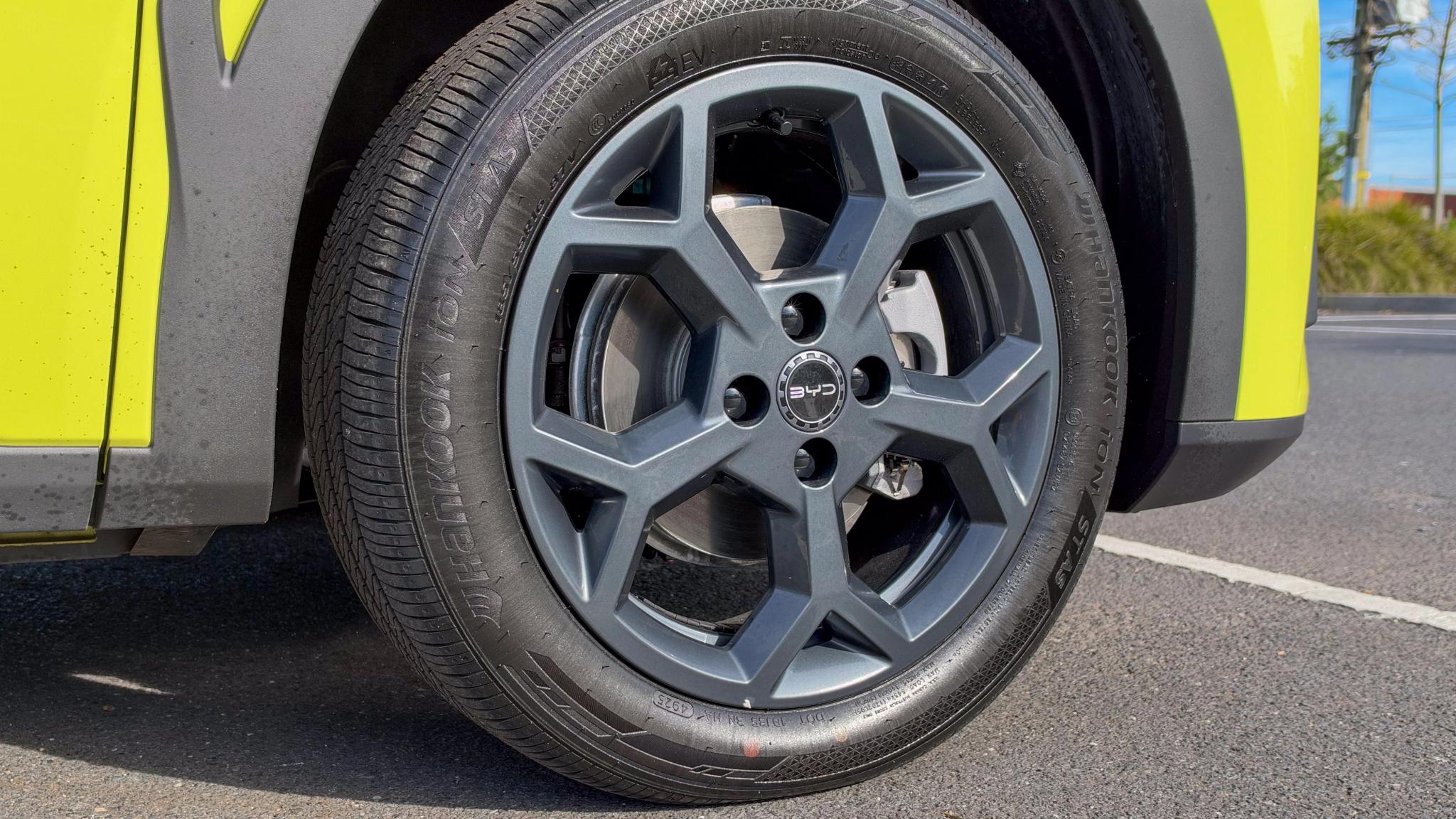
The two grades feel quite different. The Premium’s 115kW motor makes it brisk around town, with enough punch to slot into gaps without planning ahead. The Essential’s 65kW is less urgent and runs out of steam on steep hills and highway overtakes, but in city traffic it never feels slow, and its lighter weight and smaller wheels make it feel just as nimble.
A tight turning circle and compact dimensions make parking a non-event, and the Premium’s 360-degree camera makes it even easier. Road and tyre noise are well contained for the price, though they become more noticeable at highway speeds.
The driving modes don’t change much, so leave it in Eco and forget about it. The bigger irritation is the driver monitoring system, which we’ll get to in the safety section.
How efficient is the Atto 1?
BYD claims 15.5kWh/100km for the Essential and 16.0kWh/100km for the Premium, which is slightly high for something this small. The good news is that the claim is easy to beat. We averaged between 13 and 14kWh/100km in mixed driving, with stop-start city traffic bringing the number down and long highway stretches pushing it up.
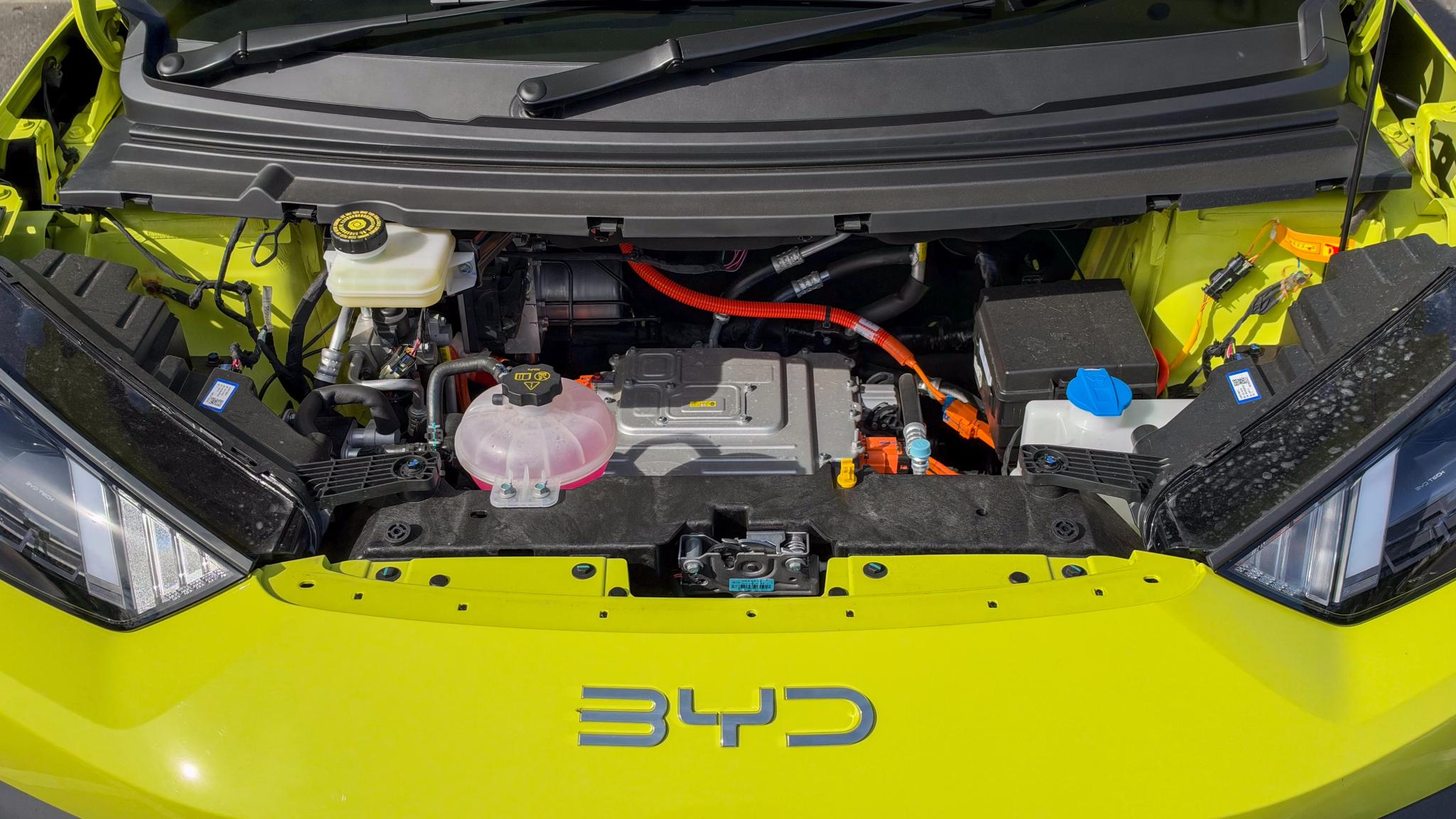
At those consumption figures, the official 220km and 310km range claims look achievable, particularly around town. If you mostly drive in the city and can charge at home, the Essential covers a lot of commuting and school runs with ease. If you regularly do long freeway runs, expect to plug in every couple of days.
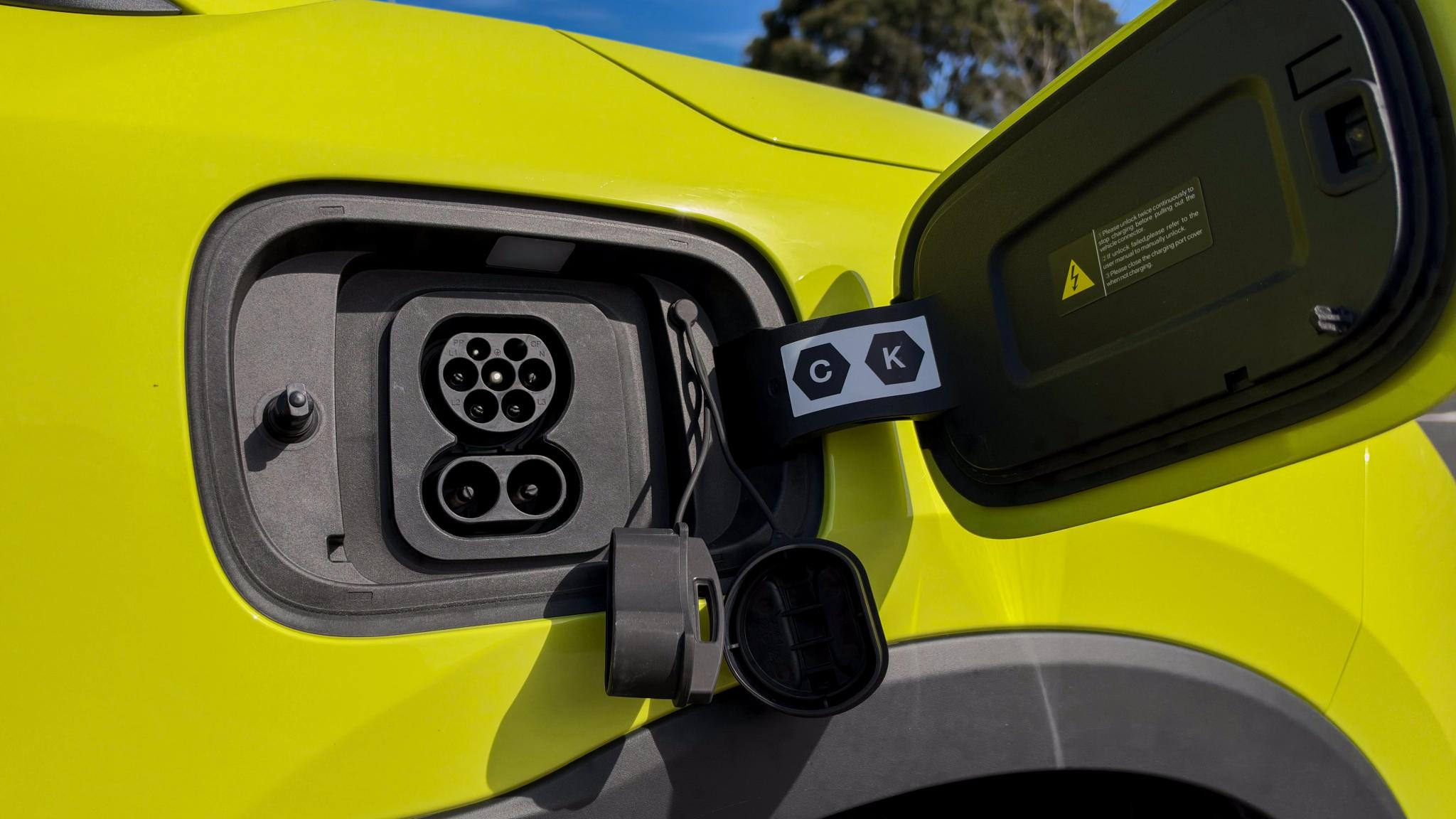
Both grades support 11kW AC charging, which is rare at this price and makes full use of a three-phase home wallbox. DC fast charging peaks at 65kW for the Essential and 85kW for the Premium, with BYD claiming a 10 to 80% top-up in 30 minutes for the Premium. Both also offer vehicle-to-load, so you can run a kettle or power tools off the battery.
Servicing is capped-price through BYD’s growing dealer network and the 20,000km interval is longer than many petrol rivals offer. BYD also includes 12 months of roadside assistance. With home charging and running costs this low, the Atto 1 could save a lot of money over a petrol city car.
| Servicing and Warranty | BYD Atto 1 |
| Service interval | 12 months | 20,000km |
| Servicing cost (5 years) | $1391 |
| Average annual cost | $278 |
| Vehicle warranty | 6 years | 150,000km |
| Battery warranty | 8 years | 160,000km |
Is the Atto 1 safe?
The Atto 1 carries a five-star ANCAP rating from 2025 based on testing of the European-market Dolphin Surf. It scored 82% for adult occupant protection, 86% for child occupant protection, 76% for vulnerable road user protection and 79% for safety assist.
Standard kit includes six airbags, autonomous emergency braking with pedestrian, cyclist and junction detection, adaptive cruise control with stop and go, lane-keeping and lane-centring assist, traffic sign recognition, driver attention monitoring and tyre pressure monitoring.
What’s missing is blind-spot monitoring and rear cross-traffic alert. Both are surprising omissions in a car built for tight city streets and busy car parks and I really wish it had them.
Unfortunately, the safety systems can be downright irritating.
The driver monitor is overeager and complains about ordinary head movements. With adaptive cruise and lane-centring switched on, the steering makes small, jerky corrections and wanders between the lines rather than holding the middle. Switching the warnings off only lasts until you next start the car. Most of this could be fixed with a software update and BYD should prioritise one.
What are the main competitors to the Atto 1?
The MG3 Vibe matches the Atto 1 Essential’s discounted driveaway price and offers five seats and a petrol engine for buyers not ready for an EV. It’s simple and easy to own, but the Atto 1 is more fun to drive, cheaper to run and comes with far more technology for the same money.
The Geely EX2 starts at $26,490 before on-roads, or around $30,000 driveaway. It brings five seats, rear-wheel drive, a seven-year, unlimited-kilometre warranty and a five-star ANCAP rating. The entry Complete grade is slow though and it costs around $10,000 more on the road than the Atto 1 Essential.
The MG4 EV Urban starts at $31,990 driveaway. It’s bigger, has five seats and feels considerably more expensive inside. It remains our pick of the budget EVs if you need the space, but it costs $12,000 more than the Essential and only charges at 6.6kW on AC.
The BYD Dolphin Essential is on offer from $28,888 driveaway and gives you five seats, more range and a bigger boot. It’s the sensible upgrade within the BYD showroom, though it’s not as much fun to drive as its smaller sibling.
If I were spending my own money before mid-December, I’d buy an Atto 1 Essential and pocket the change. If I needed five seats, I’d stretch to the MG4 EV Urban.
Should I buy the Atto 1?
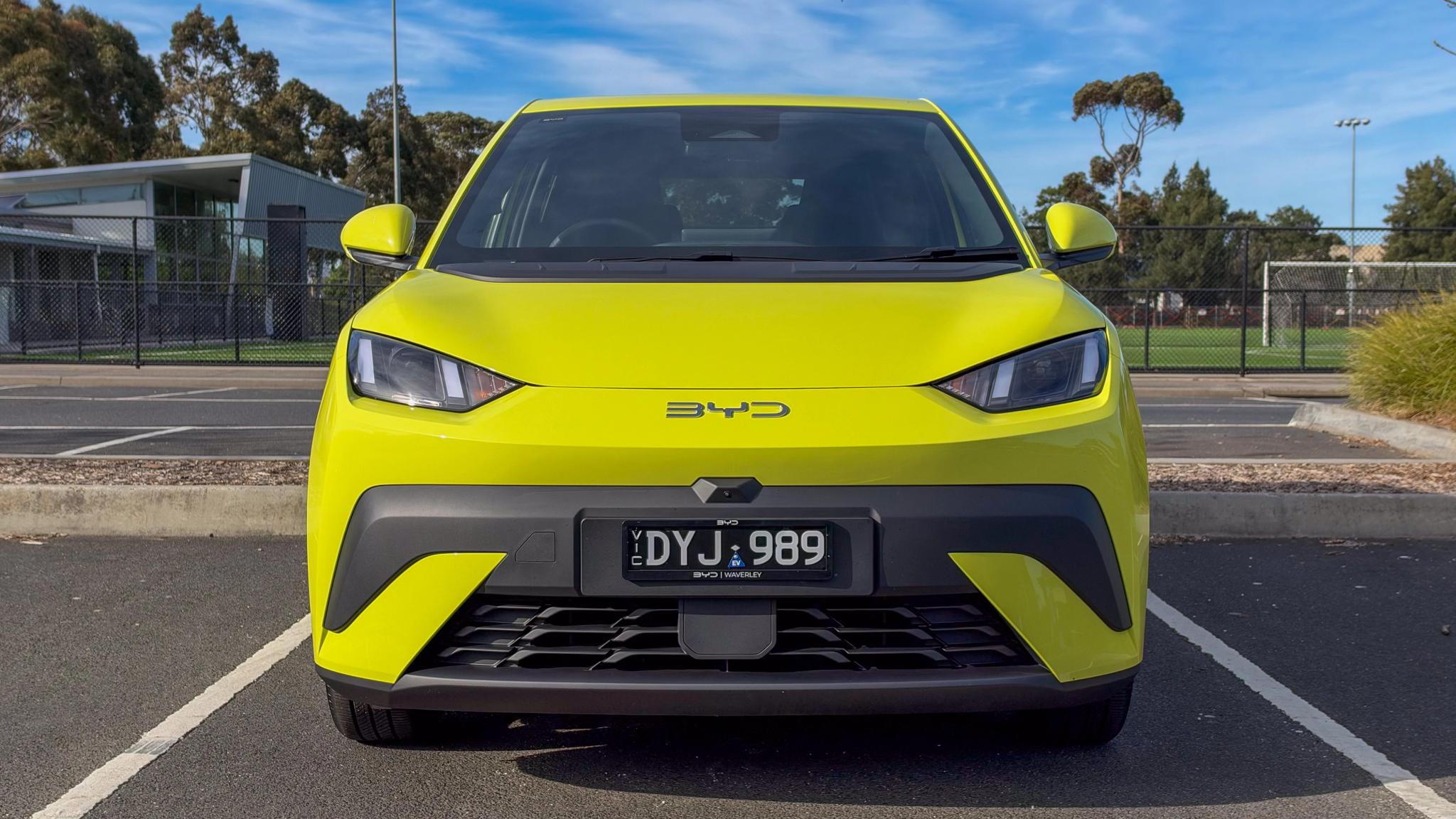
The Atto 1 isn’t perfect. The touchscreen is fiddly, the safety warnings are annoying and the air-conditioning controls are a mess. Its four-seat layout and modest range also rule it out for bigger families and anyone who regularly drives long distances.
And with the current deal, all of this costs less than most new petrol cars. That’s remarkable for an electric car that drives this well, has a five-star safety rating and costs so little to run.
As a first car, or as the second car that handles the school run and commute while something bigger does the road trips, it’s brilliant. Buy the Essential while the deal lasts, and only step up to the Premium if you regularly cover longer distances or can’t easily charge at home.
At $19,990 driveaway, I genuinely can’t think of a better new car for the money.
VerdictThe Beep Verdict
Rob Leigh
Co-founder & Director
Rob Leigh is Co-founder and Director of The Beep based in Melbourne, Australia. He has 15+ years inside a major automotive OEM, specialising in product planning, pricing and vehicle strategy.
About Author