2026 Chery Tiggo 9 review
The Chery Tiggo 9 combines a big battery, a seriously impressive cabin and plenty of power from $52,990 before on-roads. Just don’t expect much from the third row.

Rob Leigh
Pros
- Plug-in hybrid seven-seater from $52,990 before on-roads
- Cabin quality and equipment well beyond the price
- Seven-year warranty and capped-price servicing
Cons
- Cramped third row with no top tethers or curtain airbag coverage
- Soft, floaty ride and numb steering
- Glitchy CarPlay, voice control and screen-heavy layout
Our verdict
If you can charge at home, the Tiggo 9 makes a lot of sense. The Elite covers short daily trips on electricity, the Ultimate’s bigger battery stretches that to several days, and both have a cabin that’s remarkably good for the money. The catch is a third row that’s only fit for occasional use.
What does the Tiggo 9 cost in Australia?
Chery sells the Tiggo 9 in two grades. The front-drive Elite is $52,990 before on-roads and the all-wheel-drive Ultimate is $59,990 before on-roads, a gap of $7000.
That gap buys more than a rear motor. The Ultimate swaps the Elite’s 19kWh battery for a 34kWh pack that almost doubles the claimed electric range, and adds 90kW, faster DC charging, a head-up display, ventilated and massaging front seats, heated and ventilated outboard second-row seats, a heated steering wheel, leather trim, 20-inch wheels, a bigger Sony sound system and automatic parking.
Even the cheaper Elite comes with plenty of equipment. It keeps the 15.6-inch touchscreen, wireless Apple CarPlay and Android Auto, panoramic sunroof, 360-degree camera, heated power front seats, dual-zone climate and the full safety suite.
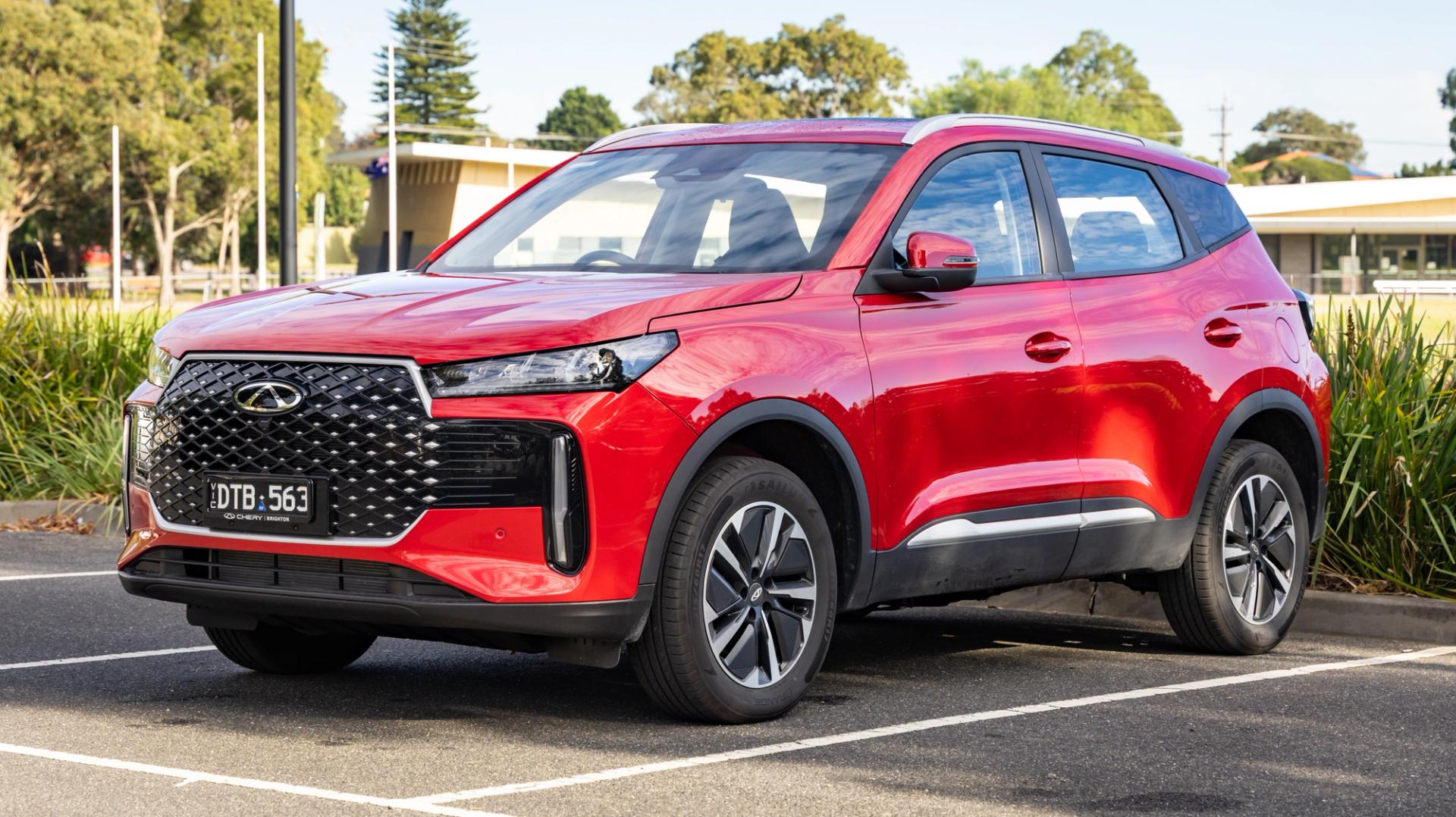
But before buying one, it’s worth looking at the cheaper Tiggo 8 Super Hybrid. The Tiggo 8 Super Hybrid Ultimate is $49,990 driveaway, while the Tiggo 9 Elite is $52,990 before on-roads, so the real gap is bigger than it first looks. For that, the Tiggo 9 Elite gives you a slightly bigger body, a nicer cabin, more power and a 1500kg braked towing rating. Our Chery Tiggo 8 Super Hybrid review covers the smaller car in detail.
Compared with other seven-seat plug-in hybrids, the pricing is hard to argue with. The Elite is $4000 cheaper than a BYD Sealion 8 Dynamic FWD ($56,990), and the Ultimate undercuts both the Sealion 8 Dynamic AWD ($63,990) and a seven-seat Mitsubishi Outlander PHEV Aspire ($66,790), all before on-roads, while matching or beating them on equipment.
| Specifications | Elite | Ultimate |
| Price excluding on-roads | $52,990 | $59,990 |
| Powertrain | 1.5L turbo PHEV | 1.5L turbo PHEV |
| Power | Torque | 225kW | 450Nm | 315kW | 580Nm |
| Transmission | 3 speed DHT | 3 speed DHT |
| Drivetrain | FWD | AWD |
| Fuel use (claimed) | 1.5L/100km | 1.4L/100km |
| Electric range (claimed) | 90km NEDC | 170km NEDC |
| Battery | DC charging | 19kWh | 41kW | 34kWh | 71kW |
| Braked towing | 1500kg | 1500kg |
| ANCAP | Not yet rated | Not yet rated |
| Warranty | 7 years | Unlimited km | 7 years | Unlimited km |
View Chery Tiggo 9 driveaway pricing and specifications →
What does the Tiggo 9 look like?
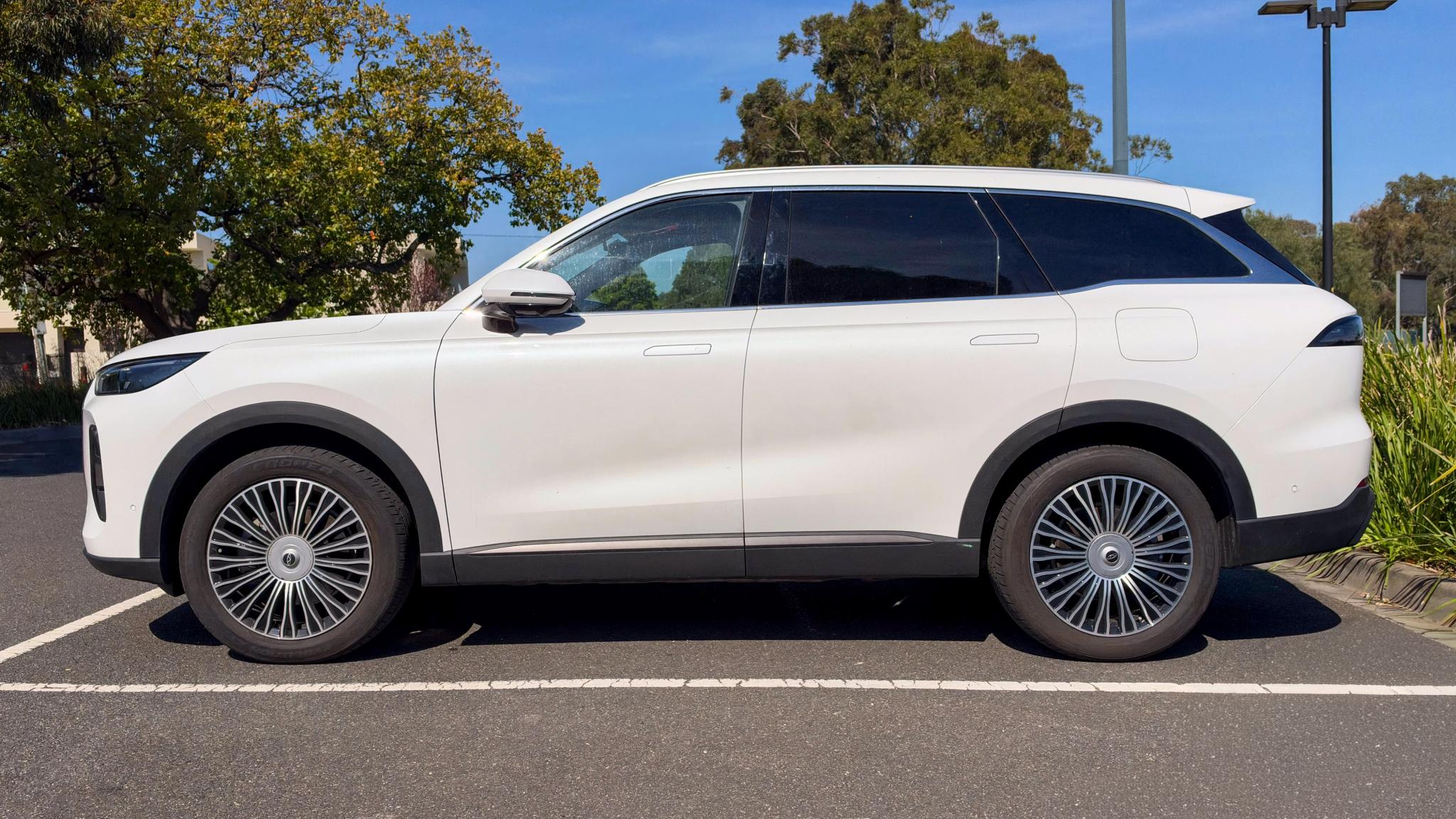
At 4.8 metres long, the Tiggo 9 is within a couple of centimetres of a Kia Sorento and about 24cm shorter than a Sealion 8. It’s a big car rather than a giant one, which you’ll appreciate in shopping centre car parks.
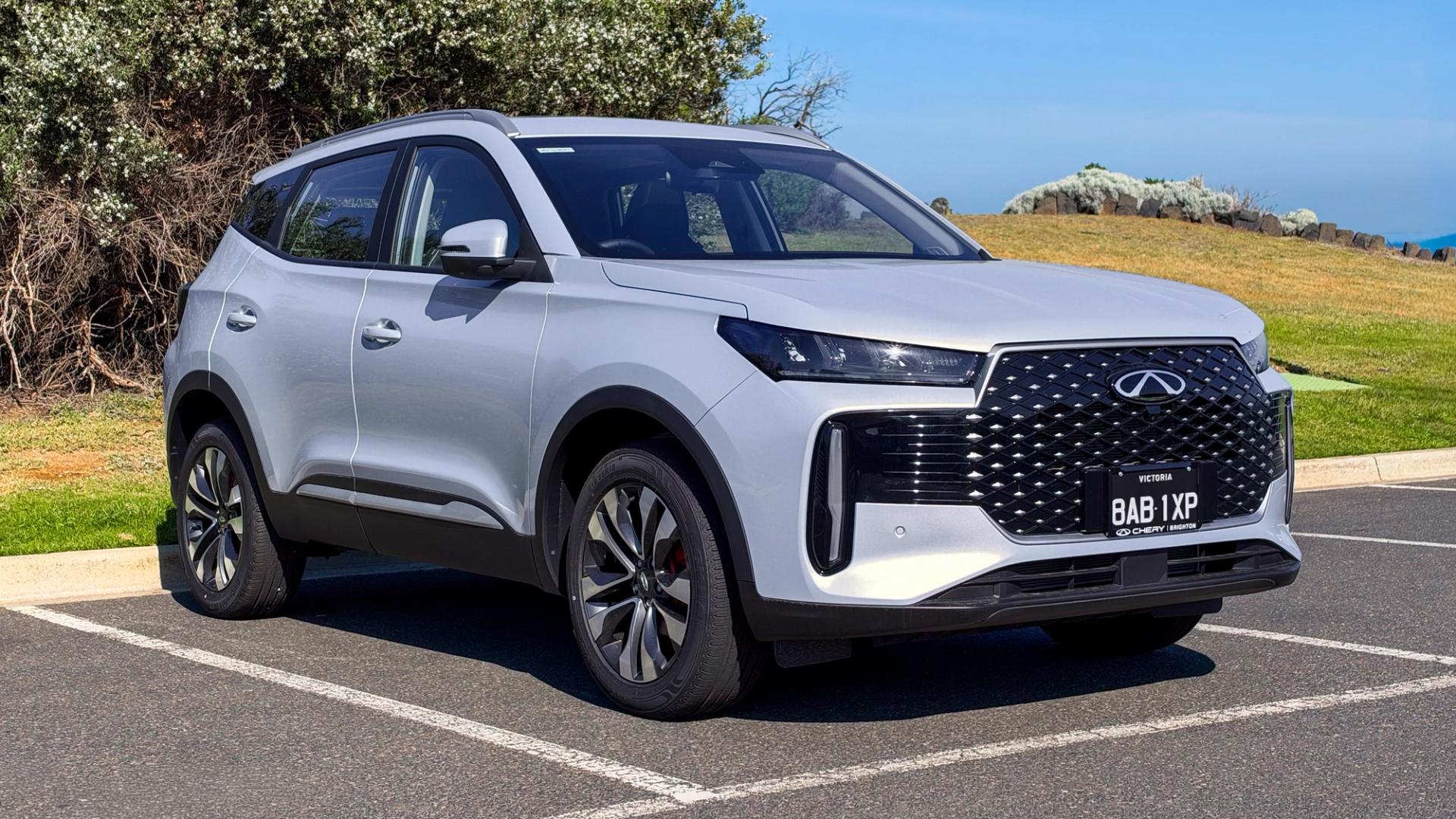
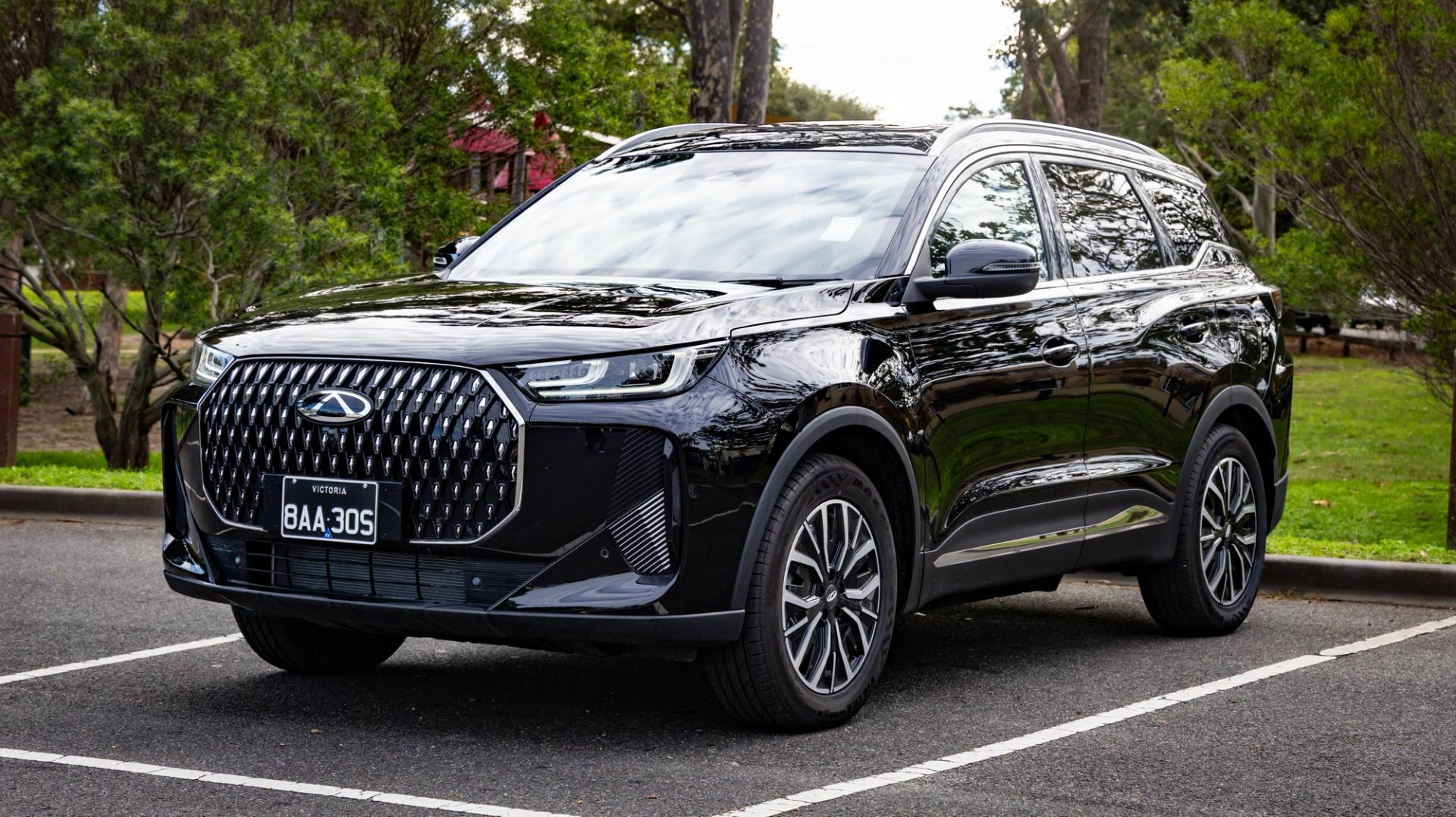
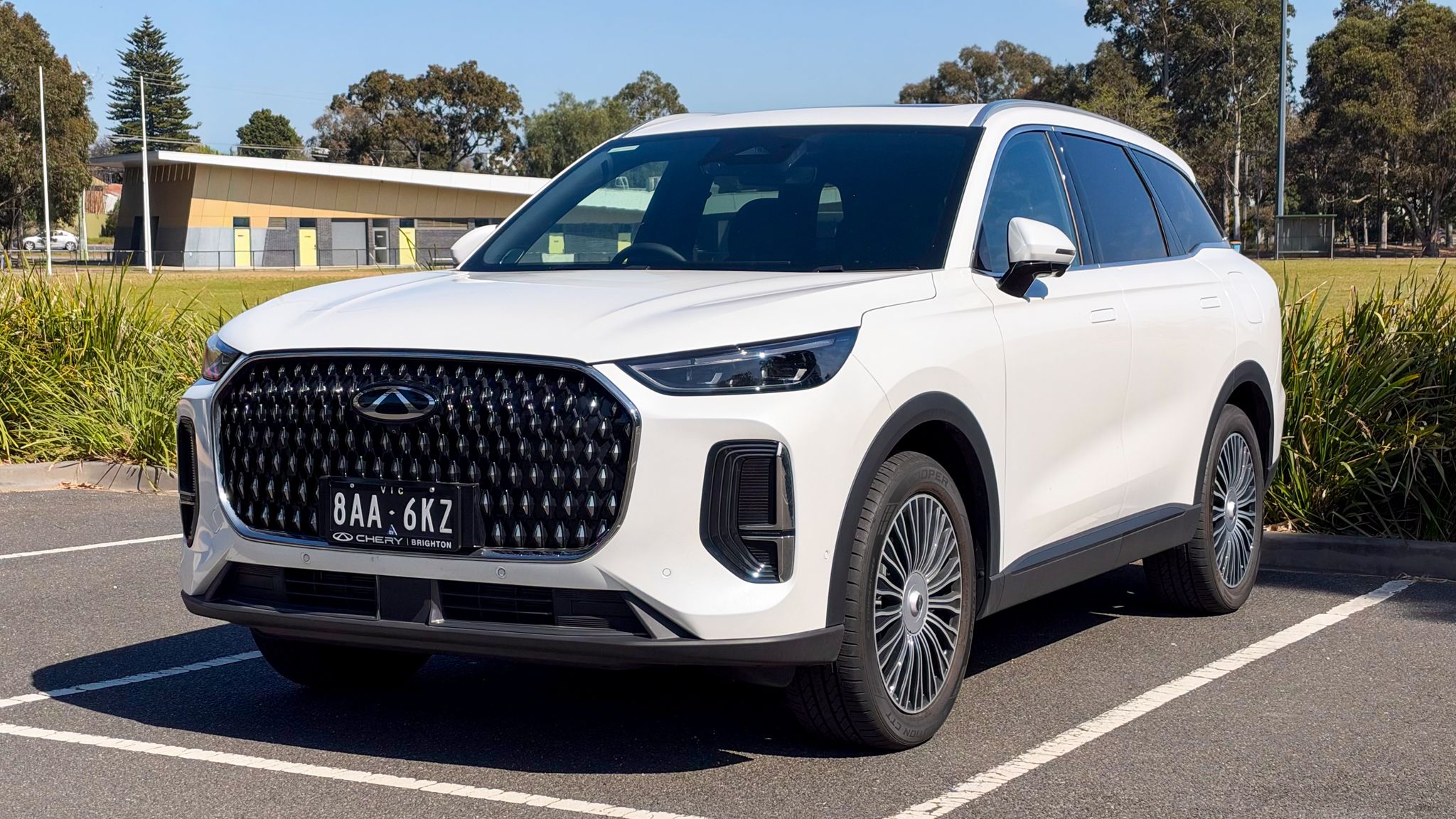
There’s no missing that enormous chrome grille, although I actually think it works quite well here. The slim headlights help, and in person the Tiggo 9 looks considerably more expensive than it is.
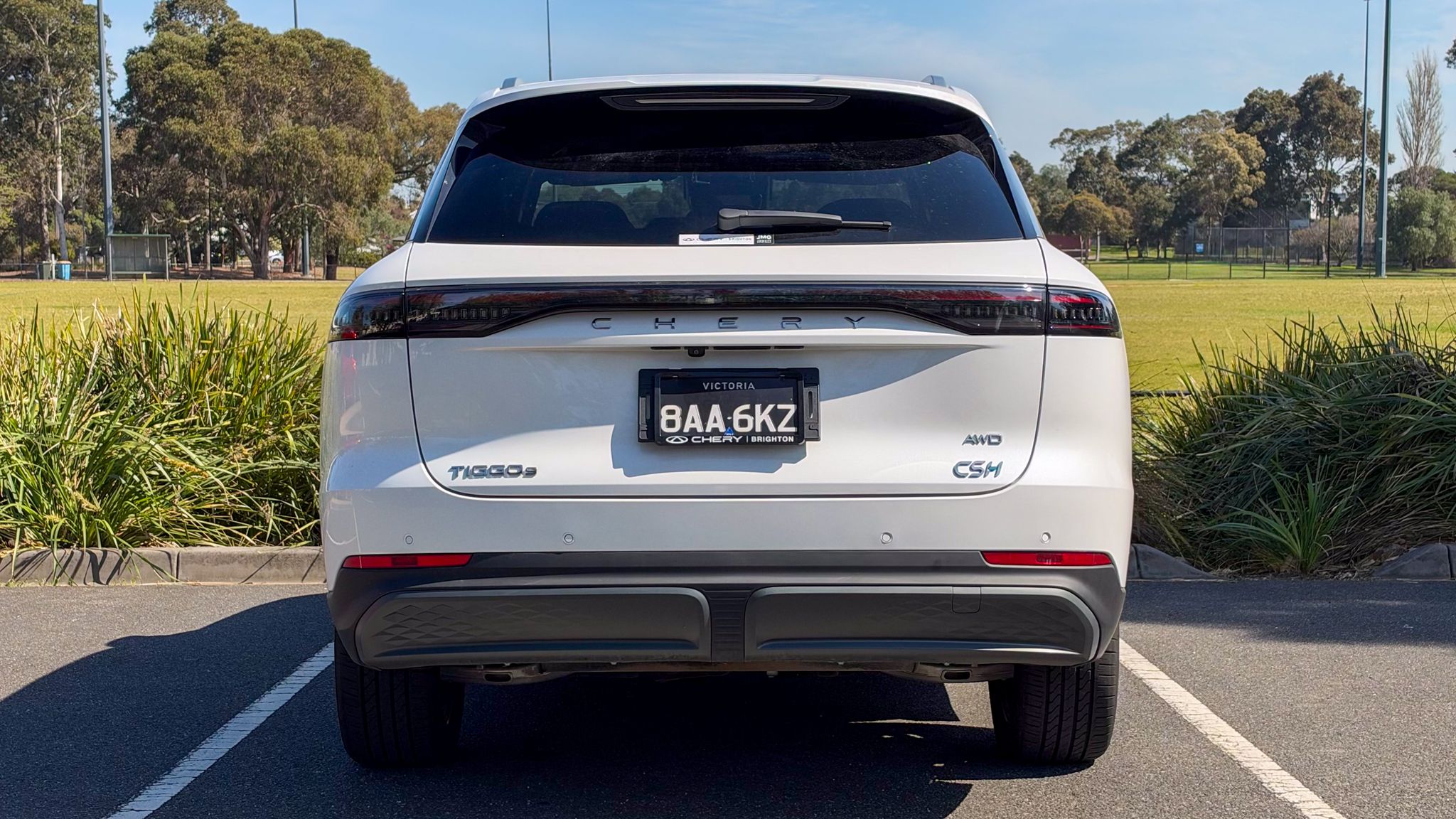
Flush door handles that pop out as you approach, silver roof rails and silver window trim keep the profile tidy. The rear gets a full-width light bar and dark privacy glass.
The two grades are easiest to tell apart by their wheels. The Ultimate’s intricate multi-spoke 20-inch alloys look like they belong on a European luxury SUV, while the Elite’s 19s are plainer. Five colours are offered, with Aurora Green the only no-cost option, and the matte grey is the one to pick if you want strangers asking what it is.
What is the Tiggo 9 like inside?
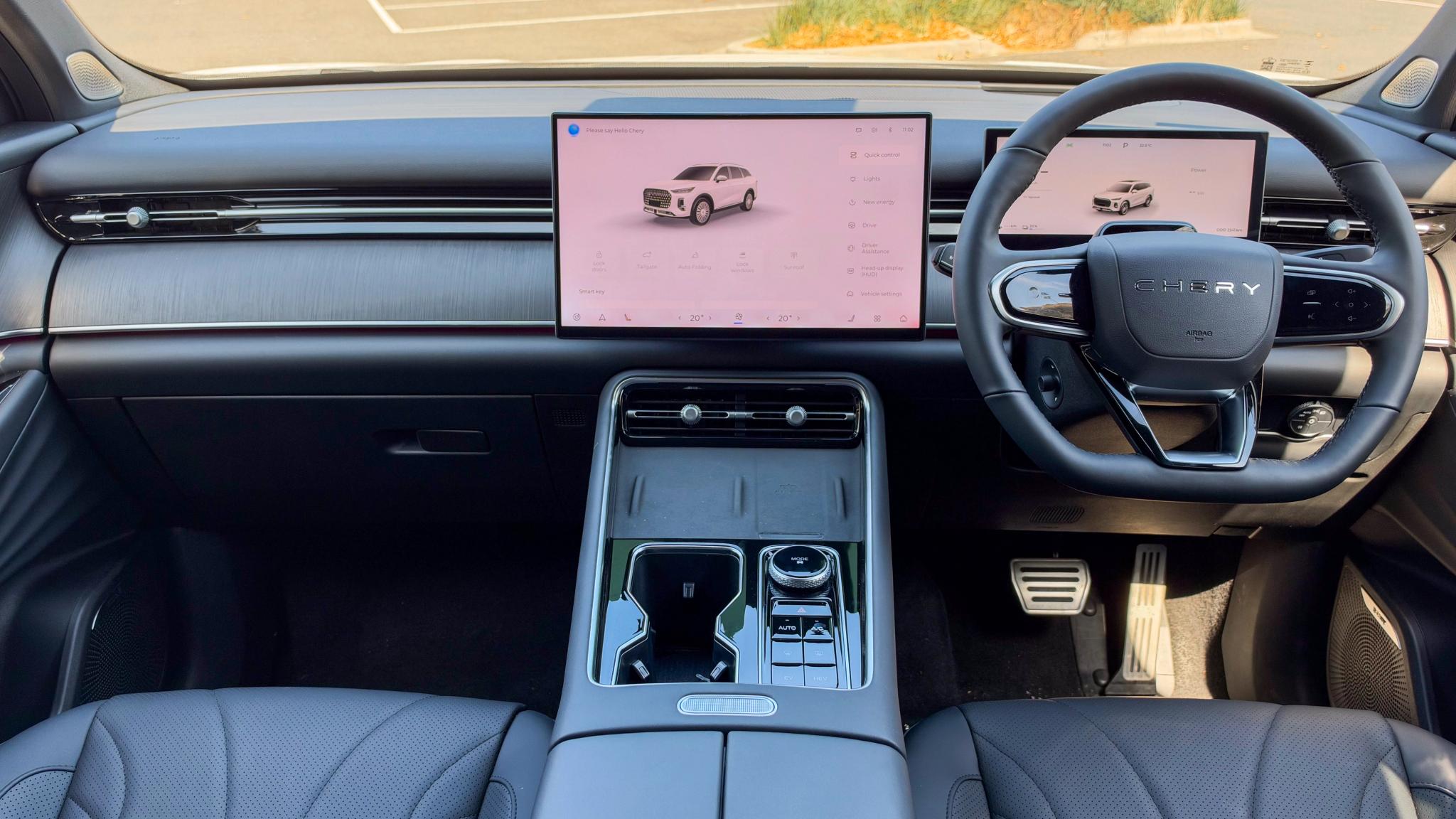
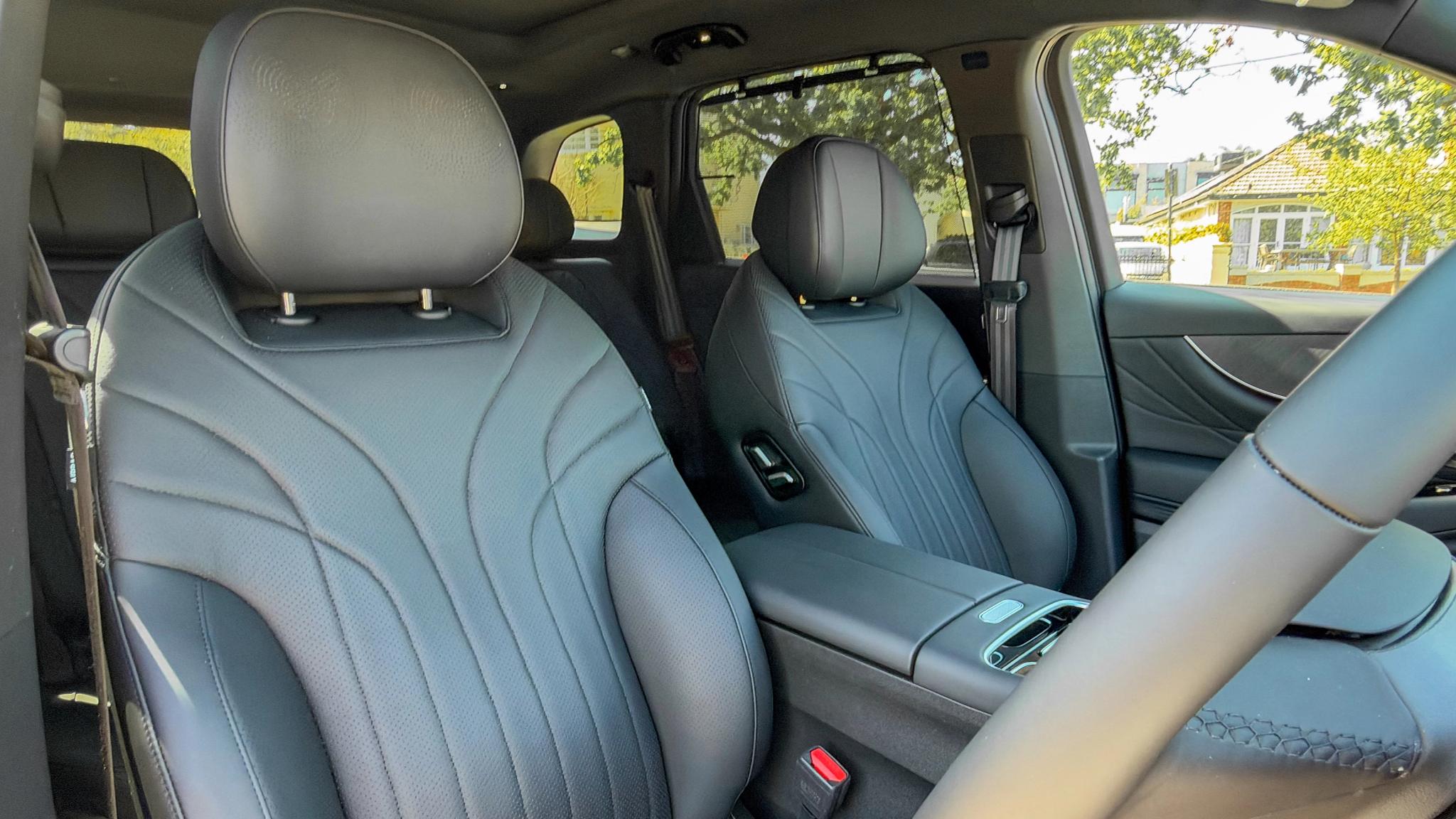
The interior is probably the biggest surprise. The dash and doors wear soft, stitched materials and the switchgear feels solid in both grades. The Ultimate feels closer to a $90,000 SUV than a $60,000 one, and the Elite’s synthetic leather doesn’t take much shine off it.
There are slips. Glossy plastic around the console throws sunlight into your eyes, and the gloss-black touch pads on the steering wheel collect fingerprints faster than a toddler’s iPad.
Both grades get a sharp, quick 15.6-inch touchscreen and a 10.25-inch digital driver display, with the Ultimate adding a head-up display. The problem is that almost everything lives in that screen. There’s a drive-mode dial and EV and hybrid buttons on the console, but no volume knob and no physical temperature or fan controls.
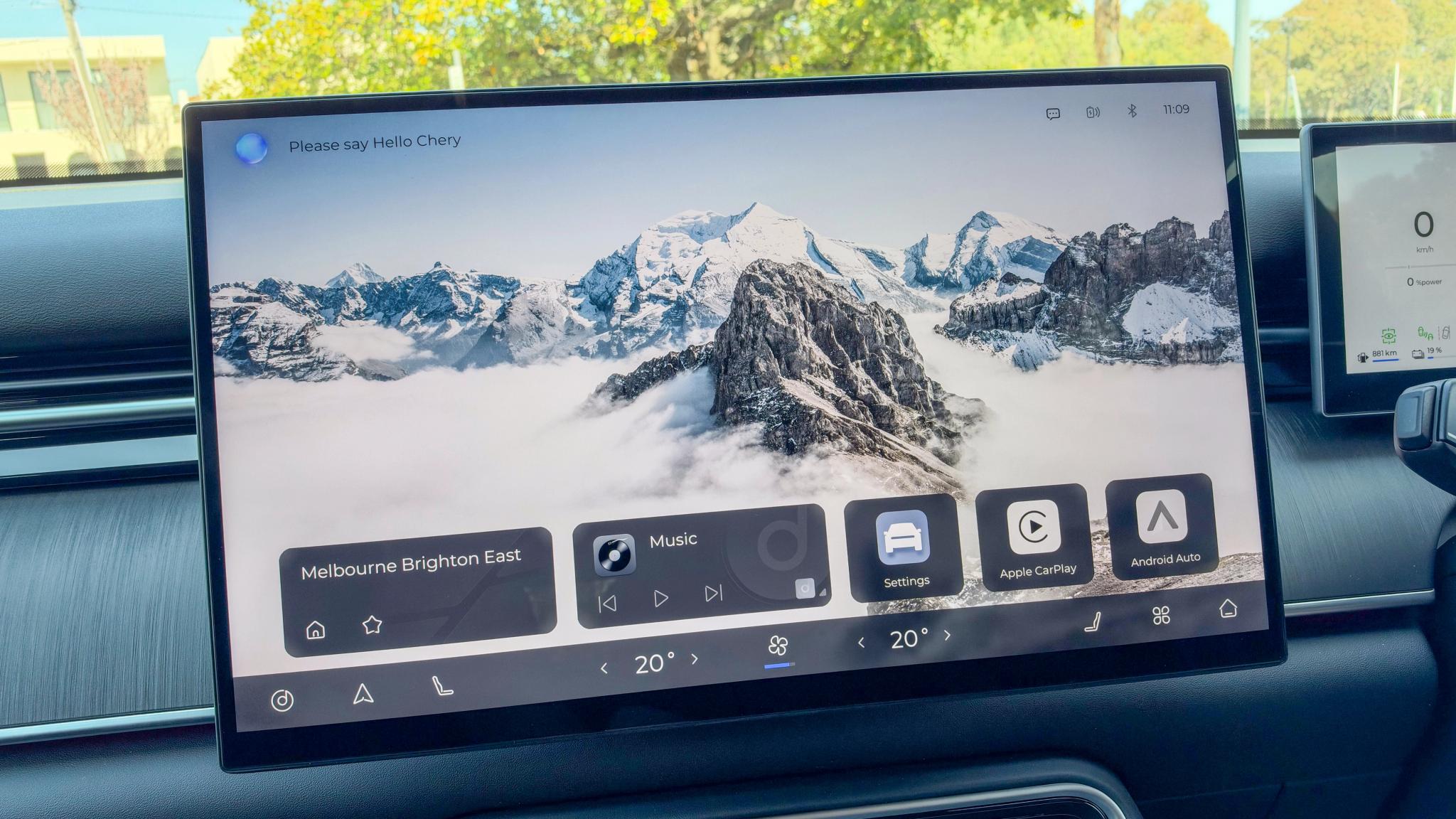
A customisable shortcut menu helps, letting you pin settings like lane-keep and driver monitoring for quicker access. The software around it is less convincing. Wireless CarPlay can be flaky, and the “Hello Chery” voice assistant often acknowledges a request, then does nothing.
The front seats are where the grades differ most. The Ultimate’s are heated, ventilated and massaging, with the adjusters mounted on the doors Mercedes-style, and the massage programs have some baffling names but work well. The Elite’s are heated and power-adjustable, which is still generous at this price.
Storage is well thought out, with a big tray under the floating console, a deep armrest bin and generous door pockets. Both grades get a panoramic sunroof with a powered blind, though the sun visors don’t extend, which you’ll notice driving west in the late afternoon.
How practical is the Tiggo 9?
The second row is excellent in both grades. There’s generous leg and headroom for adults even behind a tall driver, and the 60/40 bench slides and reclines. Rear passengers get their own vents with fan control, window sunshades and USB-A and USB-C ports, and the Ultimate adds heating and ventilation for the outboard seats.
Child seats are covered by ISOFIX points on the two outboard positions and three top tethers across the second row.
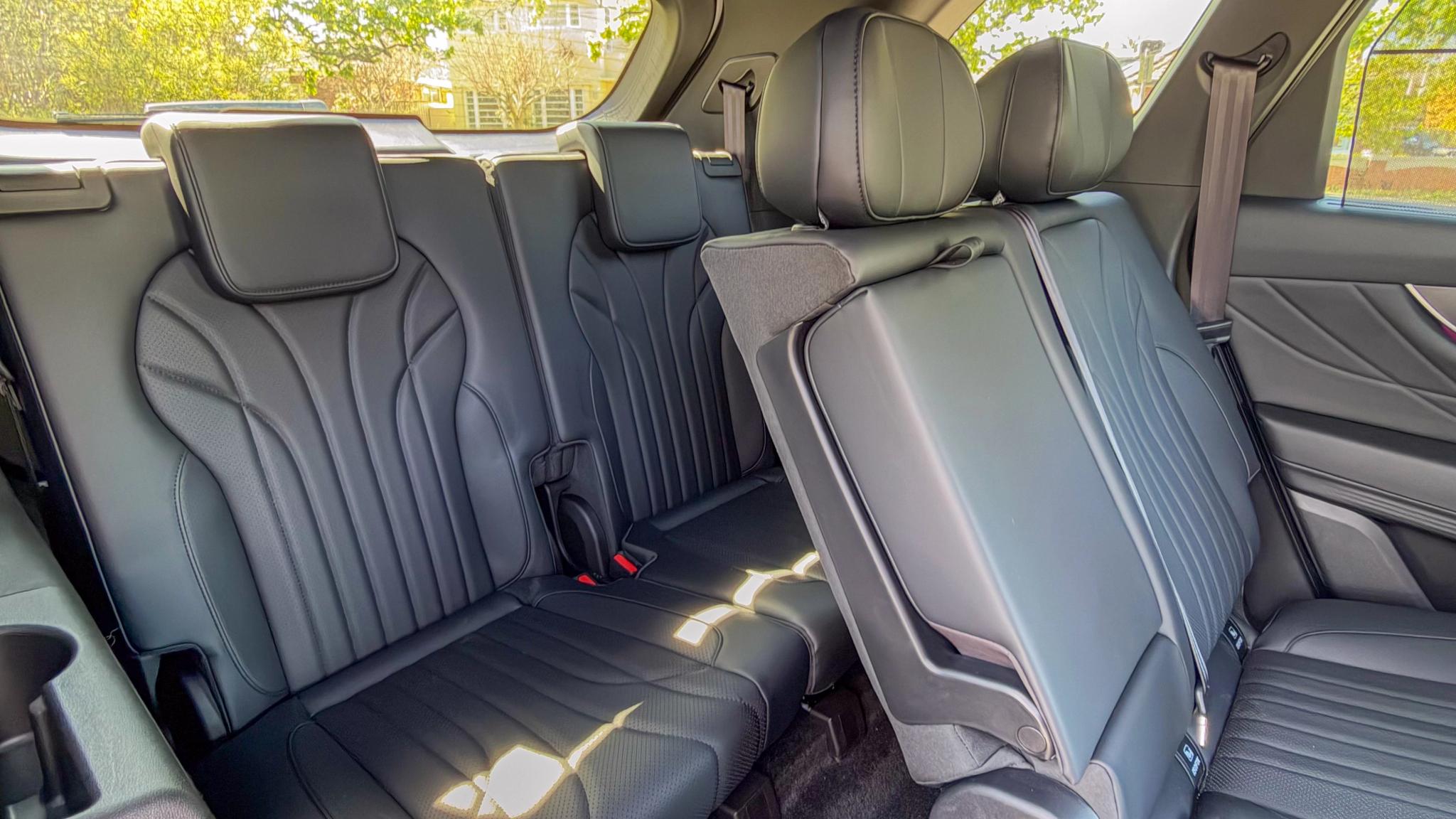
Unfortunately, things aren’t nearly as good in the third row. Only the road-side section of the second row tilts and slides for access, so passengers loading from the kerb have to climb through. Once there, legroom and headroom are tight for anyone much beyond primary school age, and there are no vents, no USB ports and no top-tether points.
That last omission matters. Without top-tether anchors, most child restraints can’t be fitted in the third row. That leaves it best suited to occasional passengers who can safely use the standard seatbelts. Like the Tiggo 8 Super Hybrid, treat it as a five-seater with two emergency seats.
Boot space is much more impressive. With every seat up there’s 148 litres, enough for a few school bags. Fold the third row and it grows to 819L to the roof, and with both rear rows down there’s more than 2000L.
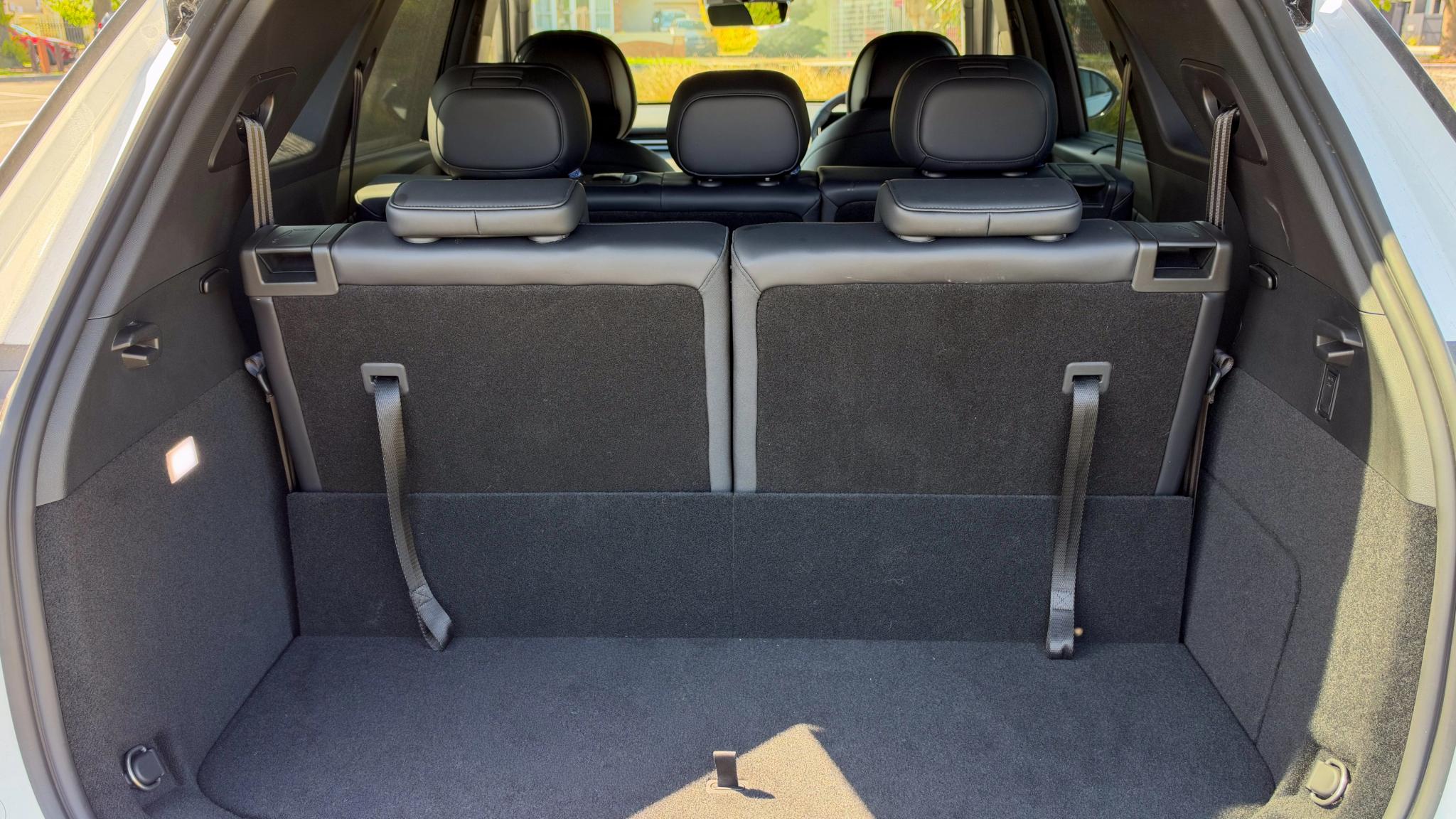
There’s no spare wheel, only a repair kit, and nowhere to stow the cargo blind when the third row is in use. Both grades are rated to tow 1500kg braked.
What is the Tiggo 9 like to drive?
Plant the throttle in the Ultimate and it pulls with an urgency that feels out of place in a seven-seat family SUV. Chery doesn’t publish a 0-100km/h time, but with 315kW and 580Nm it’s genuinely quick, especially rolling from 50 to 100km/h.
The Elite’s 225kW and 450Nm go through the front wheels only, and it’s still more than brisk enough for a family SUV. It’s 235kg lighter, which you feel around town, but squeeze the throttle hard on a damp road and the front tyres scrabble for grip, as they do in the Tiggo 8 Super Hybrid.
Both run as EVs most of the time, and both are smooth and quiet around town. When the petrol engine joins in, the handover is seamless. It does get gruff when the battery is low and you ask for a lot, because the engine is driving the wheels and charging at the same time, and that happens sooner in the Elite.
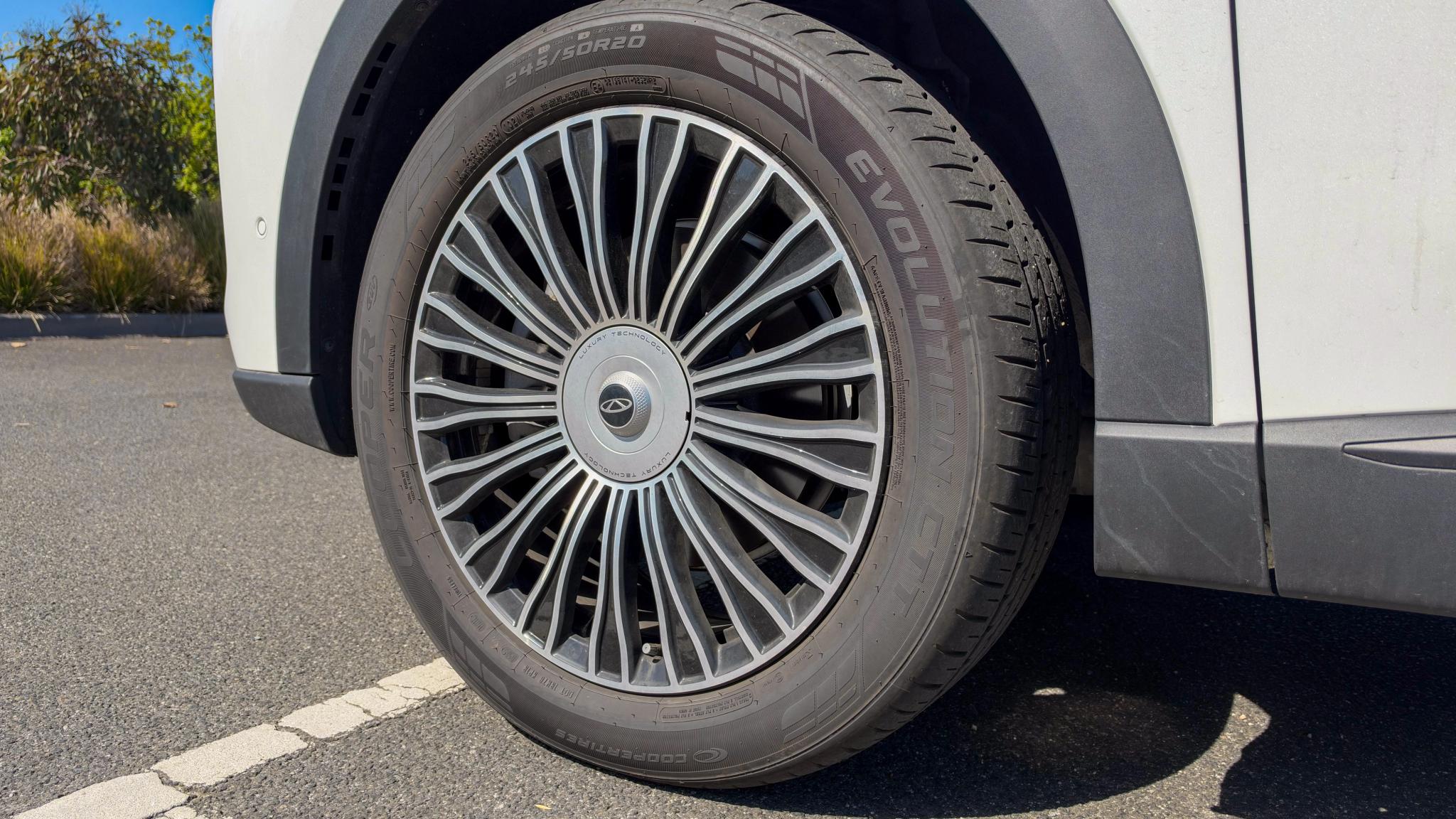
The chassis is the weak point in both. The soft suspension suits smooth suburban roads, but bigger bumps set the body bobbing and it takes too long to settle. The Ultimate’s 20-inch wheels pick up sharp edges around town, and the Elite’s taller-sidewall 19s take a little of that sting out.
The steering is light and tells you little about what the front tyres are doing. Push into a corner and the body leans heavily, and the standard tyres have limited grip in the wet. Drive either grade calmly and none of this matters. Drive the Ultimate the way its power figure invites you to and you’ll back off quickly.
Regenerative braking is adjustable, though even the strongest setting stops short of one-pedal driving. The brake pedal is more consistent than in many plug-in hybrids. If you tow or live somewhere slippery, the Ultimate’s all-wheel drive is worth having.
How efficient is the Tiggo 9?
Battery size is the biggest difference between the two grades. Chery claims 170km of electric range for the Ultimate’s 34kWh pack and 90km for the Elite’s 19kWh pack, both on the generous NEDC test.
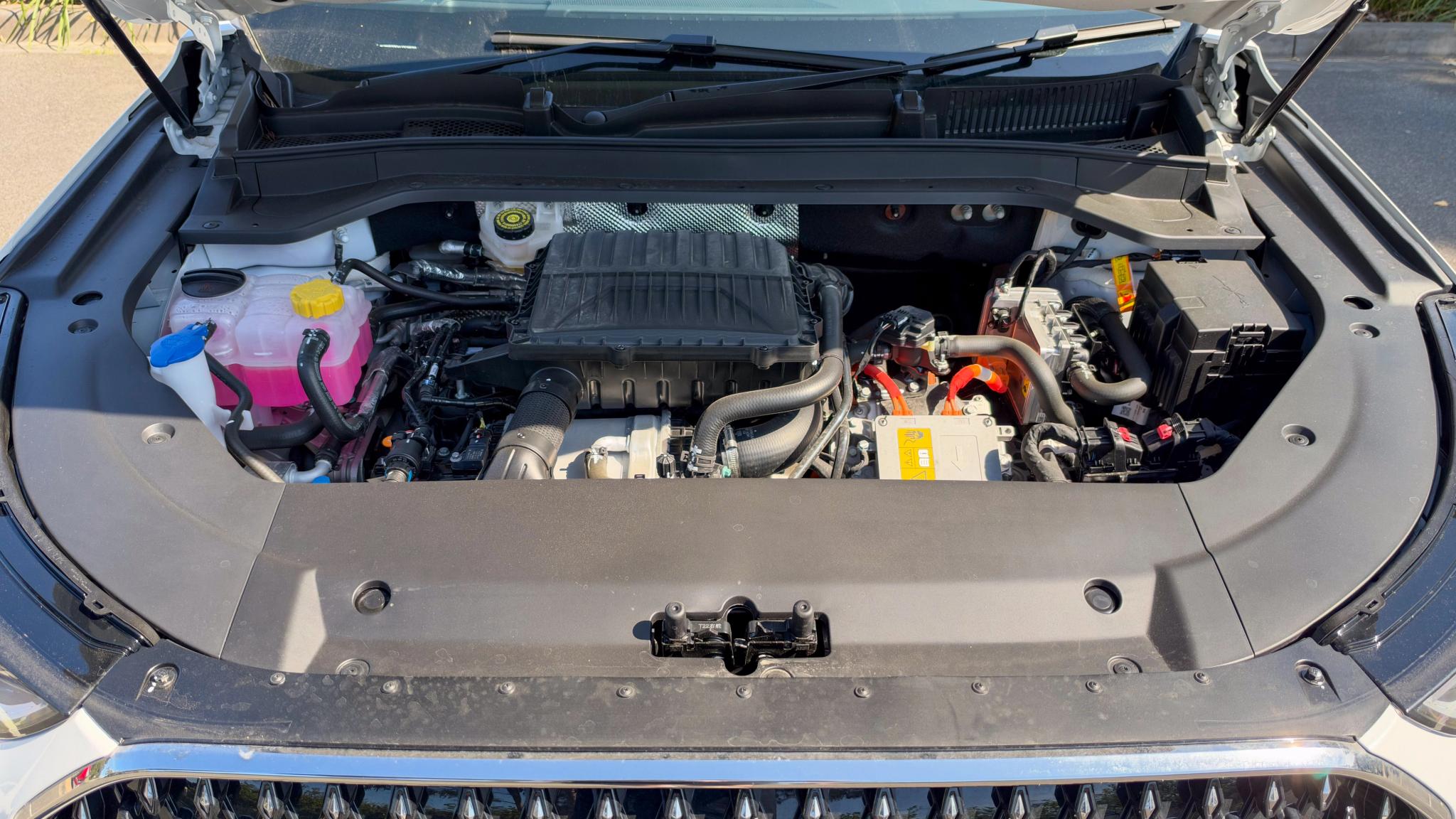
NEDC figures are always optimistic. Expect somewhere between 130 and 145km from the Ultimate in mild weather, which is enough for several days of commuting without using petrol, provided you can charge at home. The Elite is closer to 60 to 70km in real-world driving, similar to the Tiggo 8 Super Hybrid, which still covers most daily commutes.
Neither grade fully drains its battery, keeping a reserve so the hybrid system always has electric assistance. Running as hybrids, both settle at around 6L/100km, which is excellent for a seven-seater weighing two tonnes or more. Both need 95 RON premium unleaded and carry a 70L tank.
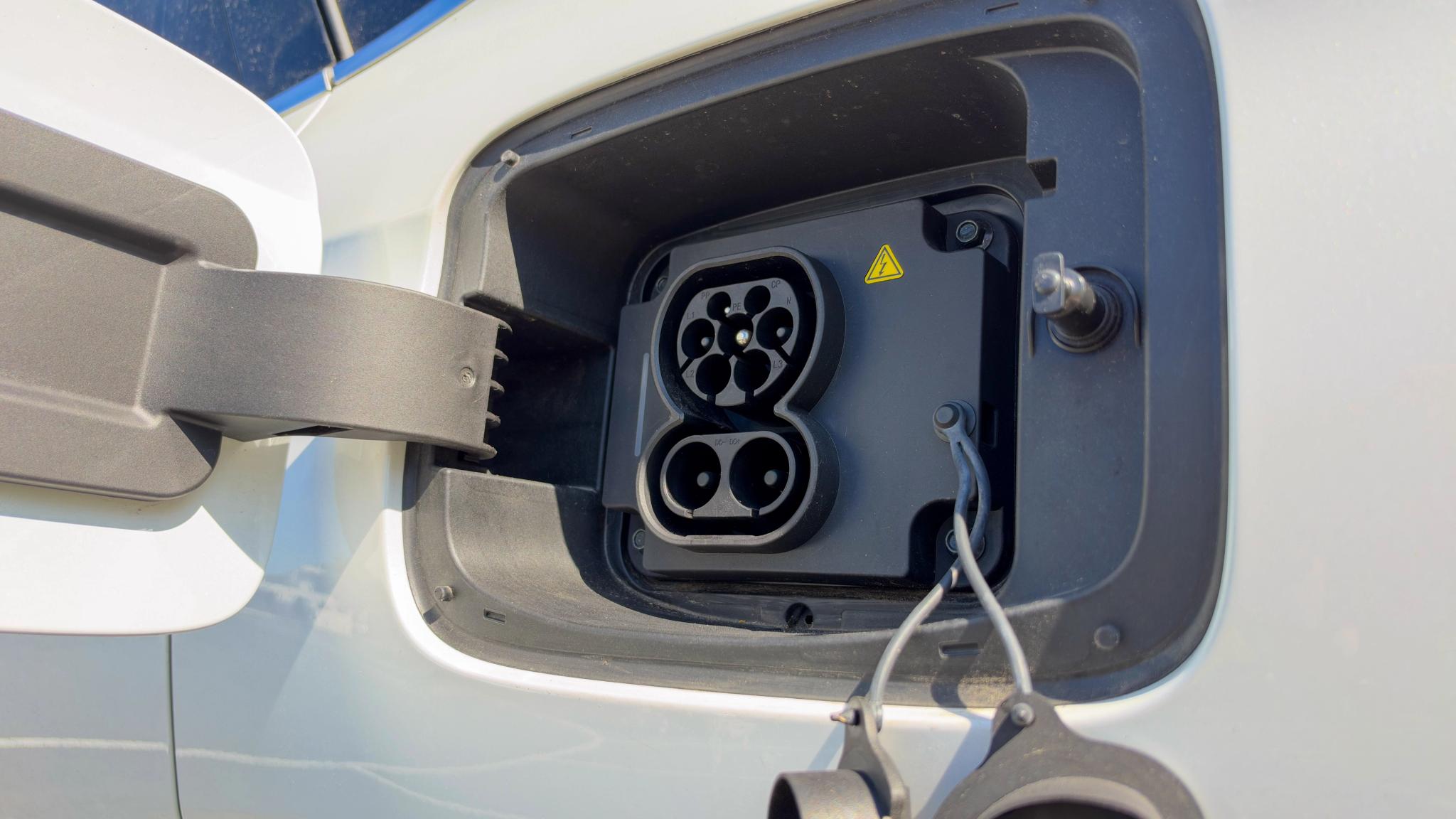
The Ultimate also has a big advantage when it comes to charging. Both grades accept 6.6kW AC, enough to fill overnight on a wallbox. On DC, the Ultimate takes up to 71kW and goes from 30 to 80% in under 20 minutes, while the Elite tops out at 41kW.
Chery’s capped-price servicing runs for seven years on the same schedule as the Tiggo 8 Super Hybrid, and covers both grades. Most visits are cheap, but the sixth-year service is a big one, so budget for it. Roadside assistance is included for up to seven years when you service with Chery. Mitsubishi offers a longer 10-year warranty on the Outlander PHEV, but it depends on servicing at its dealers.
Servicing costs
| Service | Interval | Cost |
| Service 1 | 12 months | 15,000km | $299 |
| Service 2 | 24 months | 30,000km | $349 |
| Service 3 | 36 months | 45,000km | $299 |
| Service 4 | 48 months | 60,000km | $349 |
| Service 5 | 60 months | 75,000km | $299 |
| Service 6 | 72 months | 90,000km | $1291 |
| Service 7 | 84 months | 105,000km | $288 |
| Total (7 years) | $3174 |
Servicing and Warranty
| Servicing and Warranty | Chery Tiggo 9 |
| Service interval | 12 months | 15,000km |
| Servicing cost (7 years) | $3174 |
| Average annual cost | $453 |
| Vehicle warranty | 7 years | Unlimited km |
| Battery warranty | 8 years | Unlimited km |
Is the Tiggo 9 safe?
The Tiggo 9 hasn’t been tested by ANCAP yet. Chery’s recent local models, including the Tiggo 8 Super Hybrid, have scored five stars, but until this one is tested that’s an assumption, not a result.
Both grades get 10 airbags, including a front-centre airbag and a driver’s knee airbag. The curtain airbags don’t extend to the third row, and together with the missing top tethers, that’s the Tiggo 9’s biggest safety weakness.
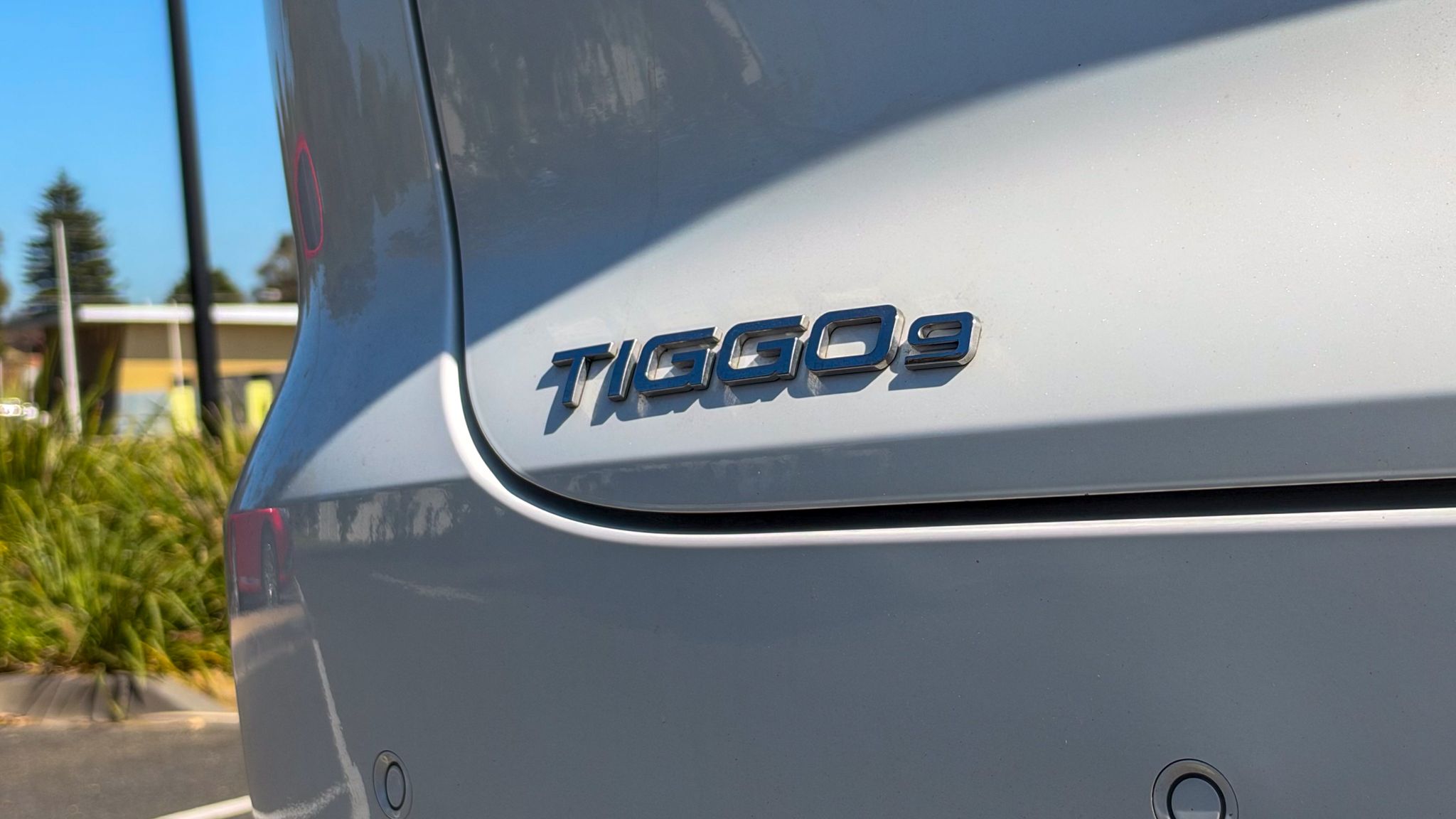
The active safety list is comprehensive in both grades: AEB with junction and vulnerable road user detection, adaptive cruise with traffic jam assist, lane-keep assist, blind-spot monitoring, rear cross-traffic alert with braking, safe exit warning, driver monitoring, speed sign recognition and a 360-degree camera. The Ultimate adds automatic parking.
The calibration is a big step up on older Chery models. The driver monitor still occasionally chimes for no obvious reason, but the overspeed alert gives you a few km/h of leeway, and you won’t spend every drive digging through menus to switch things off.
What are the main competitors to the Tiggo 9?
The BYD Sealion 8 starts at $56,990 before on-roads for the Dynamic FWD, with the AWD versions from $63,990. It’s 24cm longer, which shows in a more usable third row, and the AWD’s 359kW makes it quicker still. The Tiggo 9 Ultimate counters with a lower price than the Dynamic AWD, a richer cabin and a longer warranty.
The Hyundai Santa Fe Hybrid starts at around $58,000 before on-roads and is the one to buy if all seven seats get used every week. Its boxy body delivers a third row adults can actually sit in, and it’s more polished on the road. It can’t plug in, though, so it can’t match the Tiggo 9 for fuel-free commuting.
The Mitsubishi Outlander PHEV starts at $58,990 before on-roads for the five-seat ES, but the seven-seat Aspire is $66,790. It has a proven plug-in system and a 10-year conditional warranty. The Tiggo 9 Ultimate is cheaper than the Aspire on the road, with far more power and electric range.
The Chery Tiggo 8 Super Hybrid starts at $45,990 driveaway and is the obvious choice if the budget is tight. It has a five-star ANCAP rating and the same ownership package, but its cabin isn’t as plush and its third row is just as cramped. If you’re leaning towards the Tiggo 9 Elite, drive both.
If the third row is for occasional use, I’d take the Tiggo 9 Ultimate over the Sealion 8 and put the savings towards a home charger.
Should I buy the Tiggo 9?
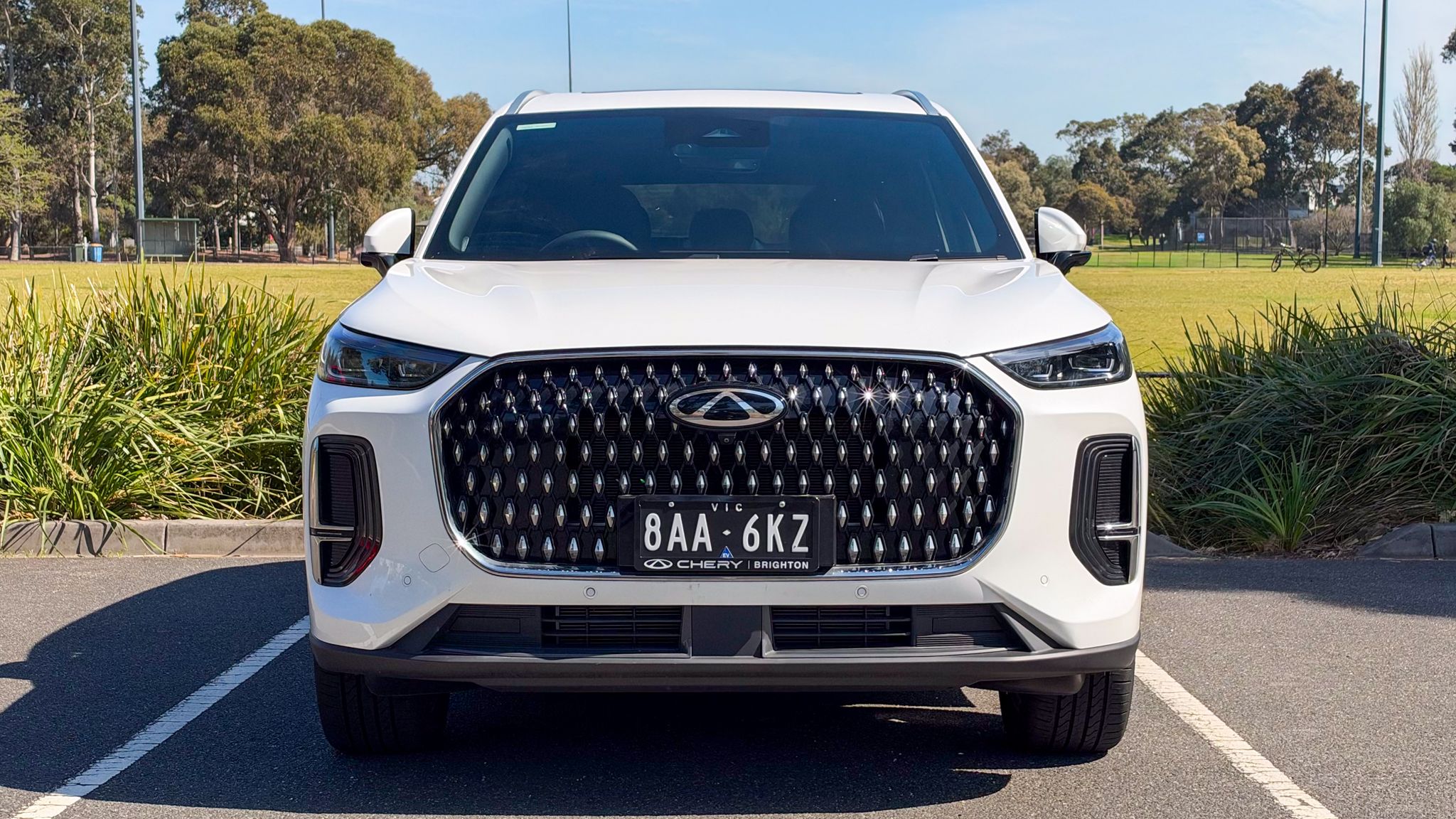
Yes, if you see the third row as a bonus rather than a requirement. Both grades give families genuine EV commuting, a cabin that feels far more expensive than it is and a long warranty, for thousands less than the obvious alternatives.
The Elite suits buyers with shorter daily drives who don’t need all-wheel drive, and it’s still a lot of car for $52,990 before on-roads. Just compare it closely with the Tiggo 8 Super Hybrid, which is cheaper, offers similar electric range and already has a five-star ANCAP rating.
The Ultimate is the one I’d buy. The extra $7000 gets you nearly double the electric range, faster charging, all-wheel drive and the luxury features that make the Tiggo 9 feel special.
If you need seven seats every day, look at the Santa Fe Hybrid or Sealion 8 instead. The Tiggo 9’s third row isn’t just tight; it has no top tethers and sits outside the curtain airbag coverage, which is a real shortcoming in a car sold as a family seven-seater.
From $52,990 before on-roads for the Elite and $59,990 for the Ultimate, I’d struggle to find another large SUV with this much equipment, power and electric range.
VerdictThe Beep Verdict
Rob Leigh
Co-founder & Director
Rob Leigh is Co-founder and Director of The Beep based in Melbourne, Australia. He has 15+ years inside a major automotive OEM, specialising in product planning, pricing and vehicle strategy.
About Author