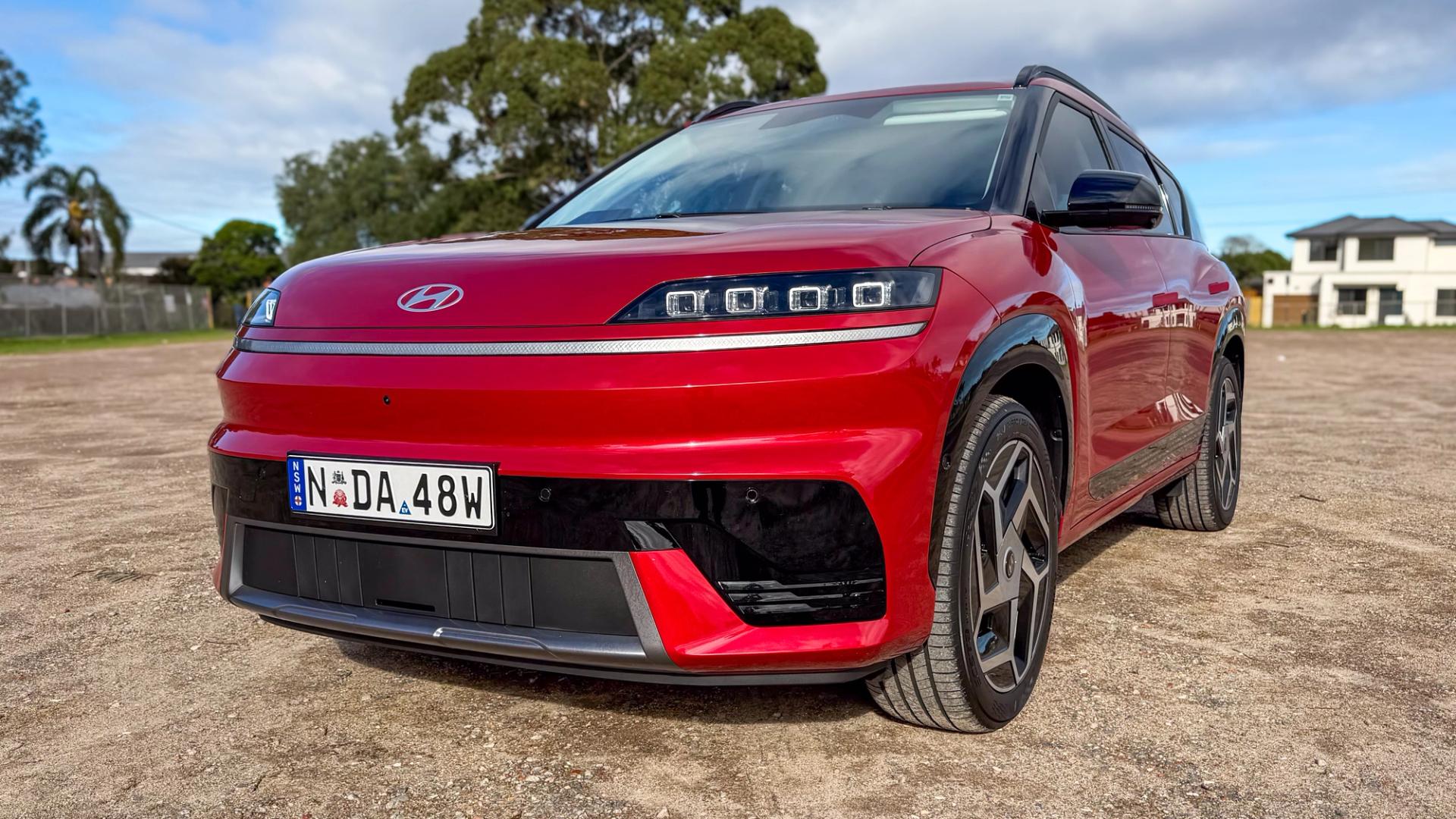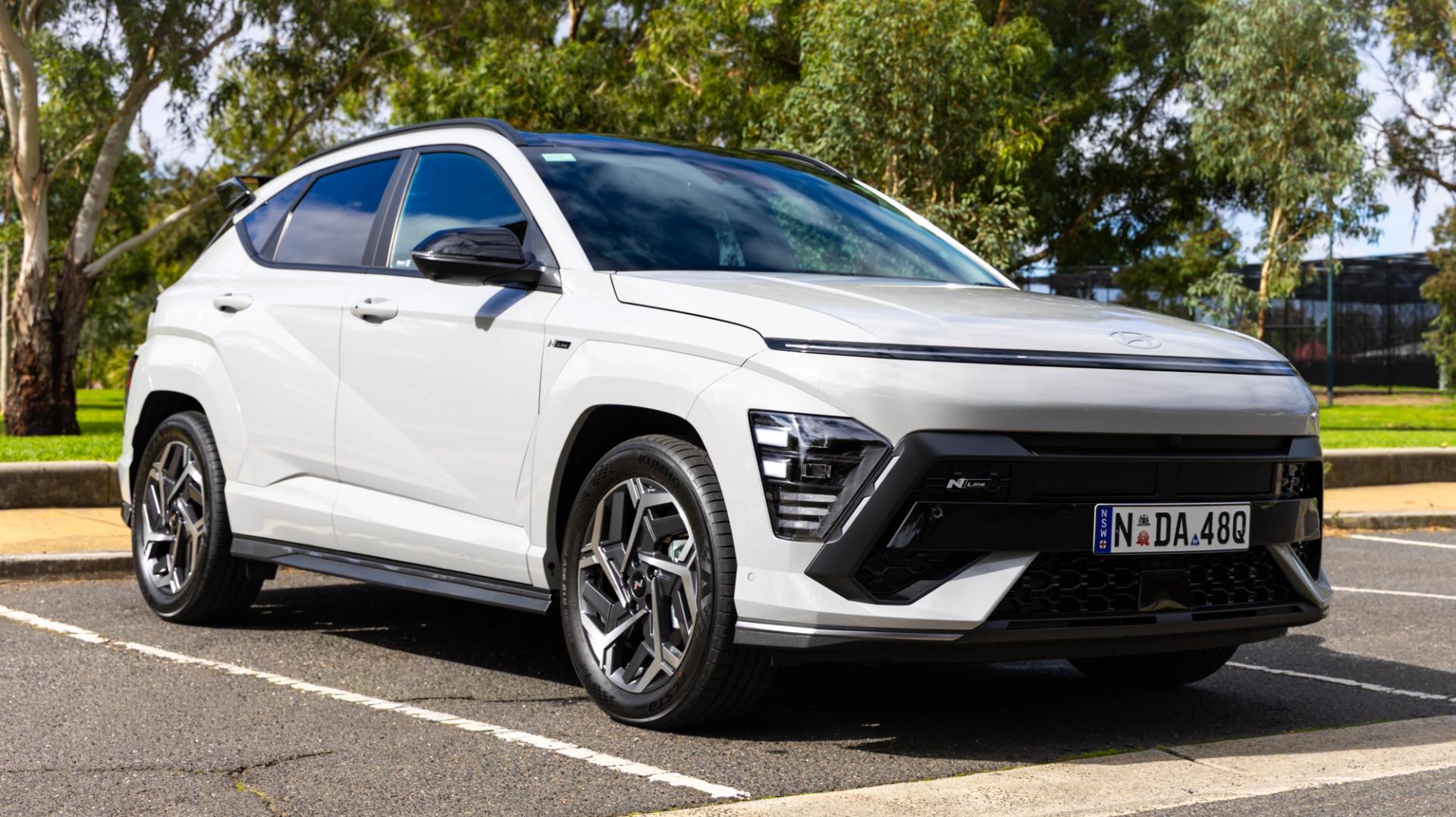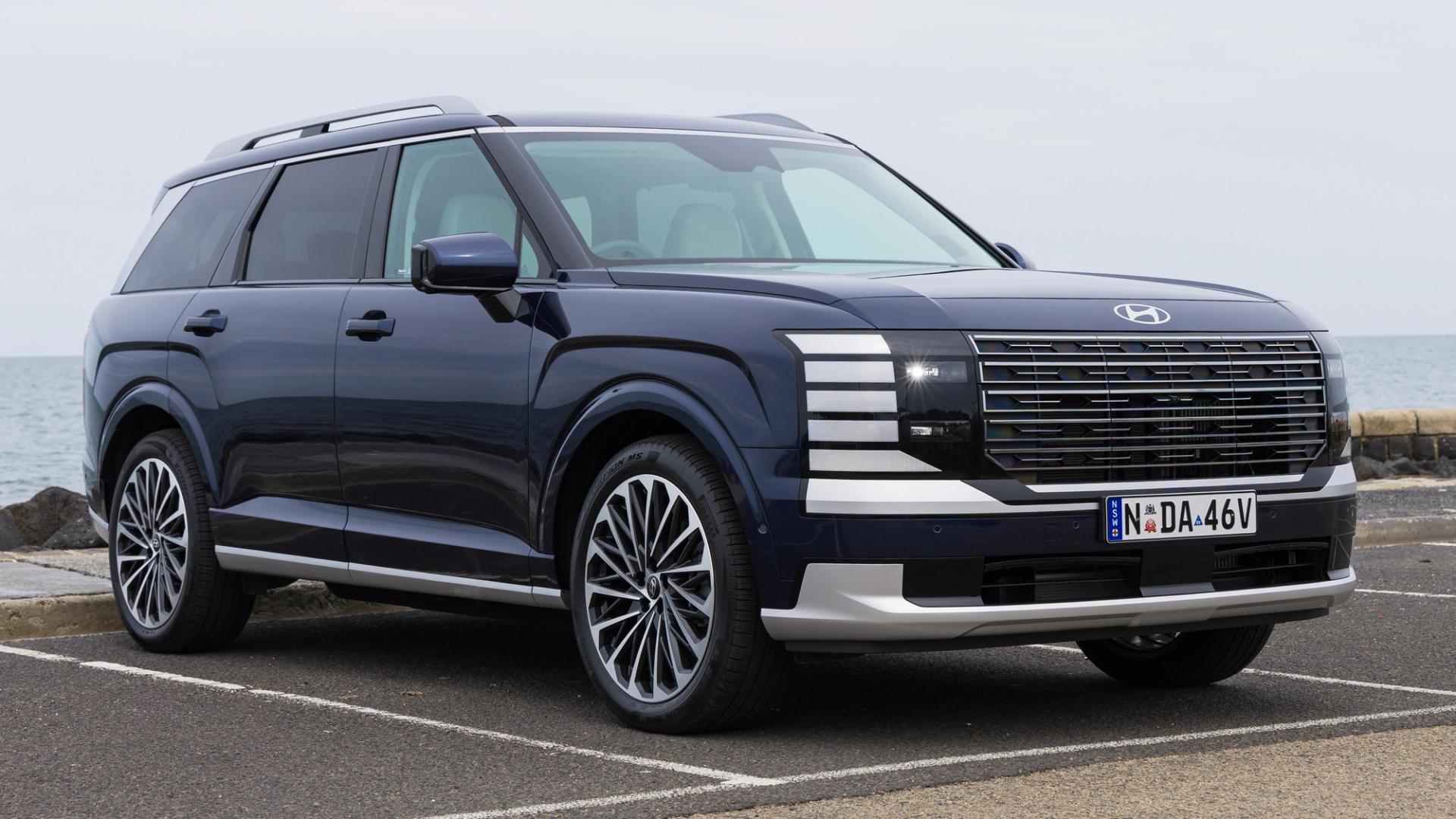
2026 Hyundai Santa Fe Hybrid review
The Santa Fe Hybrid is still my pick of the seven-seat SUVs. It’s spacious, comfortable, economical and packed with clever features that make family life easier.

Rob Leigh
Pros
- Huge, clever cabin with a third row adults can use
- Punchy, efficient hybrid that suits a big SUV
- Rides and steers better than its size suggests
Cons
- Overspeed and driver-monitor alerts still nag
- Short 10,000km service intervals
- Rear styling still divides opinion
Our verdict
There’s an enormous amount of room inside, the third row is actually useful, and the hybrid delivers plenty of performance without drinking too much fuel. It also gets the details right, from the full-size spare to a conventional six-speed auto that feels more natural than the CVT in its main Toyota rival. The catches are nagging driver alerts and a rear end I still can’t warm to.
What does the Santa Fe Hybrid cost in Australia?
The Santa Fe Hybrid starts at $57,650 before on-road costs, although Hyundai has been offering driveaway deals that make it considerably cheaper. The Elite is currently advertised in the low $70,000s driveaway, while the seven-seat Calligraphy we tested is around $10,000 more. The six-seat version costs another $500.
All-wheel drive adds $3,000 to the entry grade, while the Elite and Calligraphy are AWD only. The Santa Fe is also sold with a 2.5-litre turbo petrol engine.
Even the base Hybrid 2WD gets twin 12.3-inch screens, wireless Apple CarPlay and Android Auto, dual-zone climate control, a 360-degree camera, a powered tailgate and a 10-way power driver’s seat. The Elite adds leather, Bose audio, twin wireless chargers and a heated steering wheel. The Calligraphy layers on Nappa leather, a dual sunroof, a head-up display, ventilated and memory front seats and a UV sterilising tray.
The Toyota Kluger now starts at $62,410 before on-road costs, and every version is hybrid and AWD. The Santa Fe Hybrid AWD undercuts it on list price and offers a more modern cabin with an impressive amount of standard equipment.
| Specifications | Hybrid 2WD | Hybrid AWD | Hybrid Elite | Hybrid Calligraphy (tested) |
| Price excluding on-roads | $57,650 | $60,650 | $67,150 | $77,150 |
| Powertrain | 1.6L turbo hybrid | 1.6L turbo hybrid | 1.6L turbo hybrid | 1.6L turbo hybrid |
| Power | Torque | 172kW | 367Nm | 172kW | 367Nm | 172kW | 367Nm | 172kW | 367Nm |
| Transmission | 6 speed auto | 6 speed auto | 6 speed auto | 6 speed auto |
| Drivetrain | FWD | AWD | AWD | AWD |
| Fuel use (claimed) | 5.6L/100km | 5.6L/100km | 5.6L/100km | 5.6L/100km | 7.5L/100km (tested) |
| Braked towing | 1650kg | 1650kg | 1650kg | 1650kg |
| ANCAP | Five stars (2024) | Five stars (2024) | Five stars (2024) | Five stars (2024) |
| Warranty | 7 years | Unlimited km | 7 years | Unlimited km | 7 years | Unlimited km | 7 years | Unlimited km |
View Santa Fe driveaway pricing and specifications →
What does the Santa Fe Hybrid look like?
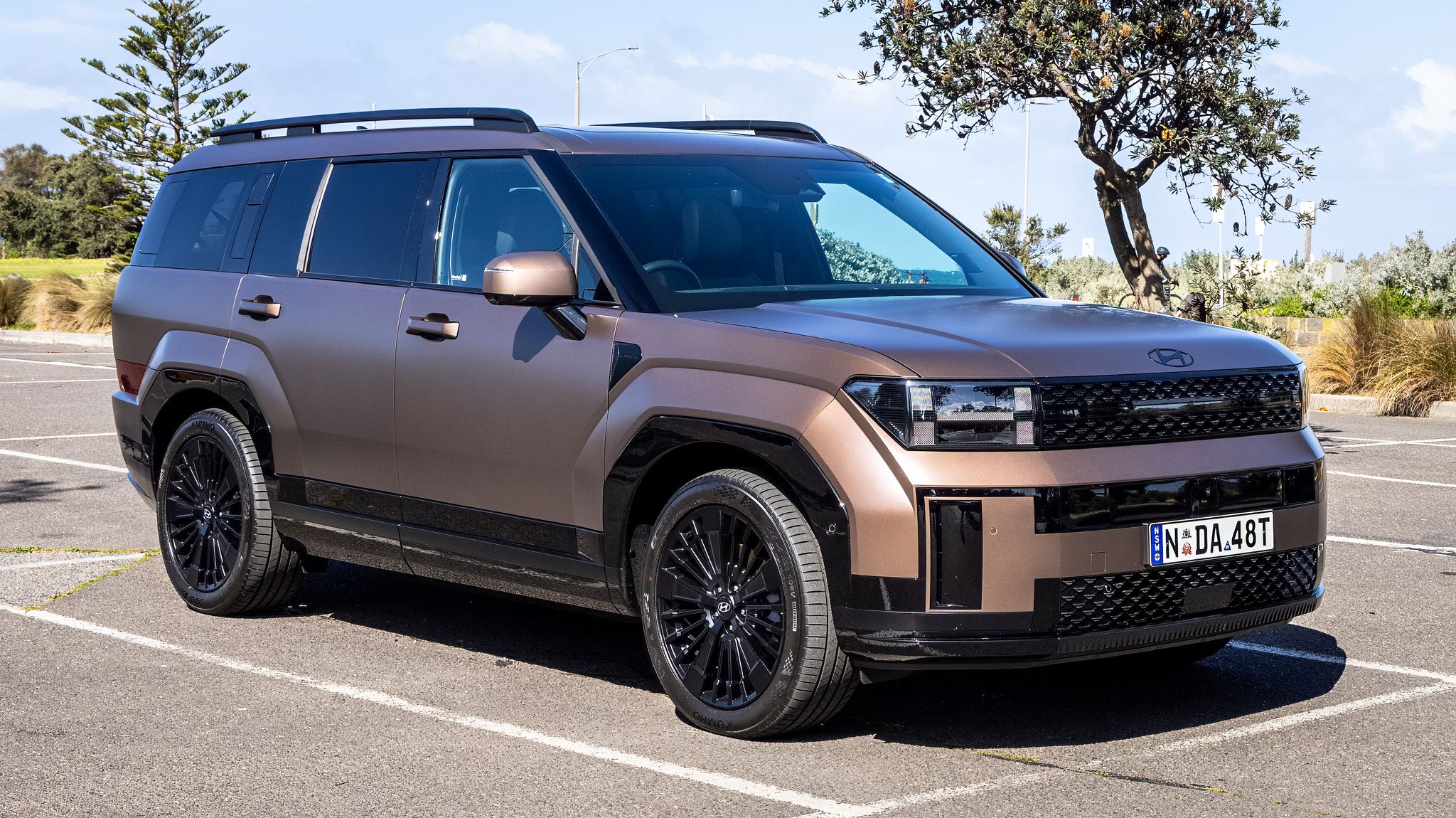
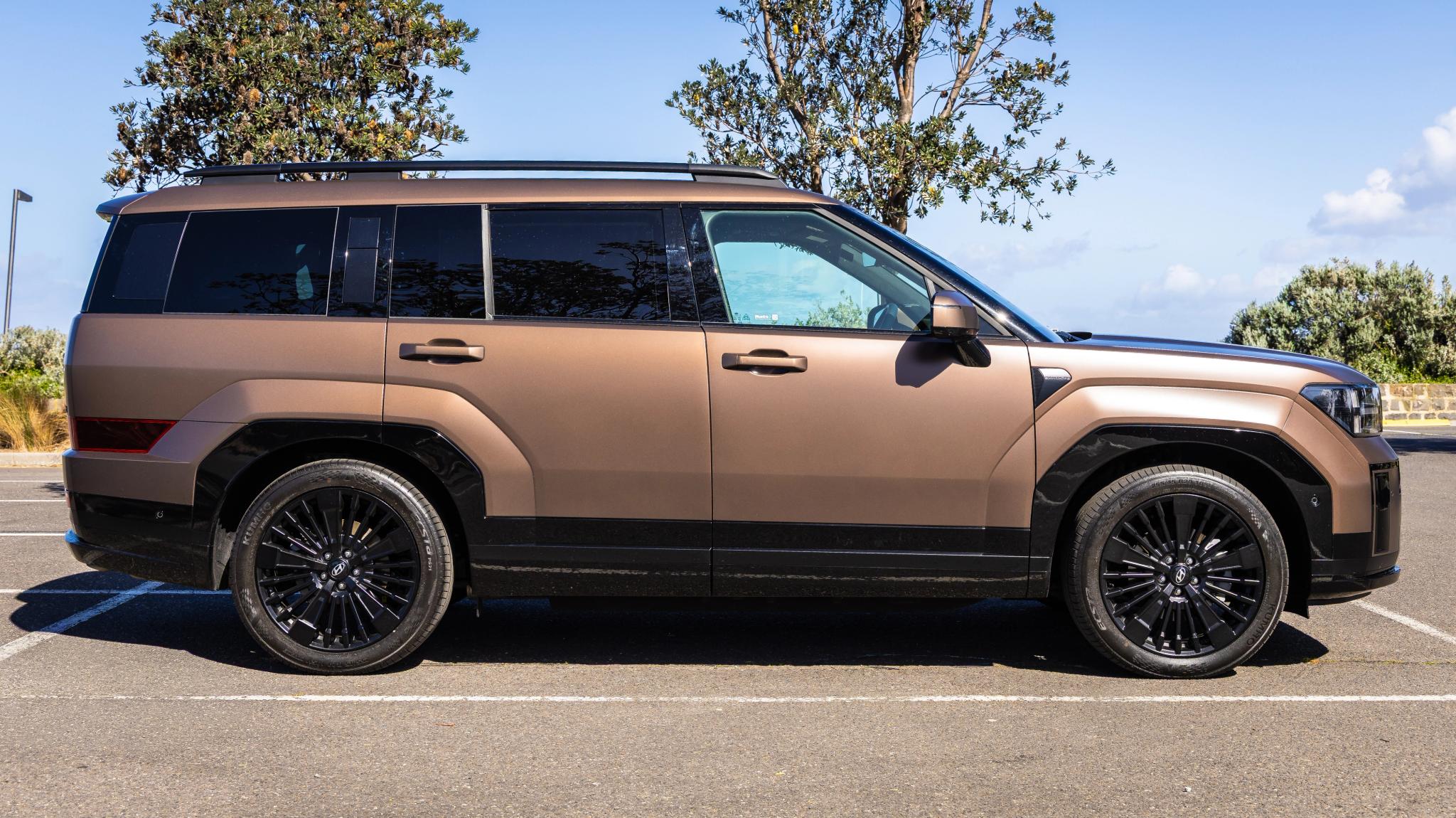
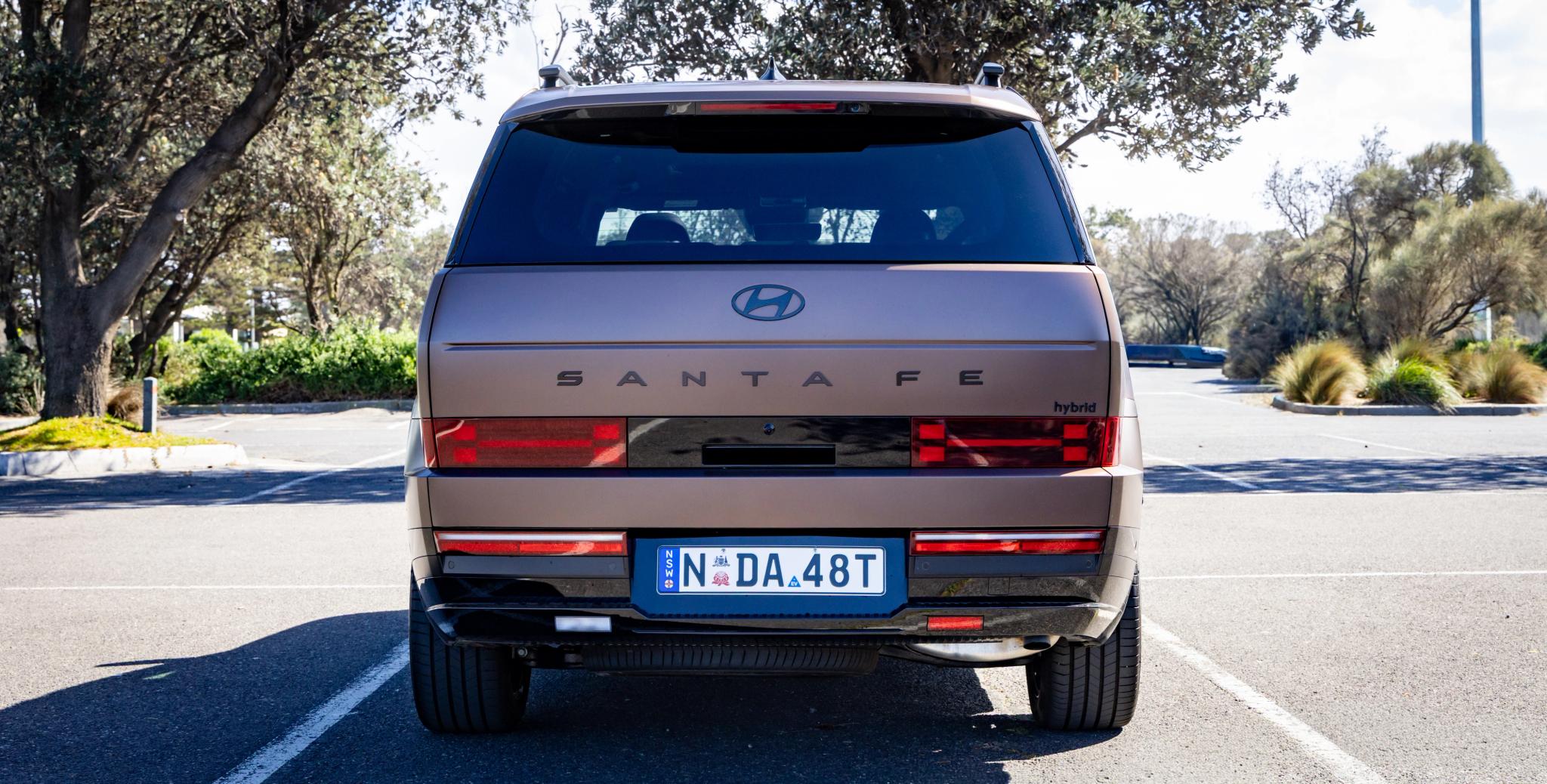
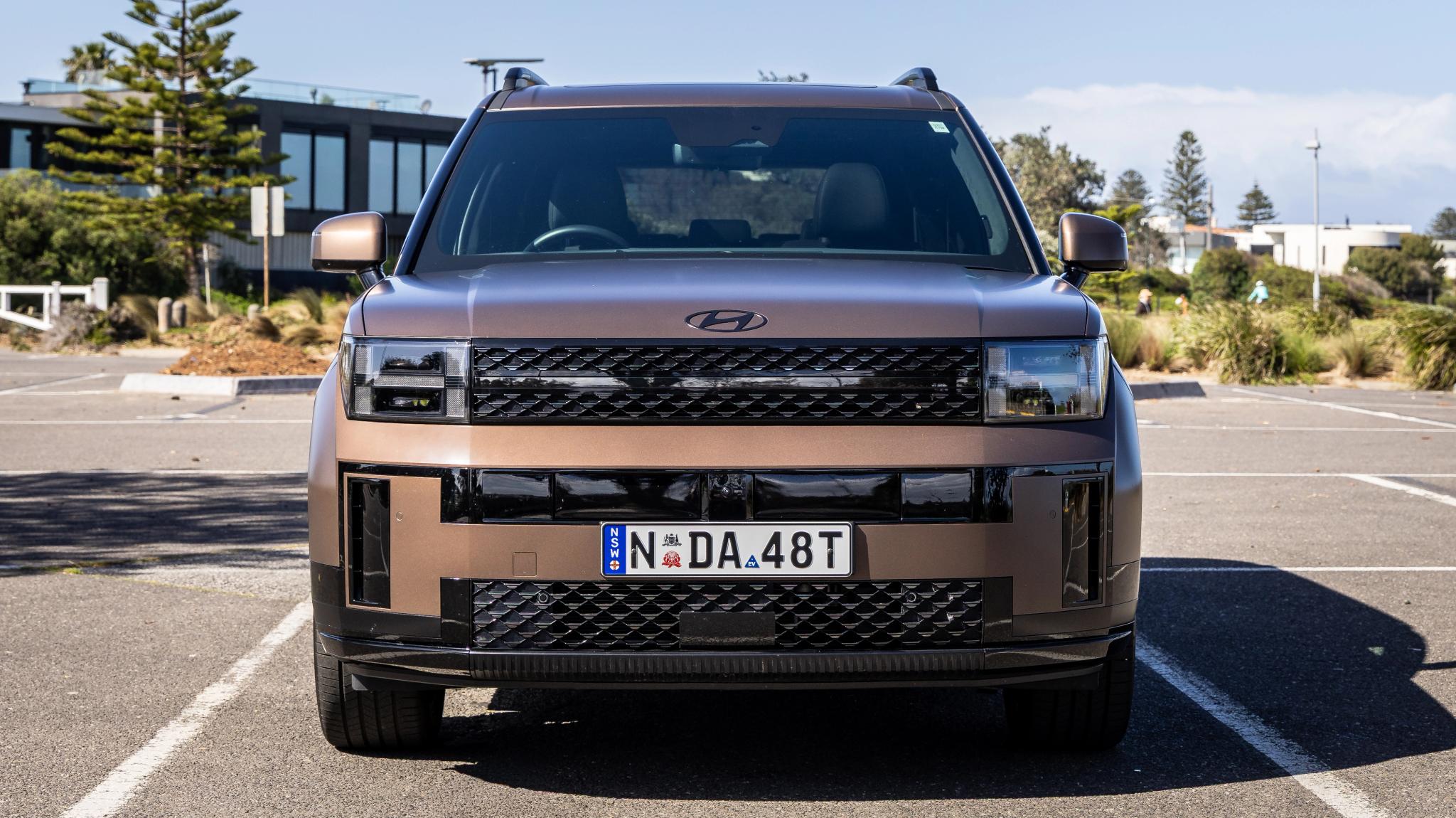
Nothing else in the class looks like it. The Santa Fe is a big, square-shouldered box with flat surfaces and a near-vertical tail. There are Hyundai H motifs everywhere, from the headlights and tail-lights to details inside the cabin.
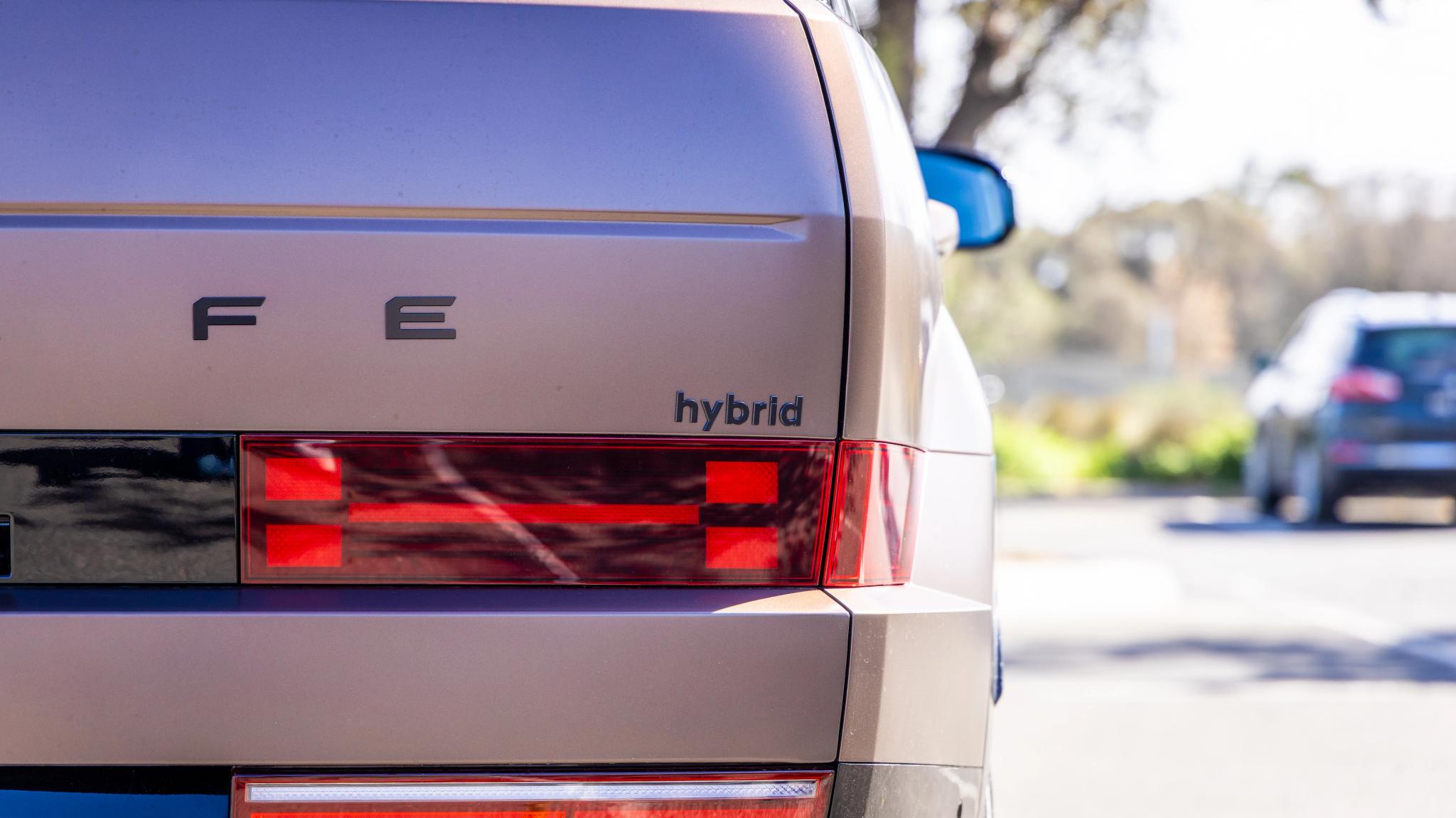
The front end has aged well and looks expensive, particularly in darker colours on the 20-inch wheels fitted from the Elite up. The rear is a different story. Two years on, I’m still not sure about it, and the low-set tail-lights make the back look heavy and awkward from most angles.
The boxy shape pays off inside, where there’s loads of headroom and far more usable space than you’d expect.
What is the Santa Fe Hybrid like inside?
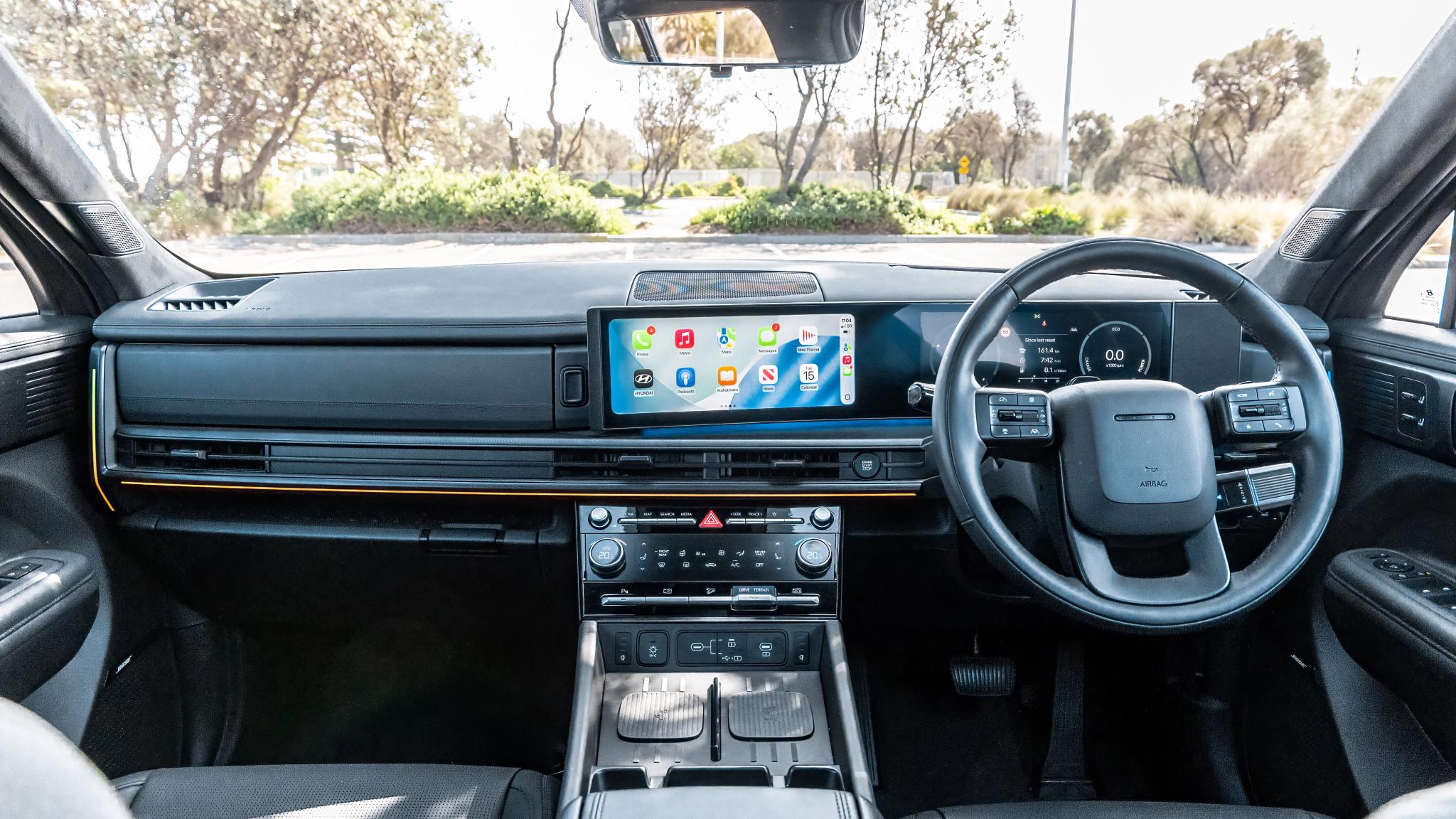
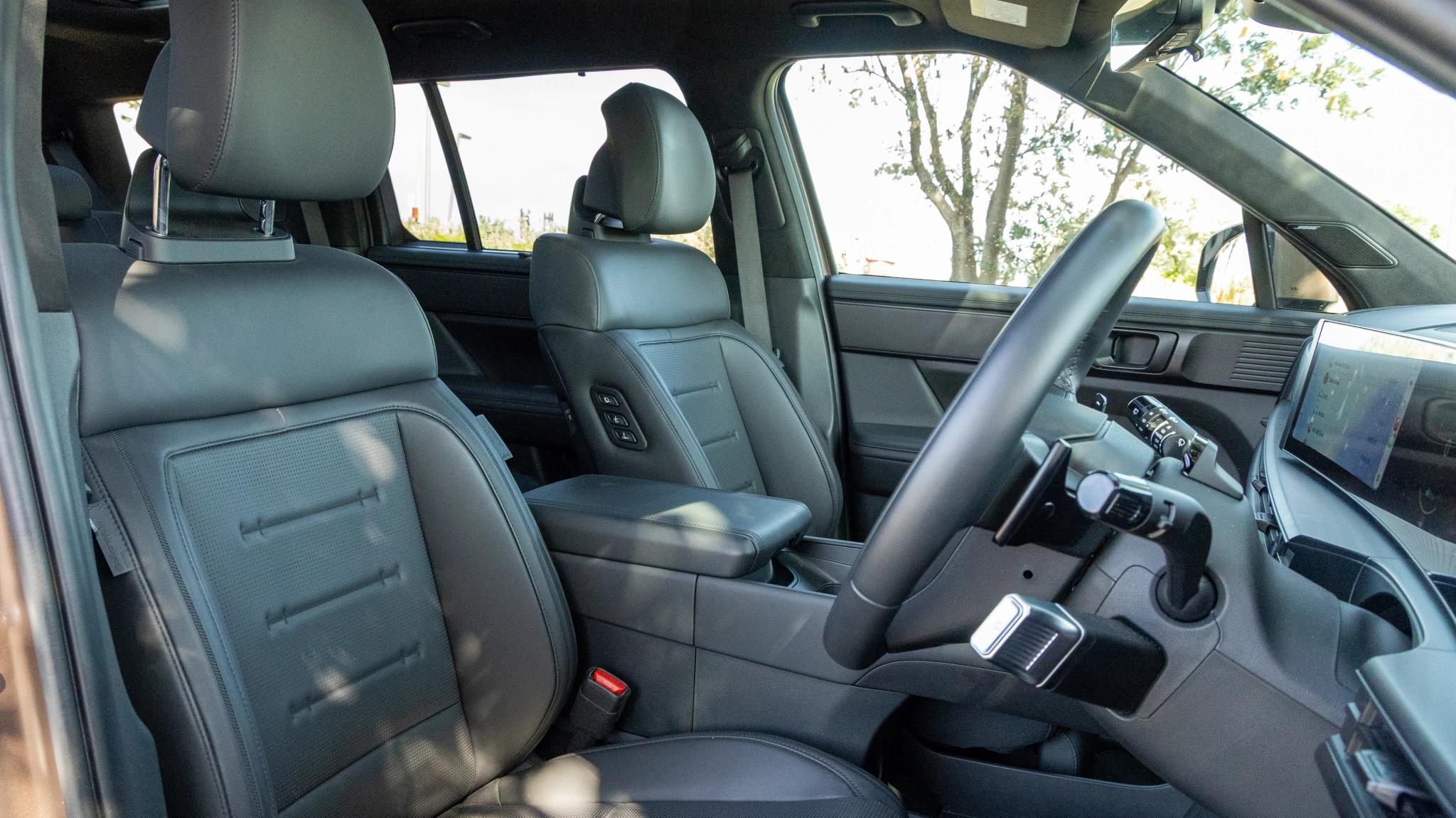
I reckon the interior is the best thing about the Santa Fe. A single curved panel spans the dash and houses both 12.3-inch screens, and Hyundai’s software is quick, logical and easy to read on the move. Phone mirroring connects without fuss.
Moving the drive selector to the steering column frees up the console for a wide bridge with two phone pads, big cupholders and a deep tray underneath. The armrest lid opens from either end, so second-row passengers can get in without bothering the driver.
A second glovebox sits high in the dash. You might not notice these things during a quick test drive, but they’re features you’ll use every day.
The Elite is where the cabin starts to feel upmarket with leather seats and plenty of soft-touch surfaces. There are a few hard plastics lower down, but nothing feels cheap. The Calligraphy adds Nappa leather and a choice of interior colours, but the Elite doesn’t feel like a big step down.
How practical is the Santa Fe Hybrid?
This is where the Santa Fe pulls clear of most of the class. The second row is roomy with a flat floor, sliding and reclining seats, vents in the pillars and USB-C ports on the front seatbacks. Getting into the third row takes one button press to tilt and slide the second-row seat out of the way.
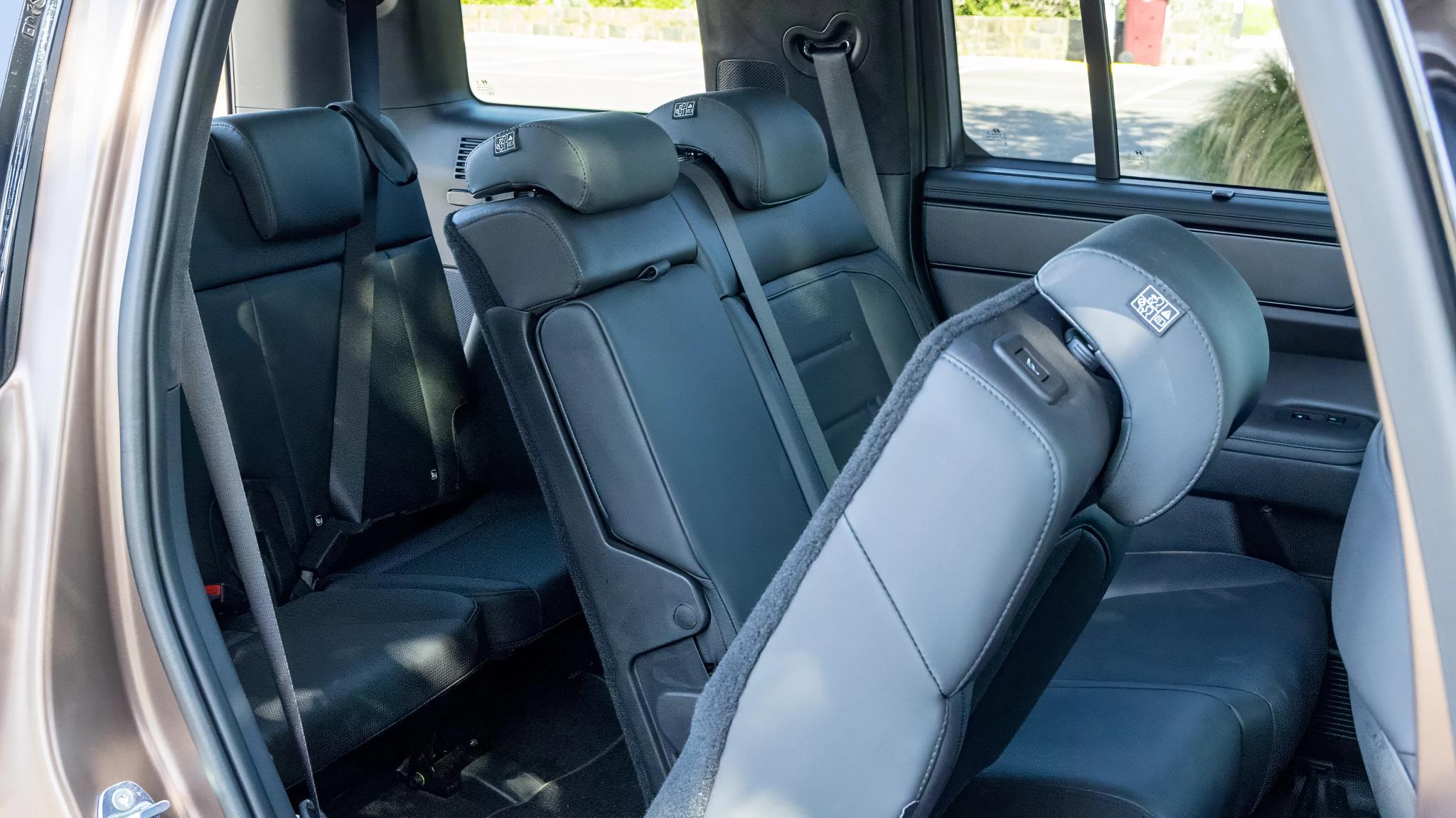
The third row is genuinely usable. Adults won’t want to spend a whole road trip back there, but they’ll manage a run across town without complaint, and kids will be very happy. They get their own vents with fan control, cupholders and USB-C ports, and curtain airbags reach all the way back.
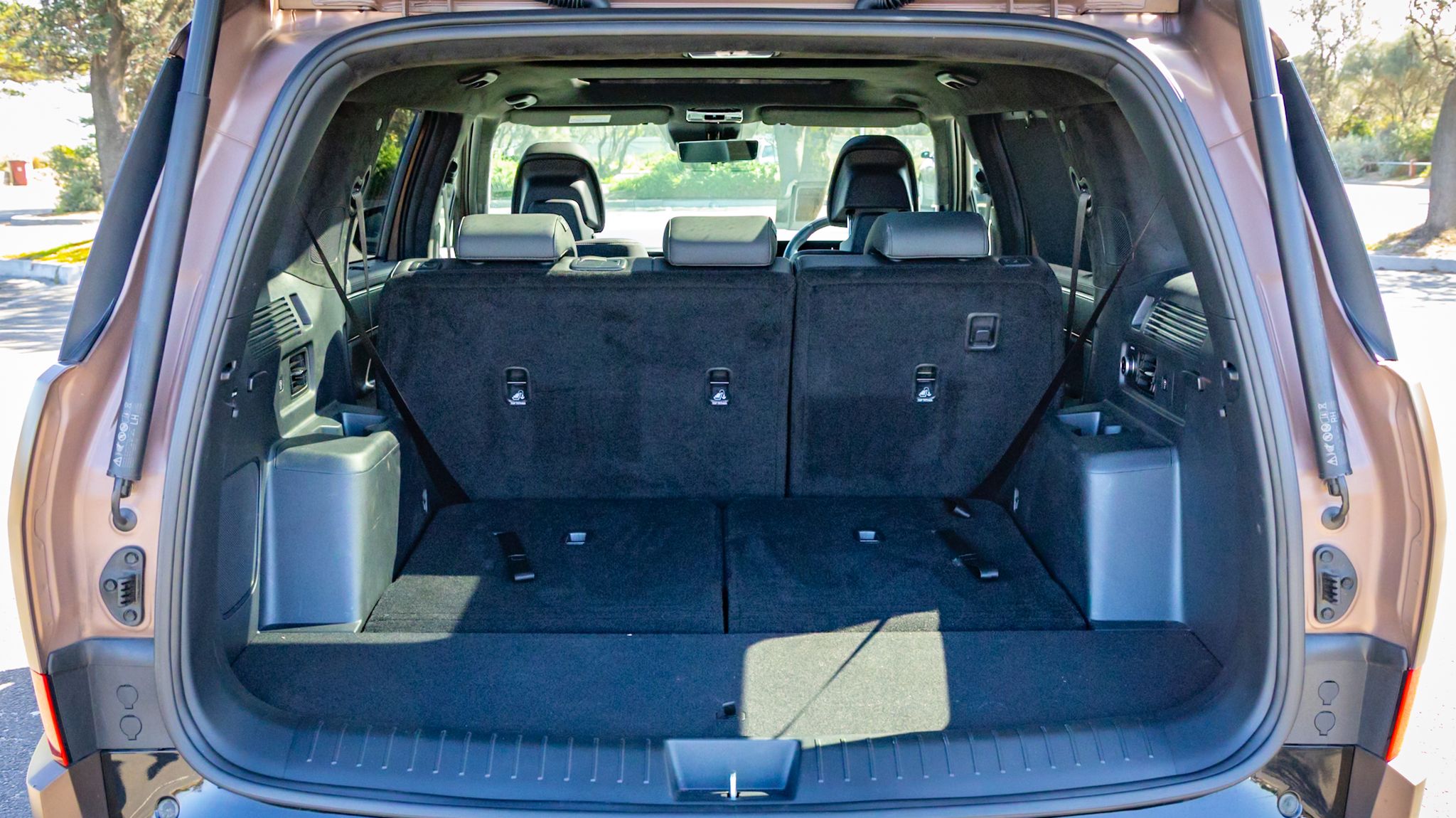
With the third row folded you get 628 litres of boot space, growing to 1949 litres with both rear rows down. The square opening makes loading prams, bikes or flat-pack furniture easy.
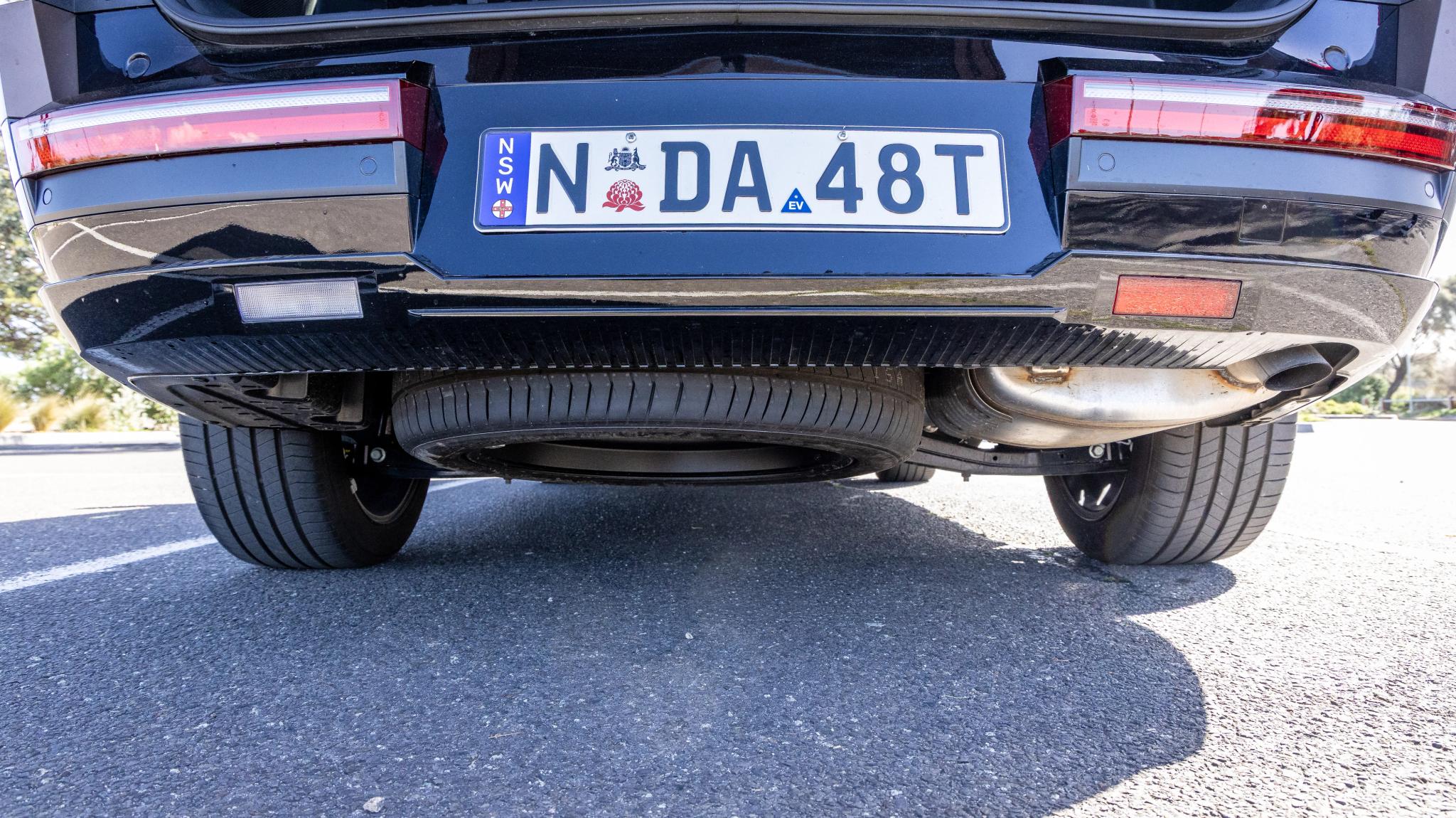
There’s also a full-size spare under the car. Almost every hybrid rival now makes do with a repair kit, and if you’ve ever had a blowout a few hundred kilometres from the nearest tyre shop, you’ll know why this matters.
Towing is rated at 1650kg braked. That covers a box trailer, a small boat or a camper, but buyers with a big caravan should look at something else.
What is the Santa Fe Hybrid like to drive?
Don’t let the 1.6-litre engine put you off. There’s plenty of power here, even with seven people on board. Around town the electric motor fills in the gaps, so it pulls cleanly from a standstill and often glides along without the engine running. Put your foot down and there’s more than enough power for overtaking, although the engine gets a bit noisy.
Hyundai uses a proper six-speed automatic rather than a CVT, and I really like it. It shifts like a normal auto, without the droning revs some hybrids produce when you ask for more pace. You can occasionally feel the system swapping between engine and motor, but it never feels underpowered, even with a full car.
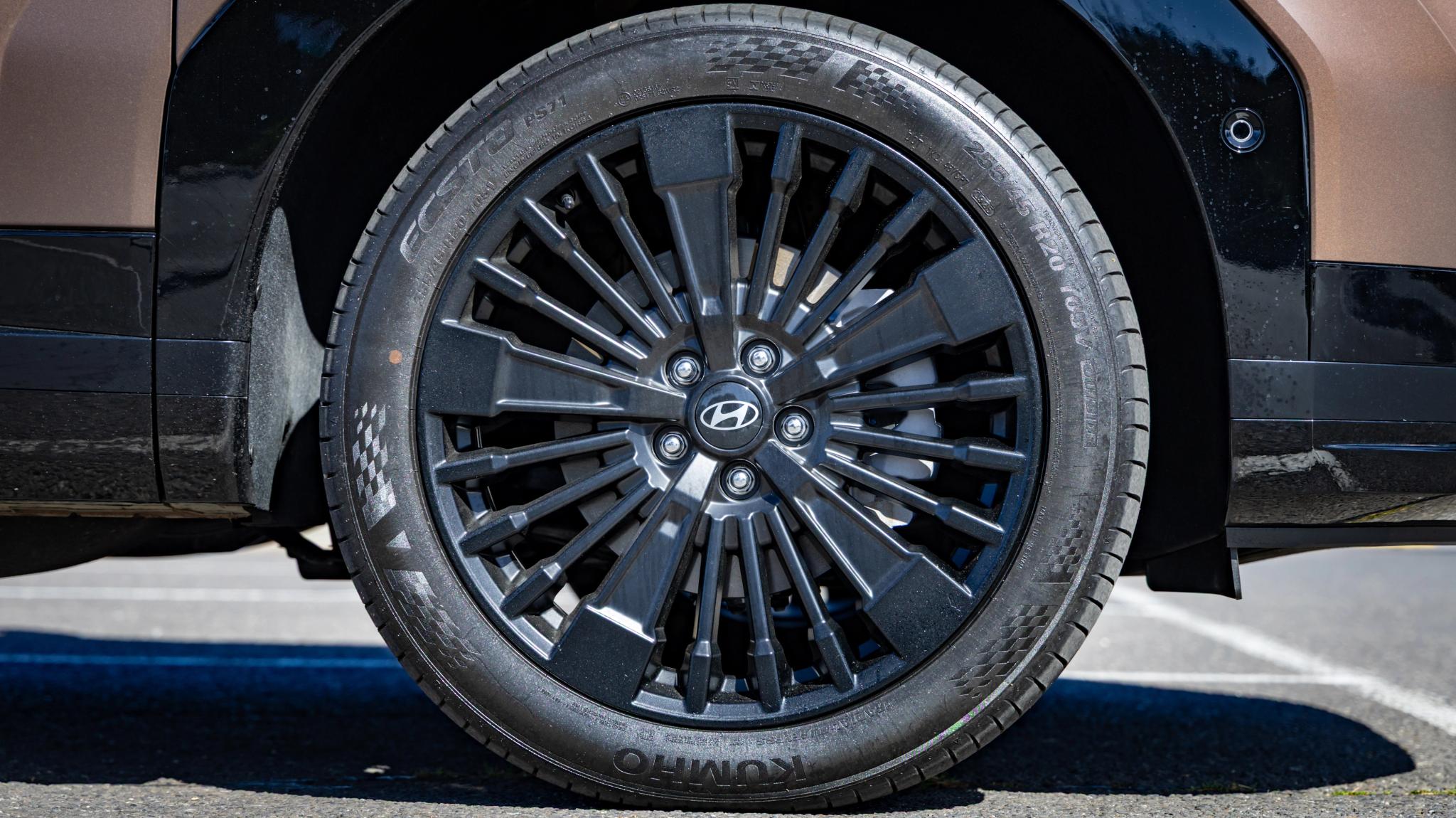
Ride comfort is excellent. It handles Melbourne’s rough suburban roads beautifully and it’s just as comfortable on the highway.
The steering is light, visibility is excellent and there’s surprisingly little body roll through corners. The boxy shape makes it easy to place, so it feels smaller from behind the wheel than it looks from the kerb. For something this big and heavy, it’s remarkably comfortable, and I actually enjoy driving it.
How efficient is the Santa Fe Hybrid?
Hyundai claims 5.6L/100km on the combined cycle. Our Calligraphy AWD returned around 7.5L/100km in mixed driving. That’s a strong result for a two-tonne, seven-seat SUV, especially when you consider how much fuel a conventional petrol engine can use in city traffic.
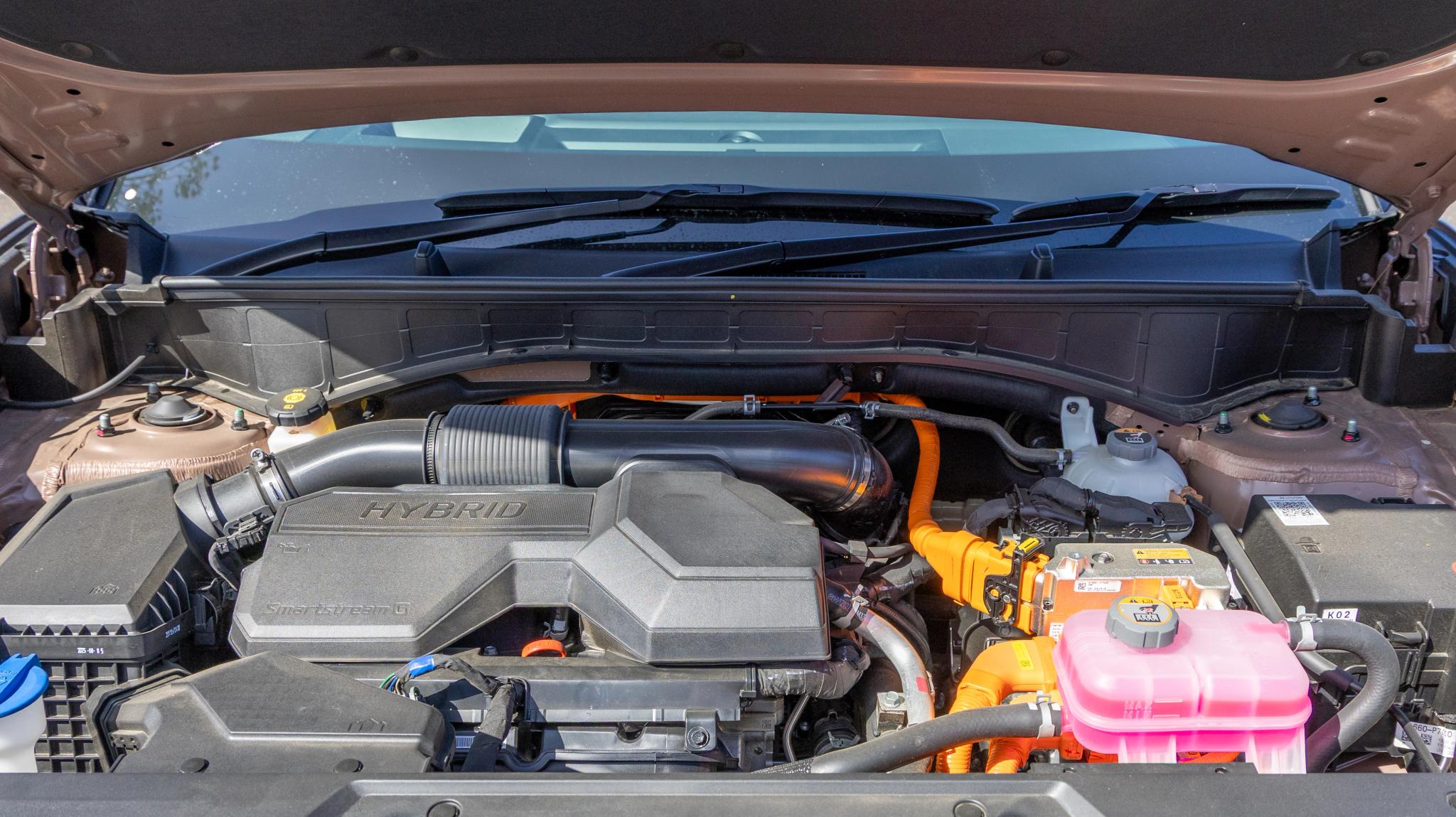
It runs on regular 91 unleaded and with a 67-litre tank you’ll comfortably cover 800km between fills, which is impressive for something this big.
| Servicing and Warranty | Santa Fe Hybrid |
| Service interval | 12 months | 10,000km |
| Servicing cost (5 years) | $2415 |
| Average annual cost | $483 |
| Vehicle warranty | 7 years | Unlimited km |
| Battery warranty | 8 years | 160,000km |
The 10,000km interval is shorter than the 15,000km many rivals now offer, so high-mileage drivers will visit the dealer more than once a year. Hyundai now offers a seven-year, unlimited-kilometre warranty, provided you service the car at an authorised Hyundai dealer. Otherwise, the standard five-year warranty applies.
Is the Santa Fe Hybrid safe?
The Santa Fe has a five-star ANCAP rating from 2024 with scores of 84% for adult occupant protection, 86% for child occupant protection, 77% for vulnerable road users and 80% for safety assist. Ten airbags are standard, including curtain coverage for the third row.
Every grade gets autonomous emergency braking with junction and cyclist detection, adaptive cruise, lane-centring, rear cross-traffic assist and a 360-degree camera. The blind-spot camera, which shows a live feed in the driver’s display when you indicate, is the most useful driver aid of the lot.
The overspeed alert and driver-attention monitor are another matter. They chime far too often, and the attention monitor is quick to complain if your eyes leave the road for more than a moment. You can switch off some of the alerts using steering-wheel controls, but they return every time you restart the car, and they’re the most irritating thing about living with the Santa Fe.
What are the main competitors to the Santa Fe Hybrid?
The Toyota Kluger starts at around $62,410 before on-roads. It tows 2000kg, which is 350kg more than the Santa Fe, and it sits higher off the ground for gravel roads and campsite tracks. Toyota’s resale values and huge dealer network are also hard to argue with.
The Kia Sorento uses a version of the same hybrid system, with hybrid grades starting at around $56,380 before on-roads. Its more conventional styling will suit buyers who can’t get past the Santa Fe’s rear. It’s also offered as a plug-in hybrid if you can charge at home.
The Hyundai Palisade starts at around $76,500 before on-roads for the eight-seat Elite. Its 2.5-litre hybrid makes 245kW, so it’s noticeably quicker with a full load, and the third row is roomier again. If you regularly carry adults in every seat, it’s worth the extra money.
The Mazda CX-80 starts at around $56,100 before on-roads, with petrol, diesel and plug-in hybrid options. It can tow up to 2500kg depending on the engine, and its cabin feels just as premium as the Santa Fe’s. The plug-in hybrid can also cover short daily trips on electricity alone.
If it were my money, I’d still buy the Santa Fe Hybrid, but anyone towing a heavy van should drive the Kluger or CX-80 first.
Should I buy the Santa Fe Hybrid?
Yes. I’ve driven plenty of seven-seat SUVs and few are as comfortable or as easy to live with as this. The bigger question is which grade to choose.
The Hybrid 2WD is all most suburban families need. It has the same cabin, screens, third row and 360-degree camera as the dearer grades, and front-wheel drive is fine on sealed roads. Spend the extra $3,000 on the Hybrid AWD if you tow, head to the snow or regularly drive on gravel.
The Elite costs $6,500 more than the Hybrid AWD, and I’d spend the extra. The leather seats, Bose stereo and other upgrades are worth having, particularly if you’re keeping the car for several years.
The Calligraphy is lovely, even at its current promotional driveaway price, but it only makes sense if you want the six-seat layout with second-row captain’s chairs.
If you need seven seats, put the Santa Fe Hybrid at the top of your shopping list.
VerdictThe Beep Verdict
Rob Leigh
Co-founder & Director
Rob Leigh is Co-founder and Director of The Beep based in Melbourne, Australia. He has 15+ years inside a major automotive OEM, specialising in product planning, pricing and vehicle strategy.
About Author