2026 Toyota RAV4 review
The sixth-generation RAV4 is sharper, smarter and thriftier than the car it replaces, yet the price has climbed and the field has closed in, so the old benchmark now has to fight for its crown.

Rob Leigh
Pros
- Genuinely frugal in the real world and still easy to live with
- Big leap forward in cabin tech with the new Arene system
- Comfortable, practical and reassuringly familiar to drive
Cons
- Price rises of up to around $6,400 depending on grade
- No ANCAP safety rating until later in 2026
- Climate controls have been buried in the touchscreen
Our verdict
The new RAV4 is aimed at buyers who already love the badge and want more of the same, with a better interior and updated technology. It nails efficiency, everyday practicality and ease of use better than almost anything in the class. The problem is the price. Toyota has improved the RAV4 in plenty of areas, but some rivals are now cheaper, roomier and have nicer interiors.
What does the Toyota RAV4 cost in Australia?
There is no shortage of choice. The range spans 11 variants across six grades. Eight are regular hybrids across the GX, GXL, Edge, XSE and Cruiser, and three are plug-in hybrids in XSE and GR Sport trim, with front or all-wheel drive depending on the grade.
Pricing opens at $45,990 before on-road costs for the GX 2WD. The GX AWD is $49,340, the GXL is $48,990 or $52,340 with AWD, the Edge AWD is $55,340 and the XSE AWD hybrid is $58,340. The Cruiser I spent most time in is $56,990 before on-roads in front-drive form, or roughly $62,000 driveaway, with the AWD version at $60,340. Premium paint adds $675.
The plug-in models top the range, from $58,840 for the XSE 2WD to $66,340 for the 227kW GR Sport. Our full RAV4 Plug-in Hybrid review covers whether the extra spend pays off.
Depending on the grade, prices have jumped between roughly $3,000 and $6,400, and the sting is sharpest at the bottom. A base GX now costs more than an entry hybrid Tucson or Sportage, which is a tough pill given the RAV4’s reputation was partly built on hard-nosed value. The price difference between the Cruiser AWD and its main rivals is much smaller, making the more expensive versions easier to justify.
| Specifications | GX 2WD | XSE AWD | Cruiser 2WD (tested) | Cruiser AWD |
| Price excluding on-roads | $45,990 | $58,340 | $56,990 | $60,340 |
| Powertrain | 2.5L hybrid | 2.5L hybrid | 2.5L hybrid | 2.5L hybrid |
| Power | 143kW | 143kW | 143kW | |
| Transmission | e-CVT | e-CVT | e-CVT | e-CVT |
| Drivetrain | FWD | AWD | FWD | AWD |
| Fuel use (claimed) | 4.5L/100km | 4.6L/100km | 4.5L/100km | 4.6L/100km |
| Braked towing | 800kg | 1500kg | 800kg | 1500kg |
| ANCAP | Not yet rated | Not yet rated | Not yet rated | Not yet rated |
| Warranty | 5 years | Unlimited km | 5 years | Unlimited km | 5 years | Unlimited km | 5 years | Unlimited km |
View Toyota RAV4 driveaway pricing and specifications →
What does the Toyota RAV4 look like?
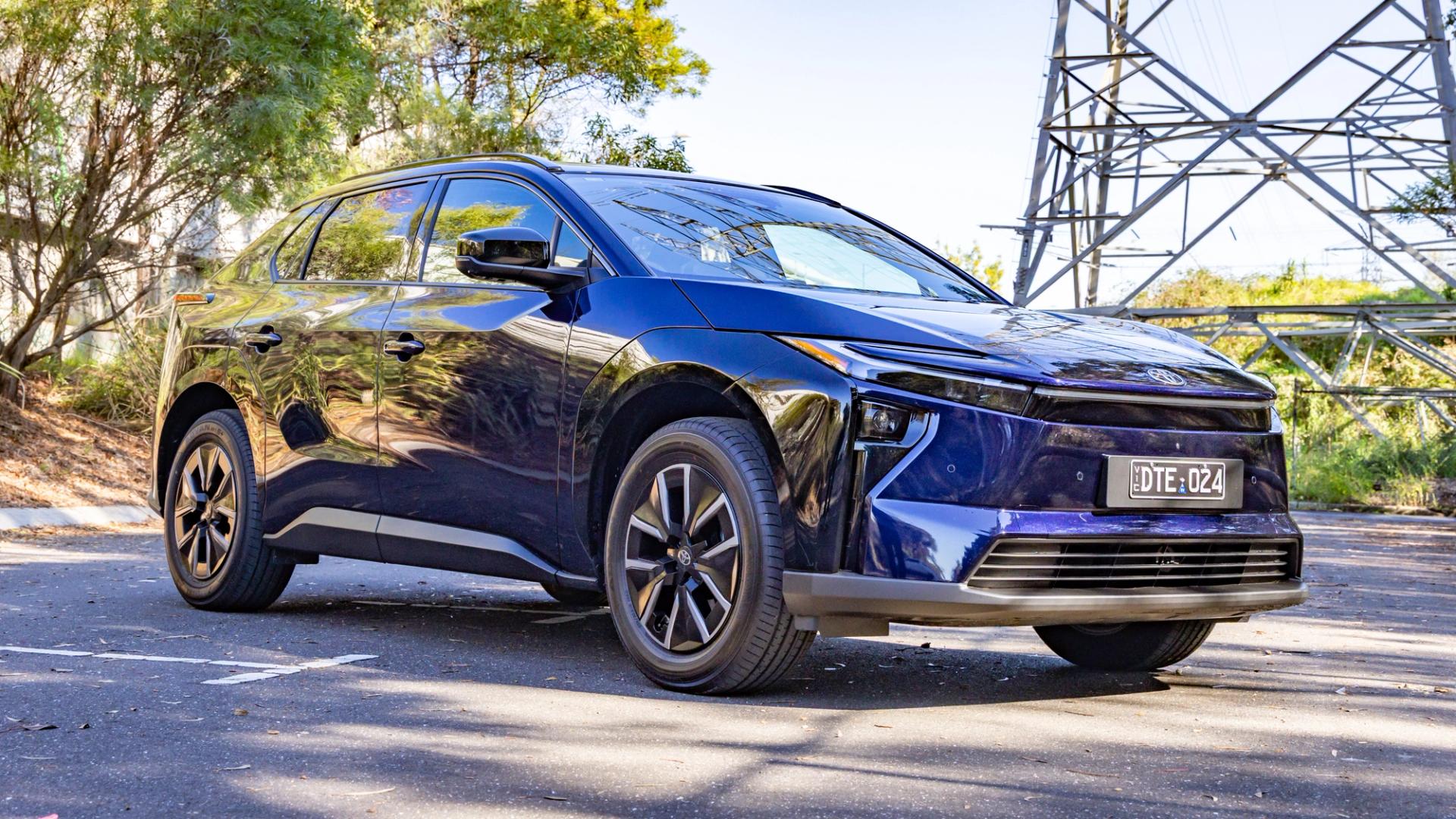
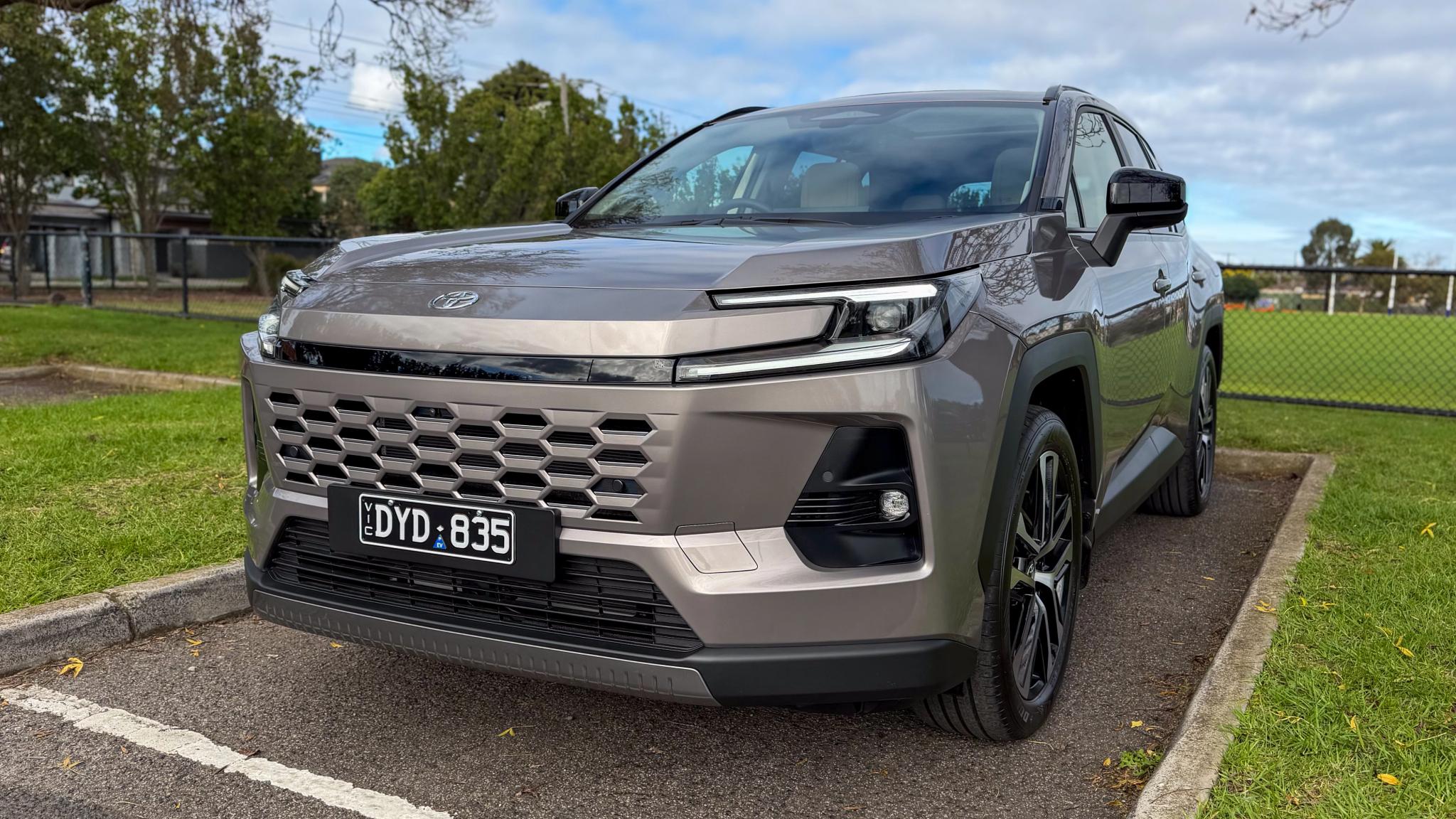
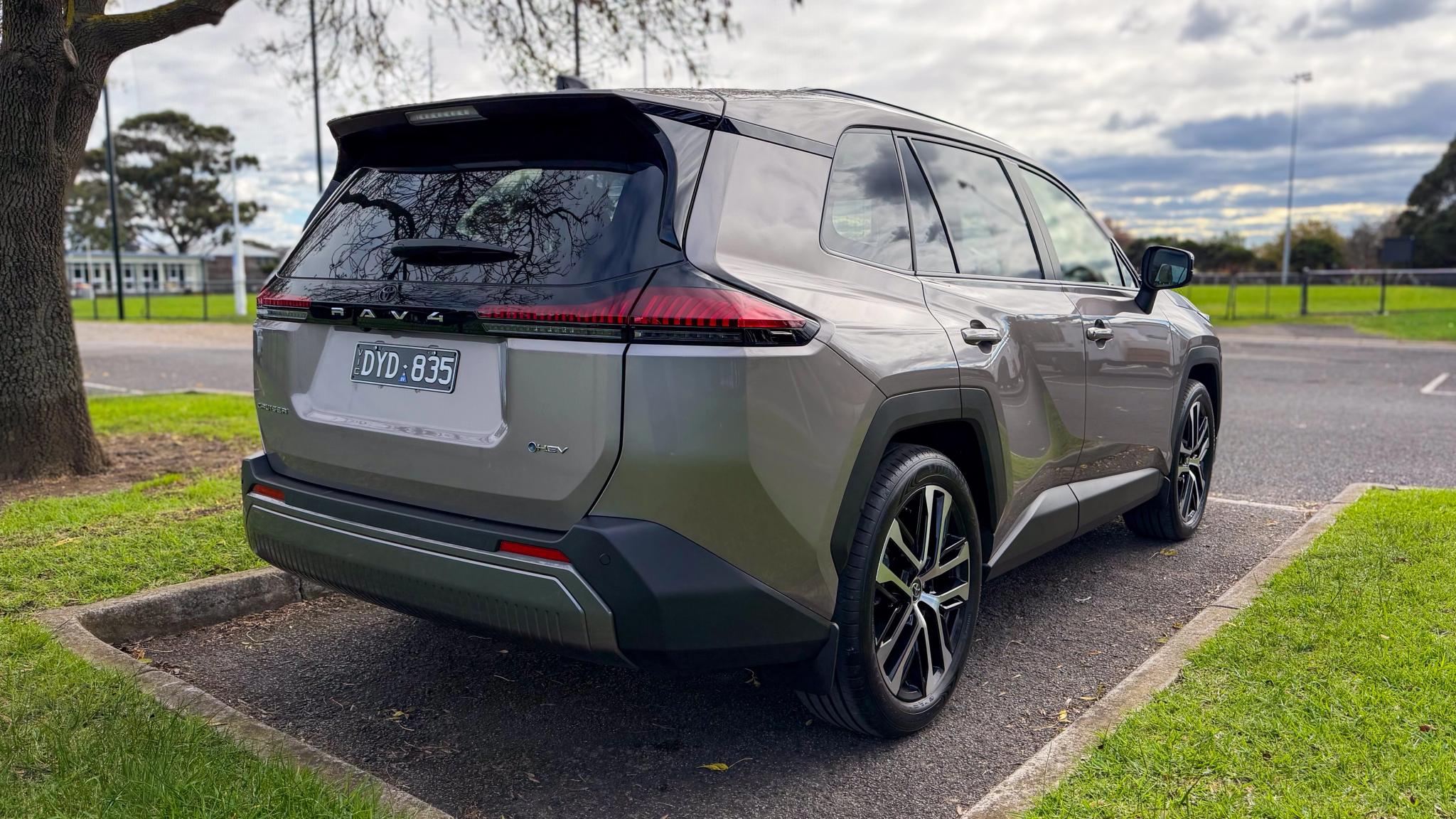
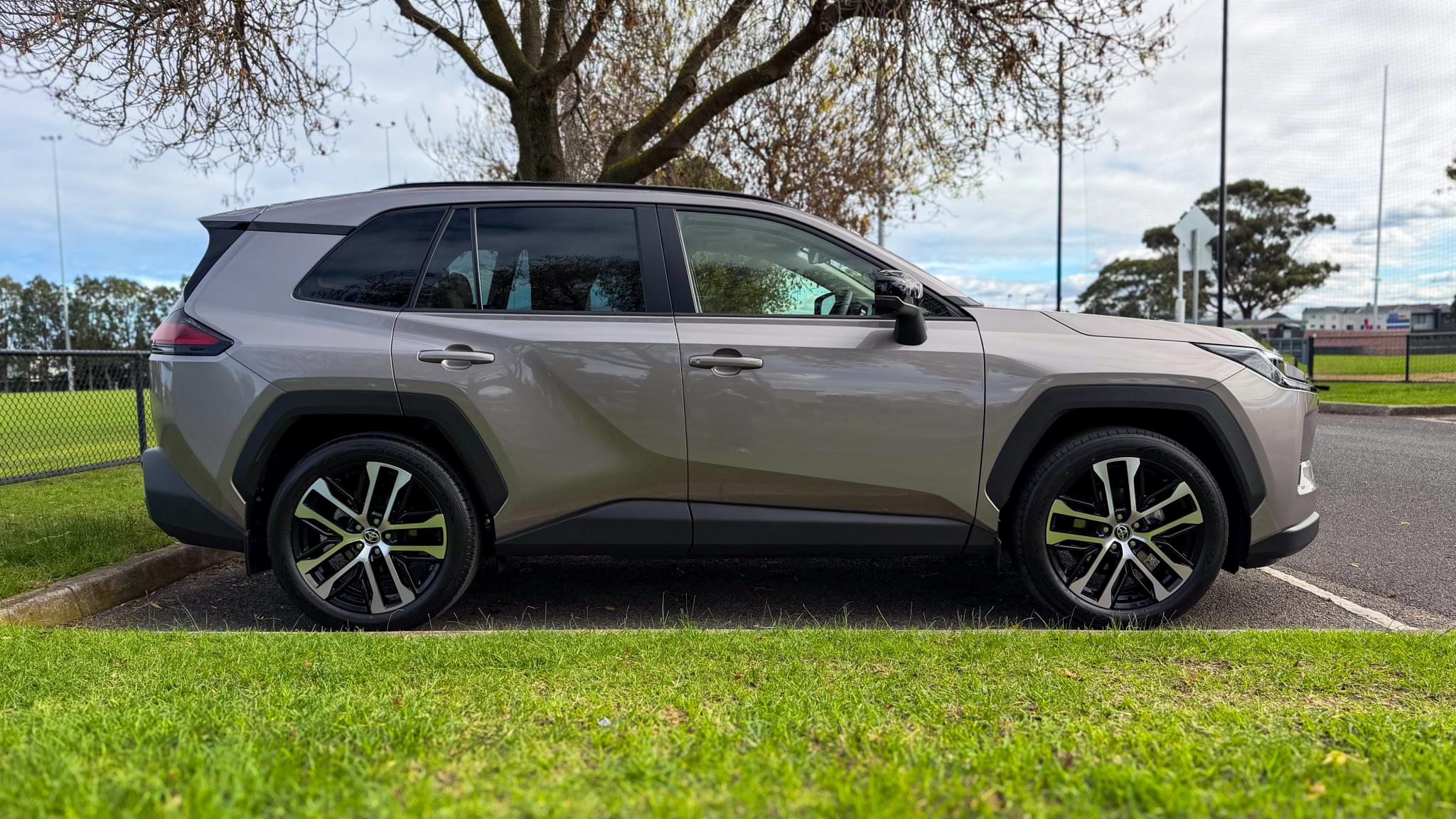
Toyota has leaned into the boxy, upright look that is everywhere right now, and the result is the most assertive RAV4 yet.
The lines are cleaner and sharper, the stance is squarer, and there is a hint of the latest HiLux in the body-coloured grille on most variants. A few of the angles are a little unusual at first glance, but it grows on you, and it photographs well.
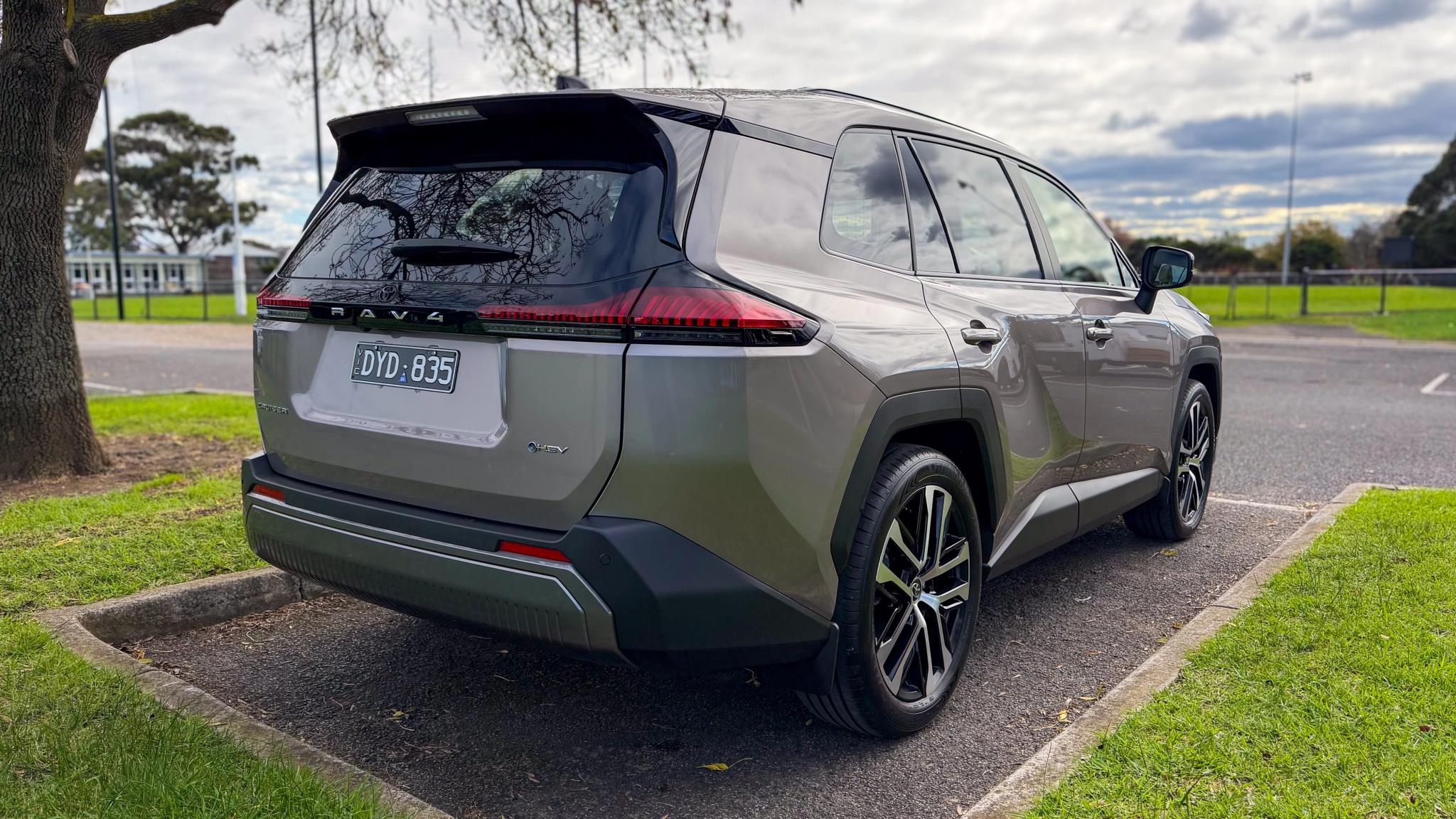
The Edge gets its own front-end design, flared wheel arches and a 20mm-wider track. I reckon it's the toughest-looking version of the regular RAV4.
It is still unmistakably a RAV4, just one that has hit the gym.
What is the Toyota RAV4 like inside?
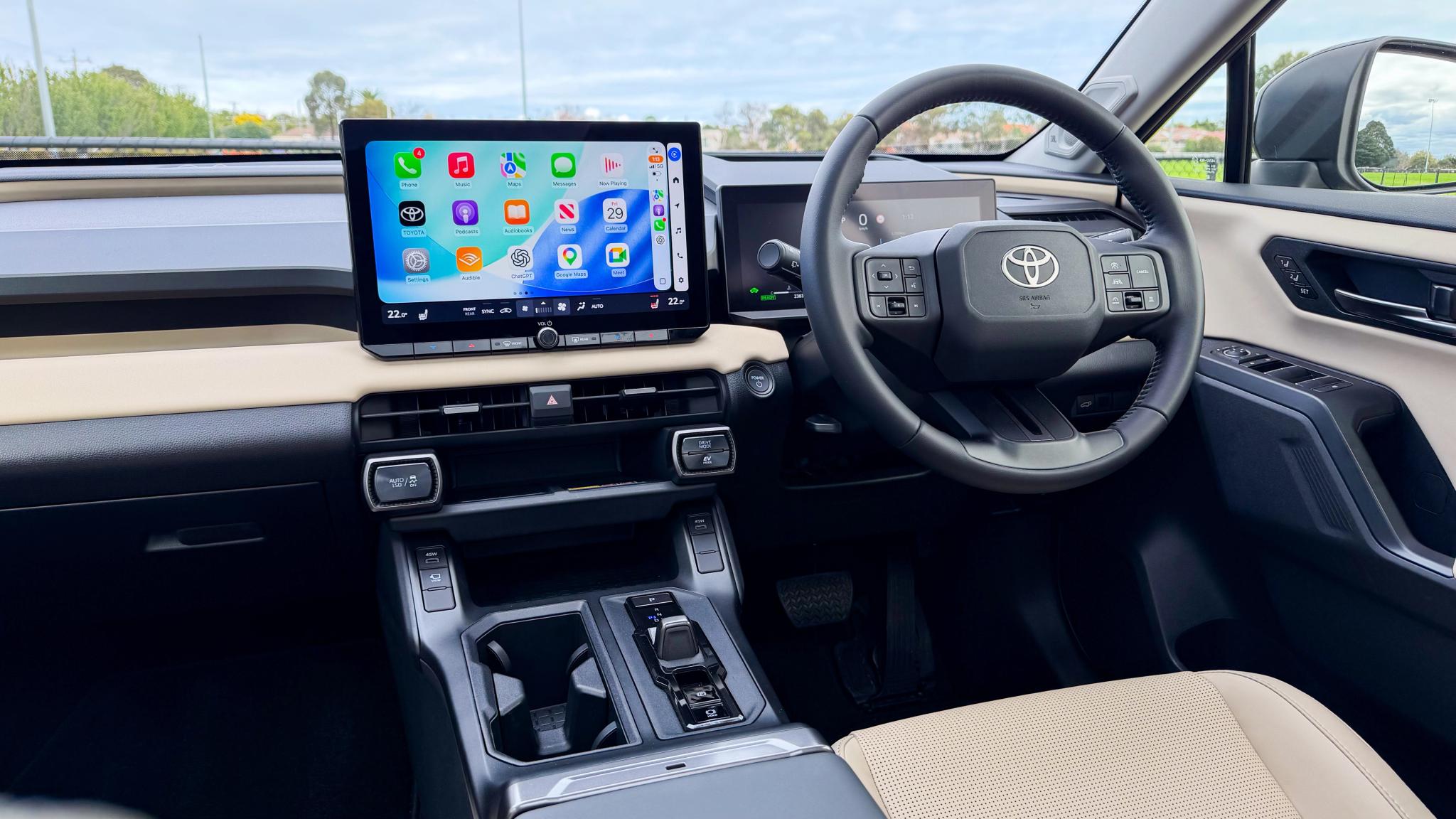
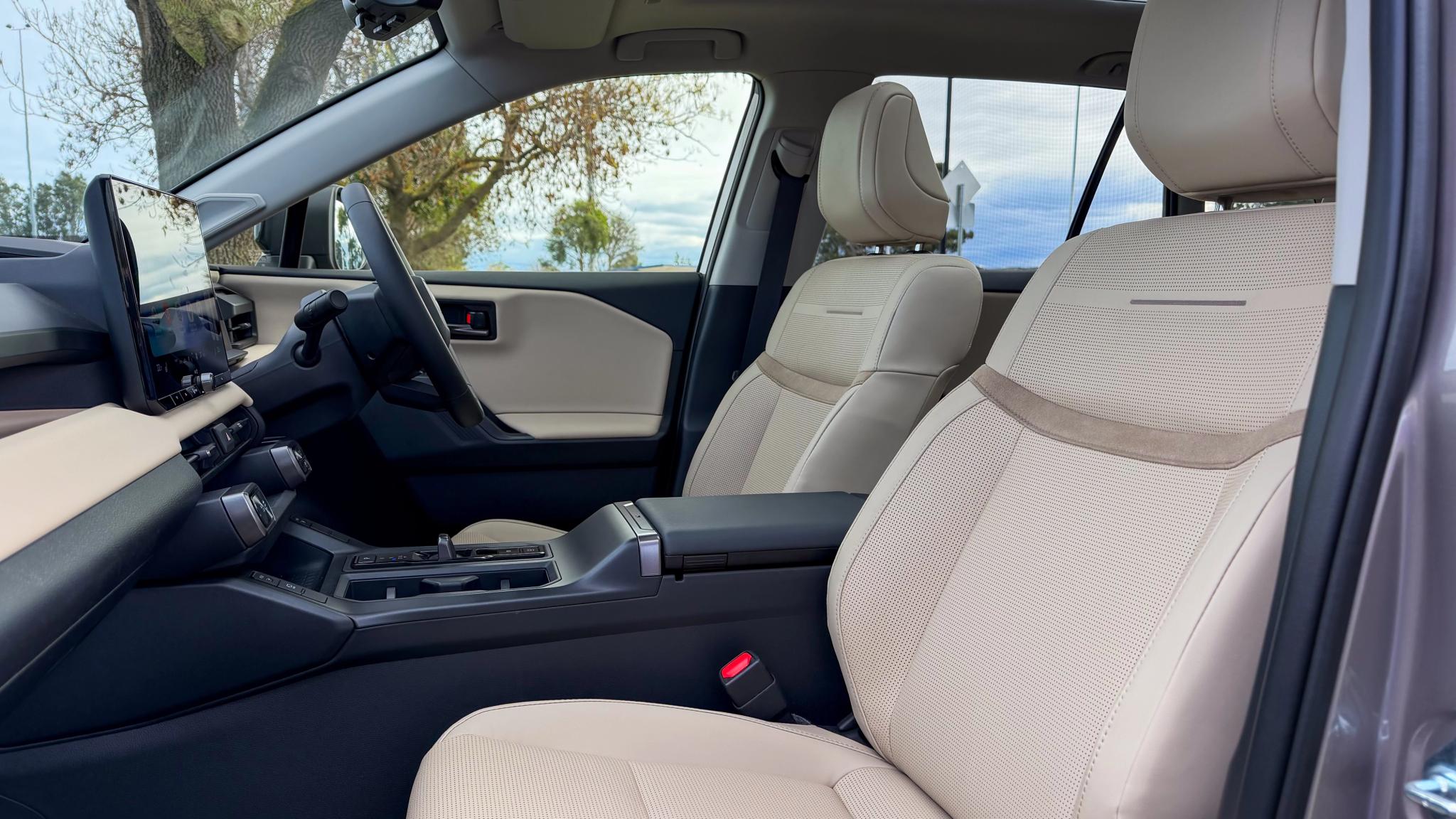
The interior is probably the biggest improvement over the old RAV4.
It has a cleaner layout, a lower dashboard that lets in more light and improves vision, and a far more contemporary feel than the model it replaces.
The centrepiece is a 10.5-inch touchscreen on the GX and GXL, or a 12.9-inch unit higher up, paired with a standard 12.3-inch digital driver's display.
Storage is a real highlight too: a huge glovebox, a clever centre console lid that opens from either side or flips over to become a tray, generous door bins and a handy dash-top shelf.
It is not flawless. There are more hard plastics than you would hope for at this price, even in the top Cruiser. Cloth trim runs through the GX and GXL, the Edge and XSE step up to premium trim upholstery with suede inserts on the XSE, and only the Cruiser gets leather-accented seats. The base car’s wheel is now finished in urethane rather than leather.
The interior feels well built, but some rivals offer nicer materials for less money.
How practical is the Toyota RAV4?
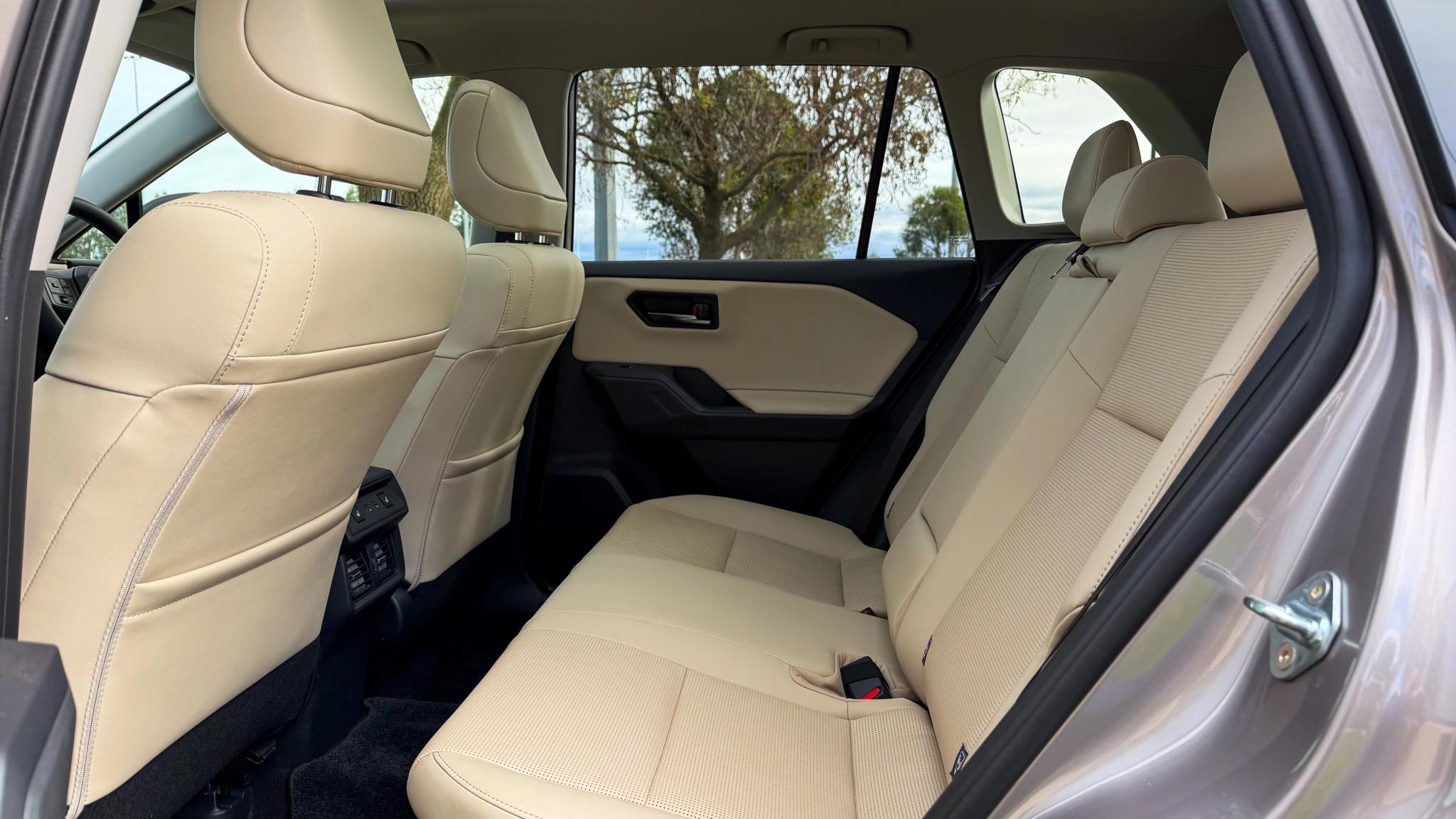
Very. Back-seat space is good rather than class-leading with enough room for taller adults to sit behind a similarly sized driver, plus rear vents, USB-C ports, a fold-down armrest and door bins.
The outboard rear seats are even heated on the top grade, a RAV4 first. Taller passengers will find a Tucson or Sportage roomier in the second row, and the doors do not open quite as wide as an X-Trail's, which makes wrangling child seats a touch fiddlier than it should be.
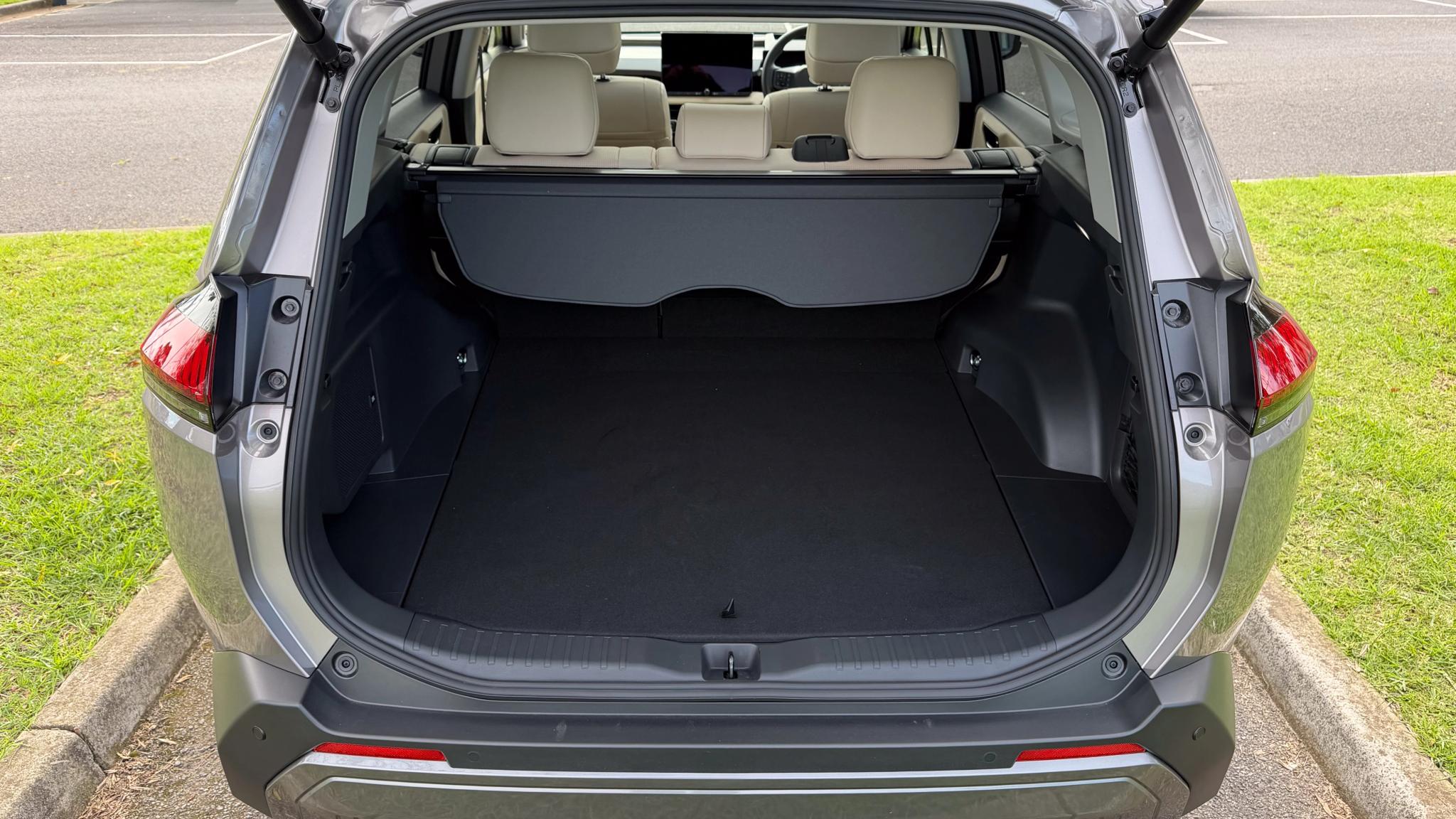
The boot is the trump card. Toyota quotes up to 705 litres with the seats up, and while that figure is measured to the roof, the space easily swallows prams, suitcases and the usual family clutter. A power tailgate features on higher grades, and you get a space-saver as standard with a full-size spare available on the GX.
What is the Toyota RAV4 like to drive?
The new RAV4 feels very similar to the old one on the road, and that's mostly a good thing.
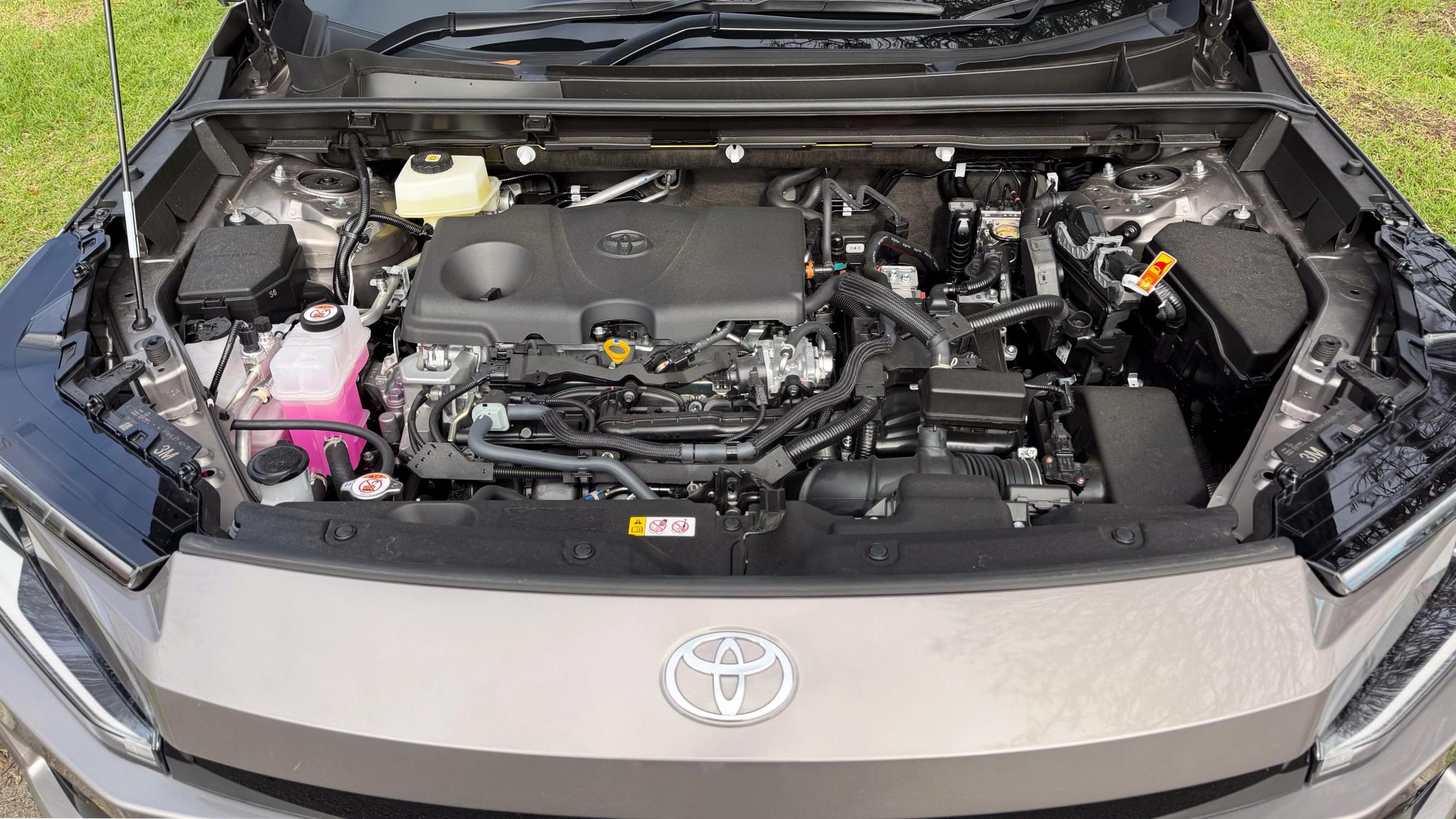
The big talking point is power, because there is less of it. The updated hybrid system now produces 143kW combined, down 17kW in front-drive guise and 20kW with all-wheel drive, courtesy of tighter emissions rules.
Toyota insists performance is on par with before, but you do feel it. Off the line on electric power it is brisk and smooth, yet the mid-range shove from 40km/h to highway pace feels less urgent than it once did. On the upside, the petrol engine is quieter and the transition between electric and petrol is seamless.
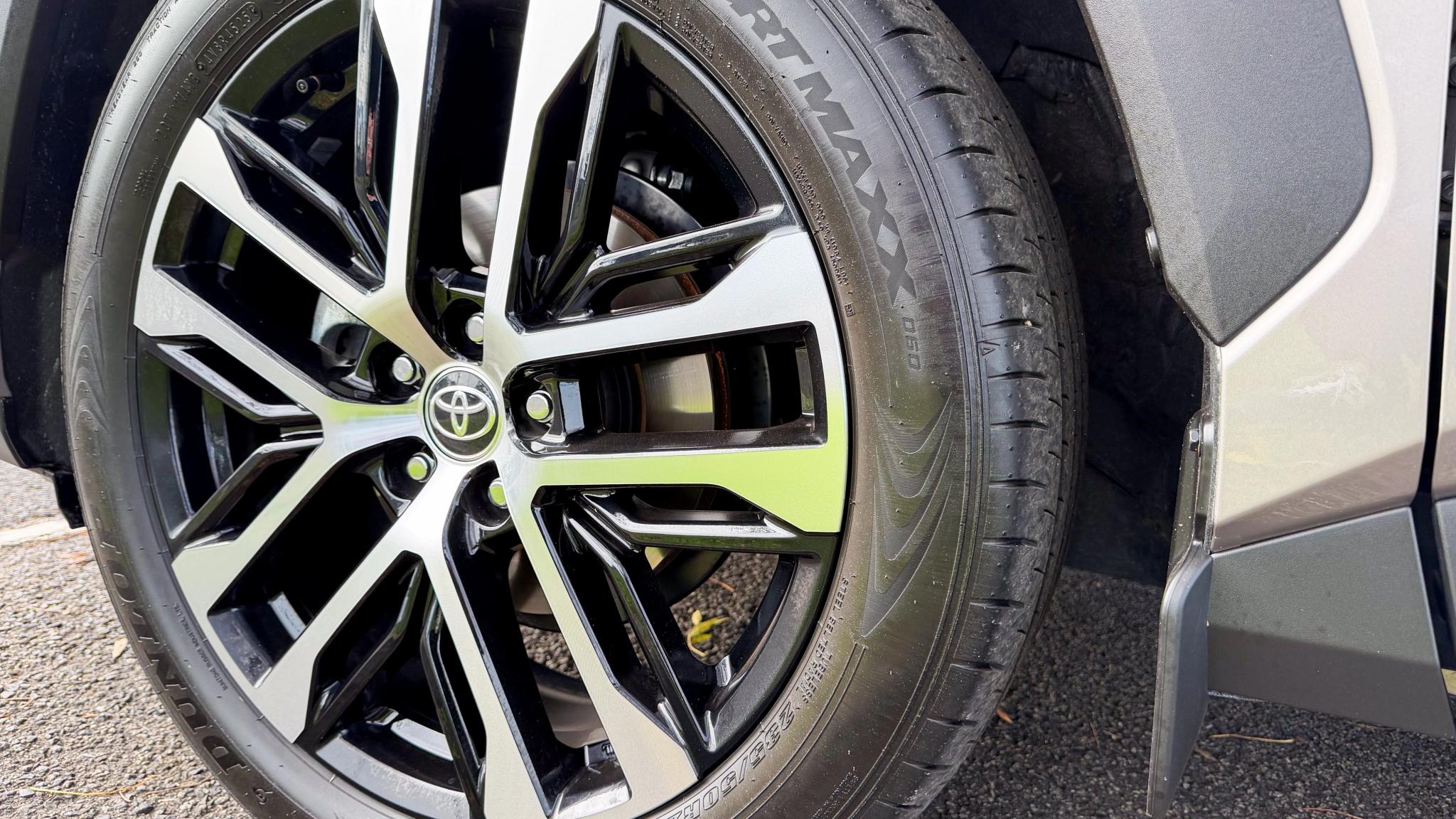
The steering is heavier and more reassuring than before, the ride is settled and the body stays composed through corners even if it leans a fair bit when you push on. The brake pedal is easy to judge, and the handover between regenerative and friction braking is well sorted.
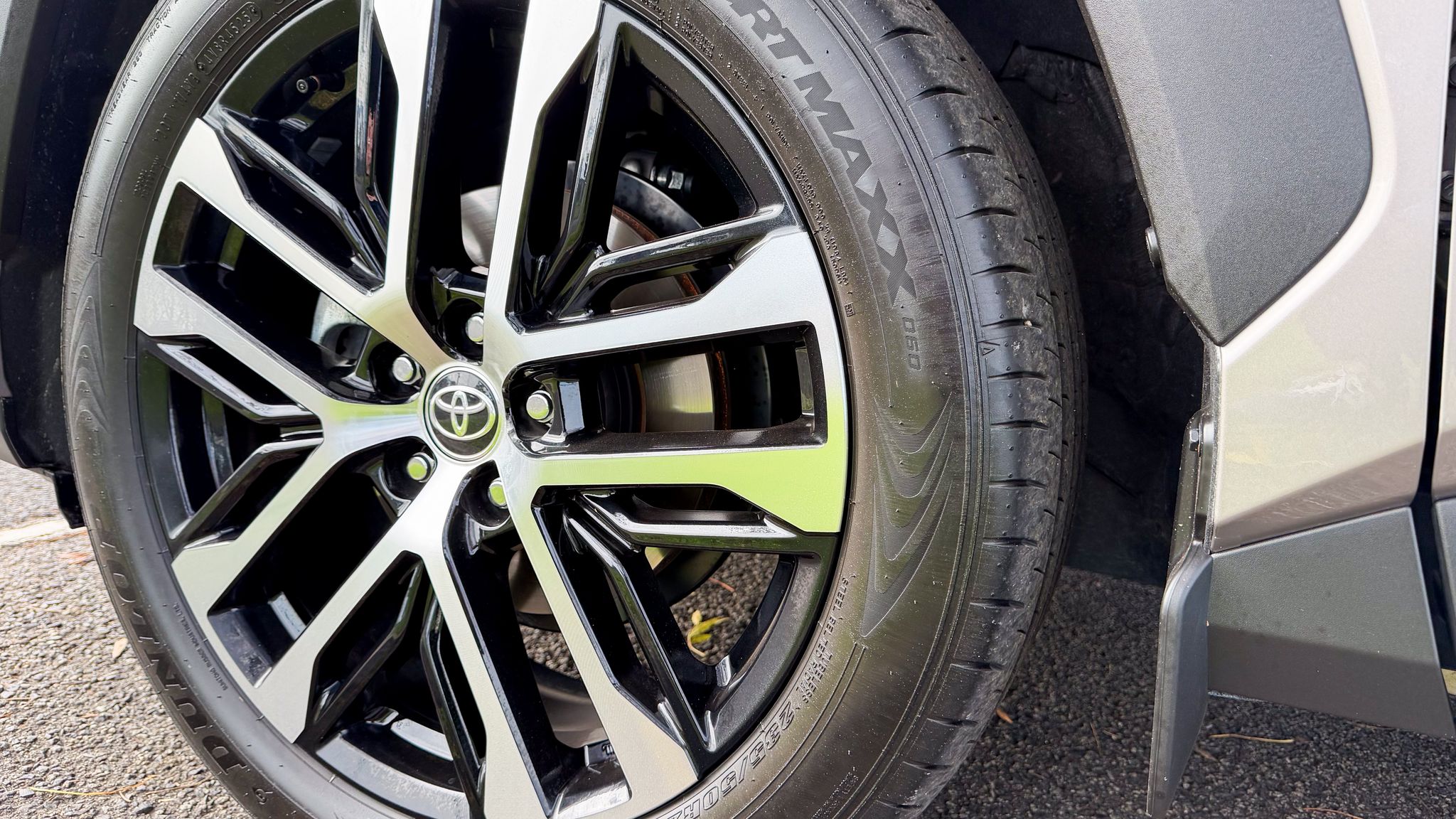
One thing worth noting: the Cruiser's 20-inch wheels make the ride slightly firmer than the cheaper grades on smaller alloys, which ride beautifully. If comfort is your priority, the lower grades are the smarter buy.
How efficient is the Toyota RAV4?
Fuel economy remains a core strength. Toyota claims 4.5L/100km for front-drive models and 4.6L/100km with all-wheel drive, and across mixed driving I saw figures in the high-5s, dropping into the 4s around town and climbing toward 7L/100km when worked hard. That is still excellent for a family SUV this size.
One downside is that the new RAV4 needs 95-octane premium unleaded instead of regular 91, which adds to your fuel costs.
Ownership costs are reasonable but no longer the bargain they once were, with servicing up from around $270 a visit on the old car. The warranty stretches to seven years on the driveline and the battery cover extends with Toyota dealer servicing. It is a solid package, though some rivals now offer longer cover as standard.
| Servicing and Warranty | Toyota RAV4 |
| Service interval | 12 months | 15,000km |
| Servicing cost (5 years) | $1625 |
| Average annual cost | $325 |
| Vehicle warranty | 5 years | Unlimited km |
| Battery warranty | 10 years | Unlimited km |
Is the Toyota RAV4 safe?
Here is the awkward bit. The new RAV4 currently has no ANCAP rating. Production delays pushed its launch into ANCAP’s tougher 2026 test criteria, so Toyota has made active and passive safety upgrades across the hybrid and plug-in range, reaching showrooms from late October 2026. Toyota expects that to deliver a five-star rating before the end of the year.
Cars built before the upgrade can’t be retrofitted and will stay unrated, so if a five-star rating matters to you or your fleet, make sure you’re buying one built after the update.
On the equipment front it is well stocked, with eight airbags including a front centre airbag, autonomous emergency braking with pedestrian, cyclist and junction detection, adaptive cruise control, blind-spot monitoring, rear cross-traffic alert and lane-keeping assist. Most of it is nicely calibrated, but the driver attention monitor is a genuine nuisance, chiming after the briefest glance away from the road and resetting to its most sensitive setting every time you restart the car. It is the kind of thing you hope Toyota fixes with an over-the-air update.
What are the main competitors to the Toyota RAV4?
The Hyundai Tucson Hybrid opens from around $42,600 plus on-roads, undercutting the base RAV4 outright. It offers more rear-seat room and a longer warranty, though it can’t quite match the Toyota’s real-world fuel use or resale reputation.
The Kia Sportage Hybrid shares much of the Tucson’s mechanical package, from around $44,450 plus on-roads and rising to about $60,370 for the GT-Line AWD. It’s roomier in the back and sharply styled, but the RAV4 still feels the more polished long-term ownership proposition.
The Nissan X-Trail e-Power uses its petrol engine purely as a generator for an EV-like drive, and now opens at $45,990 plus on-roads for the ST-L 2WD, line-ball with the base RAV4, rising to $58,380 for the Ti-L AWD. It’s smooth and quiet, very nicely appointed inside and the doors open wider for child seats, but it uses more fuel than the Toyota when the highway kilometres pile up.
The Honda CR-V e:HEV runs from $49,900 driveaway to $64,400 for the RS AWD, with a slick hybrid system and cheaper servicing. It’s spacious and easy to live with, though it can’t quite match the RAV4’s frugality or the breadth of its range.
If it were my money, the RAV4 would still be my pick for running costs and resale, but I’d drive the Tucson and the X-Trail e-Power first, because both now sit right on its price.
Should I buy the Toyota RAV4?
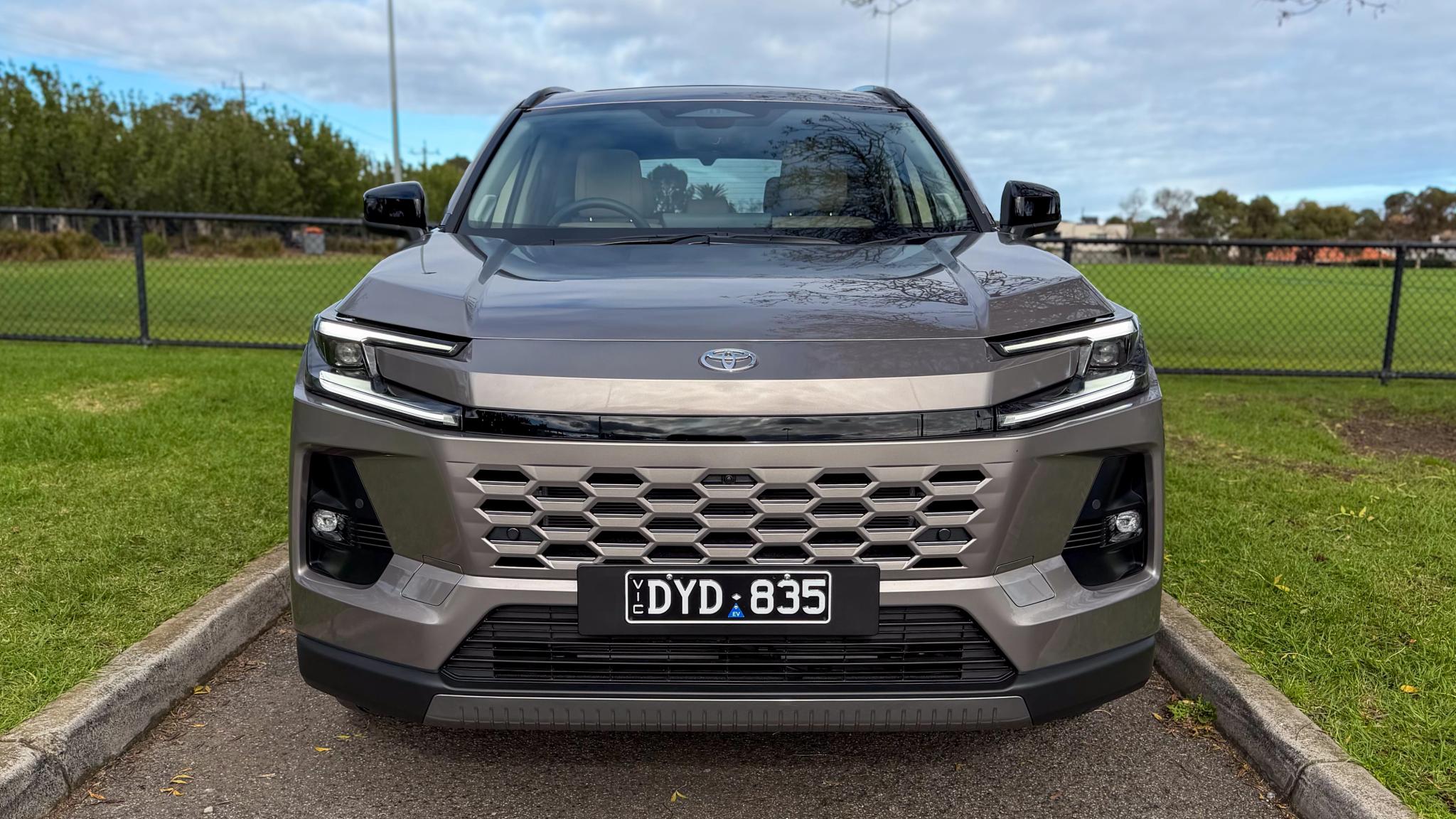
If you already own a RAV4 and want to upgrade, you will love this one.
It looks fresh, the tech is a huge leap, the cabin is more practical and it is even thriftier than before, all wrapped in Toyota's reputation for reliability and strong resale.
There are a few downsides. It's more expensive, the touchscreen climate controls are frustrating, performance isn't quite as strong, and it still doesn't have an ANCAP rating.
If you can charge at home, the plug-in hybrid is the version worth stretching for, and our RAV4 PHEV review breaks down whether the extra spend pays off.
The RAV4 is still a cracking family SUV and absolutely belongs on your shortlist, but it is no longer the runaway benchmark, so test-drive a couple of rivals before you sign.
VerdictThe Beep Verdict
Rob Leigh
Co-founder & Director
Rob Leigh is Co-founder and Director of The Beep based in Melbourne, Australia. He has 15+ years inside a major automotive OEM, specialising in product planning, pricing and vehicle strategy.
About Author