2027 Tesla Model 3 Rear-Wheel Drive review
Tesla has cut $9000 and a handful of comforts from the Model 3, and the result is the smartest buy in the range for anyone who can live without broadcast radio.

Shane Riley
Pros
- Cheapest way into a Model 3 by $9000
- More claimed range than the dearer Premium RWD
- Settled ride and accurate steering
Cons
- No FM or DAB radio, and still no CarPlay
- Budget Giti tyres roar on coarse bitumen
- No rear screen or floor mats at this price
Our verdict
The Model 3 RWD keeps everything that makes a Model 3 good to own: the efficient drivetrain, the Supercharger network, the strong safety credentials and the sharp chassis. What goes is mostly stuff you notice from the back seat, the floor or the radio dial. City commuters, novated lease buyers and rideshare drivers should start here, while regional drivers who rely on broadcast radio should think carefully.
What does the Model 3 RWD cost in Australia?
The Model 3 RWD starts at $45,900 before on road costs, making it the cheapest Tesla ever sold here and $9000 less than the Model 3 Premium RWD. Overseas it wears the Standard badge. Our test car’s Stealth Grey paint added $1900, bringing it to $47,800 as tested.
Above it sit the Premium RWD at $54,900, the Premium Long Range RWD at $61,900 and the Performance AWD at $80,900.
The price looks even better when you compare it with rival electric sedans. BYD’s cheapest Seal is now the $52,990 Premium, and the Mazda 6e GT and Kia EV4 Air both sit at $49,990, so the Tesla undercuts all three by at least $4000. Right now it’s the cheapest electric sedan in the country.
Despite the price cut, you still get a decent amount of equipment. You get the 16 inch touchscreen, matrix LED headlights, a panoramic glass roof, heated front seats, a heated steering wheel, wireless phone charging and a powered boot that opens hands free as you walk up.
To hit the price, Tesla deleted ventilated front seats, heated rear seats, the 8.0 inch rear touchscreen, the wraparound ambient lighting, two speakers, the power steering column, the FM and DAB tuners and even the floor mats. The Premium also gets a more sophisticated suspension with added noise suppression, and on rough roads you can hear the difference.
| Specifications | RWD (tested) | Premium RWD | Premium Long Range RWD | Performance AWD |
| Price (excluding on-roads) | $45,900 | $54,900 | $61,900 | $80,900 |
| Powertrain | Electric | Electric | Electric | Electric |
| Power │ Torque | 208kW │ 350Nm | 208kW │ 350Nm | 235kW │ 450Nm | 461kW │ 723Nm |
| Transmission | 1 speed | 1 speed | 1 speed | 1 speed |
| Drivetrain | RWD | RWD | RWD | AWD |
| 0-100km/h | 6.2 sec | 6.1 sec | 5.2 sec | 3.1 sec |
| Electric range (claimed) | 572km | 520km | 750km | 600km |
| Battery │ DC charging | 62.5kWh │ 175kW | 62.5kWh │ 175kW | - │ 250kW | - │ 250kW |
| ANCAP | Five stars (2025) | Five stars (2025) | Five stars (2025) | Five stars (2025) |
| Warranty | 5 years │ Unlimited km | 5 years │ Unlimited km | 5 years │ Unlimited km | 5 years │ Unlimited km |
View Tesla Model 3 driveaway pricing and specifications →
What does the Model 3 RWD look like?
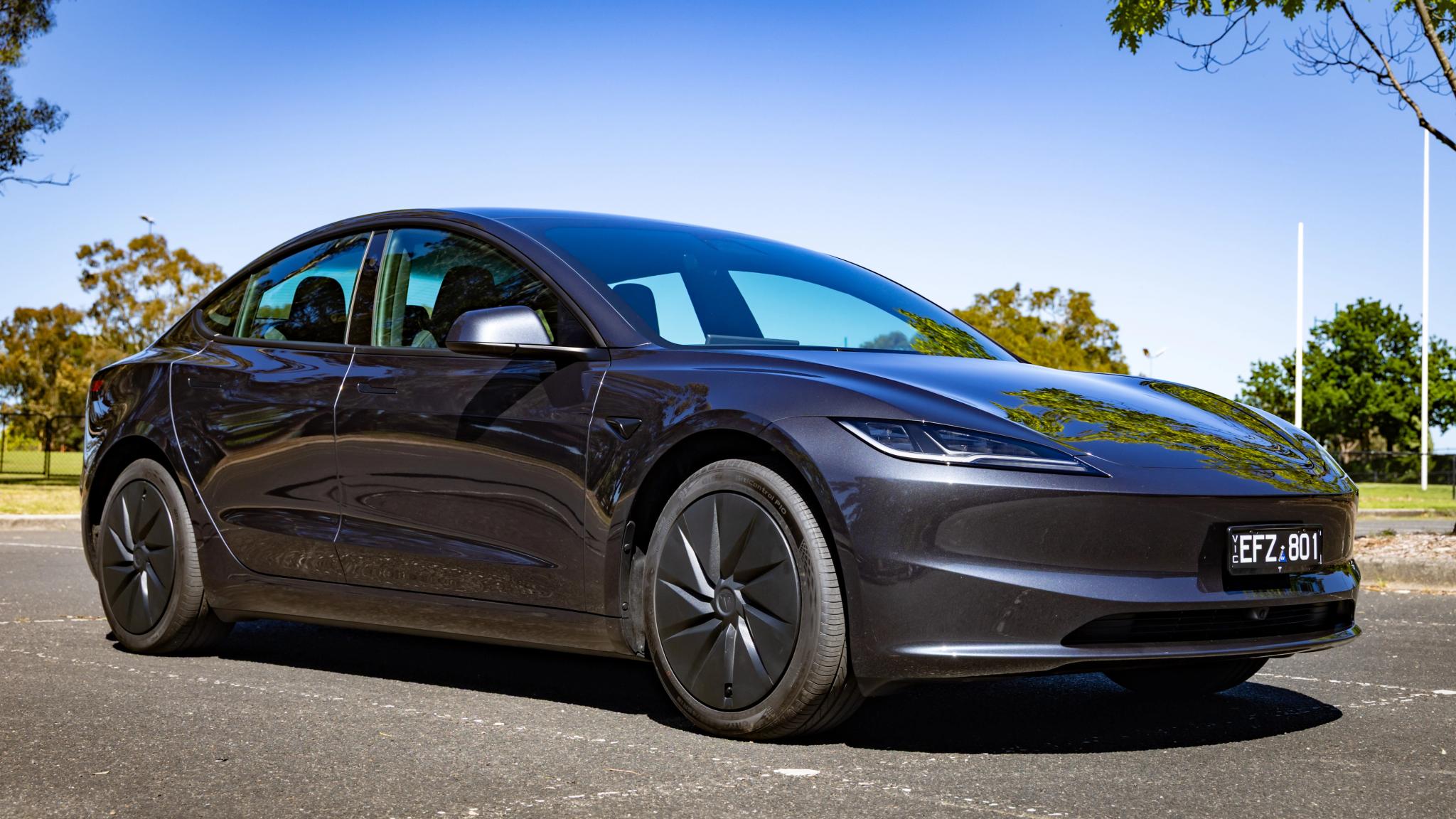
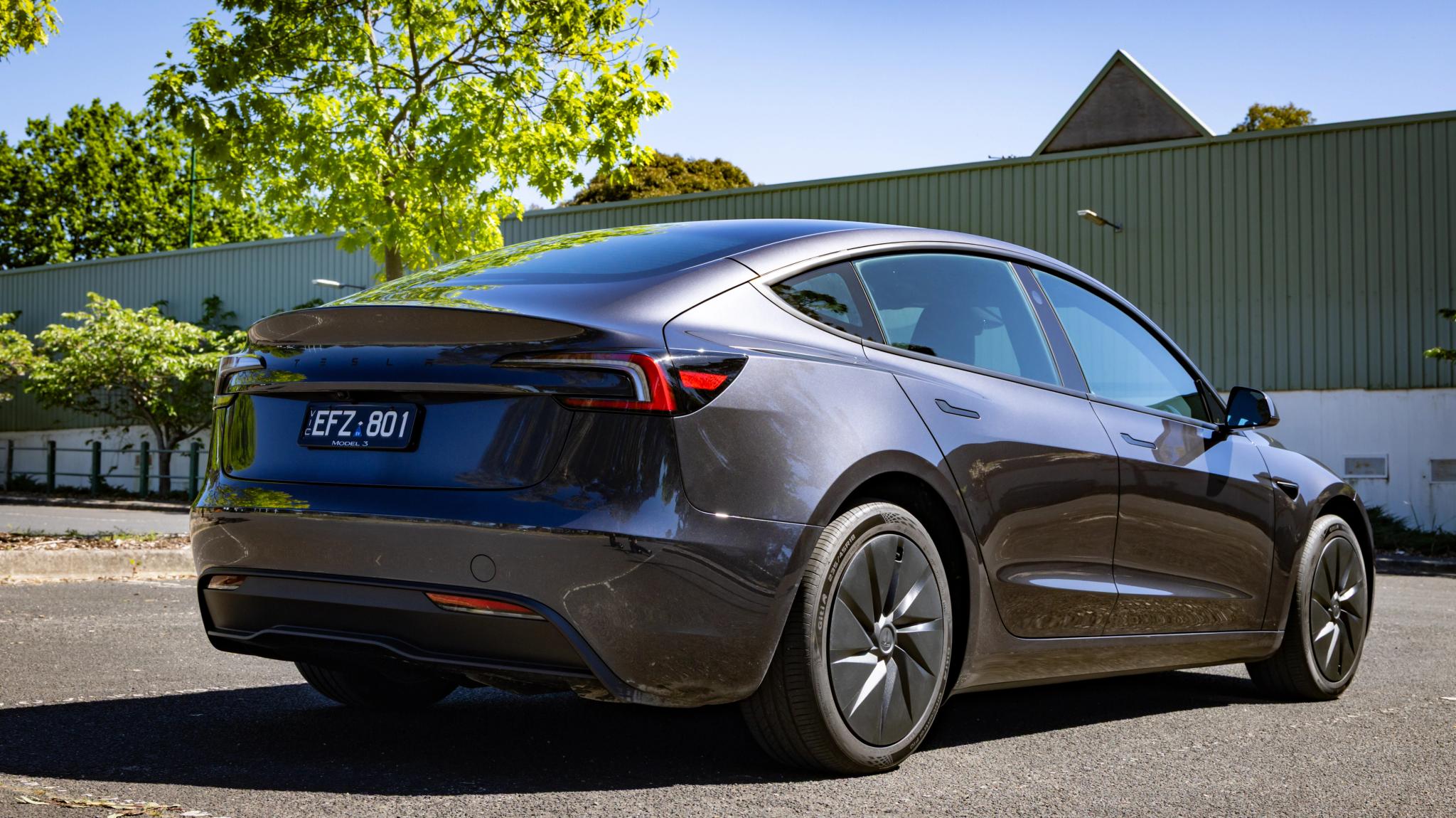
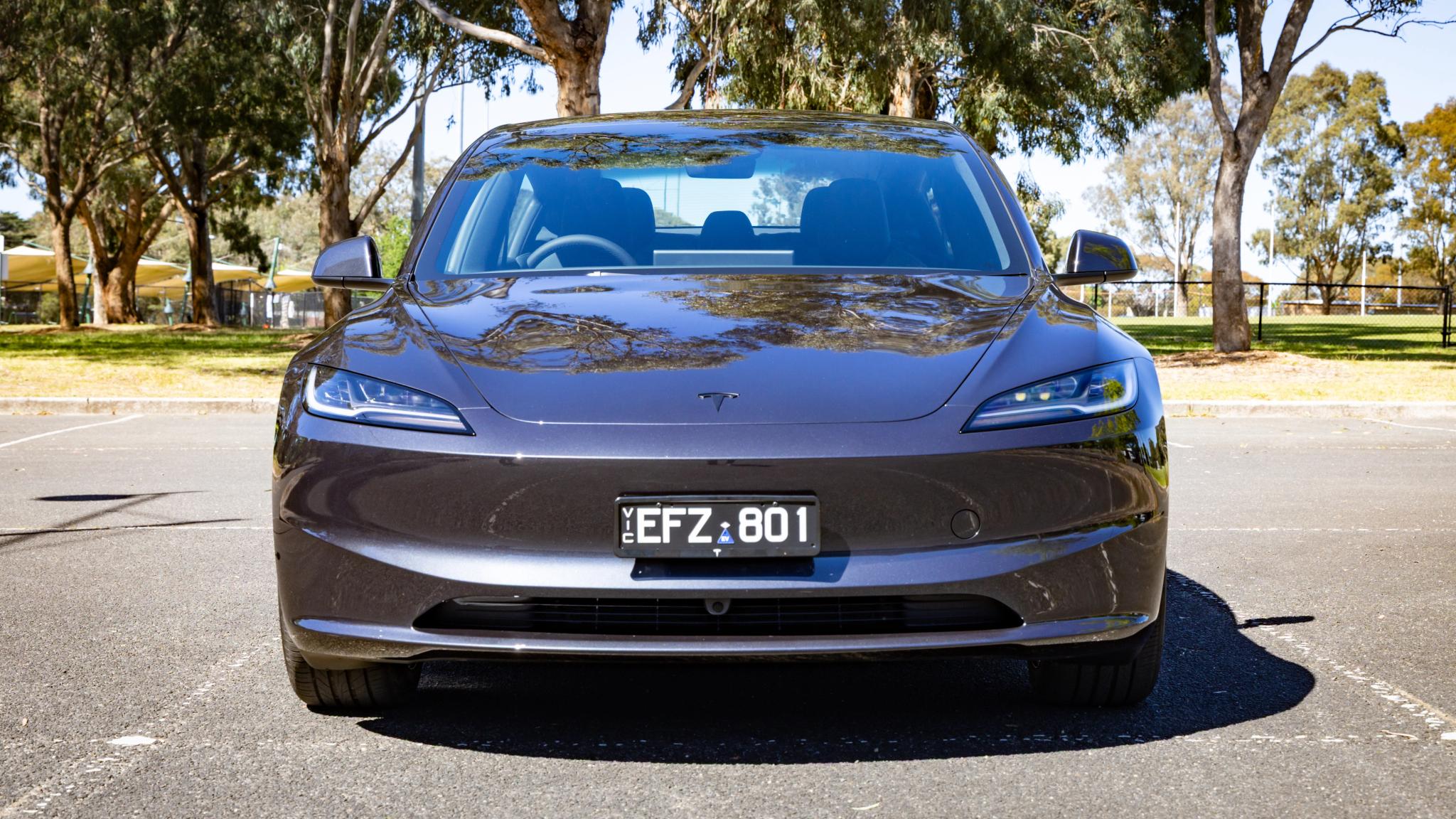
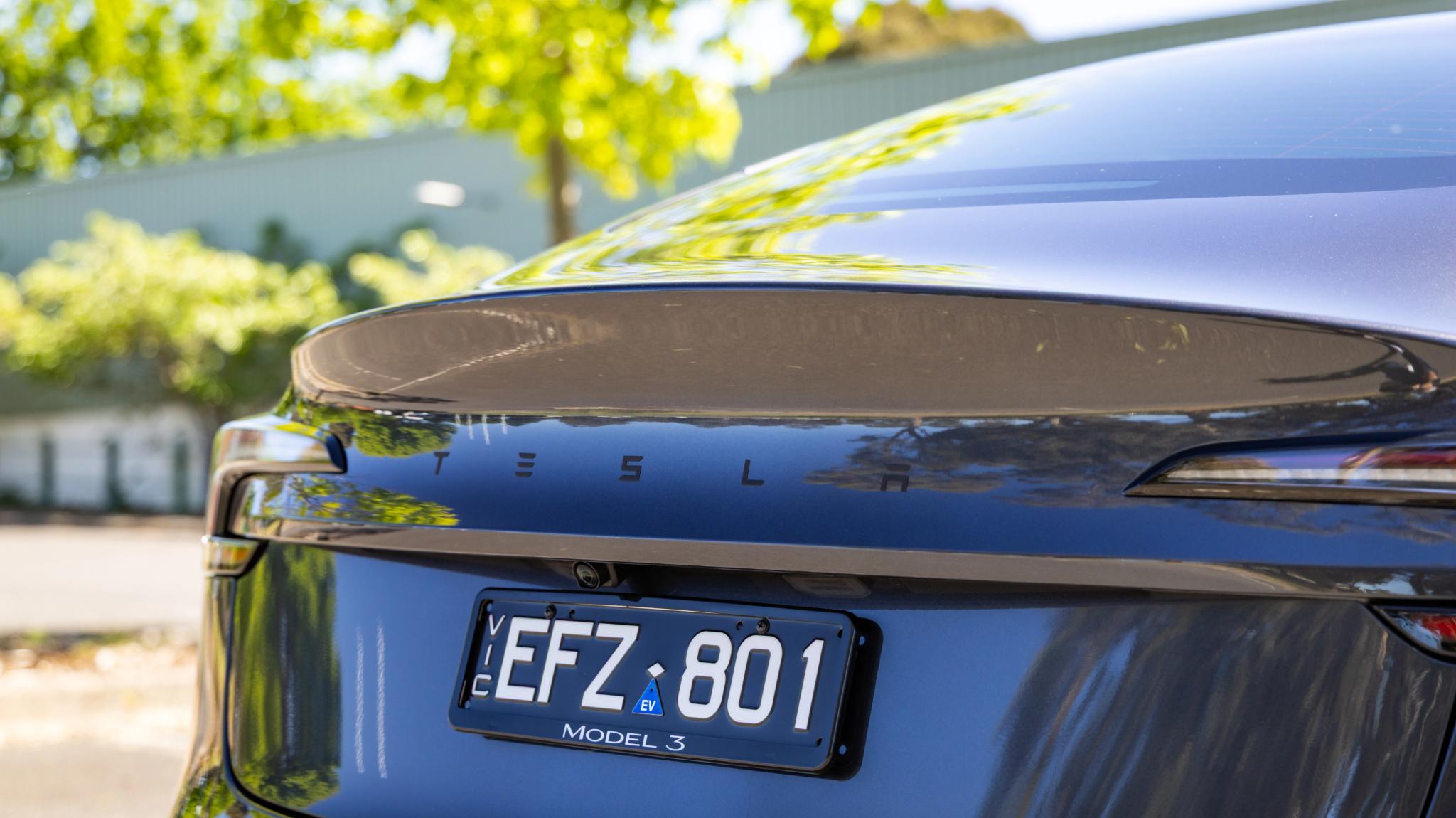
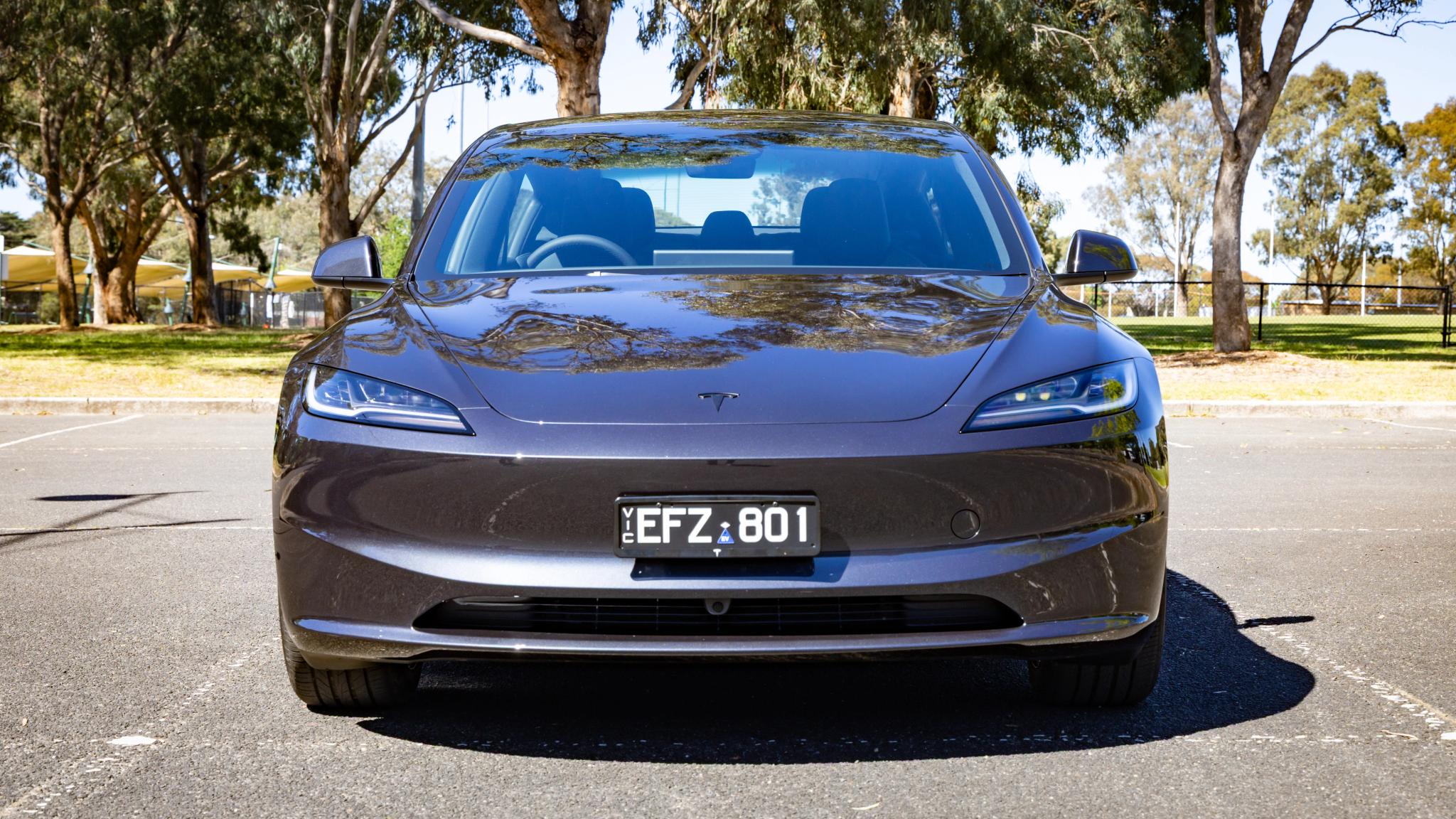
Your neighbours will need a spec sheet to pick it. The base car shares the slim nose, matrix LED headlights and smooth tail of every other current Model 3, and the shape still looks cleaner than most of the sedans it competes with.
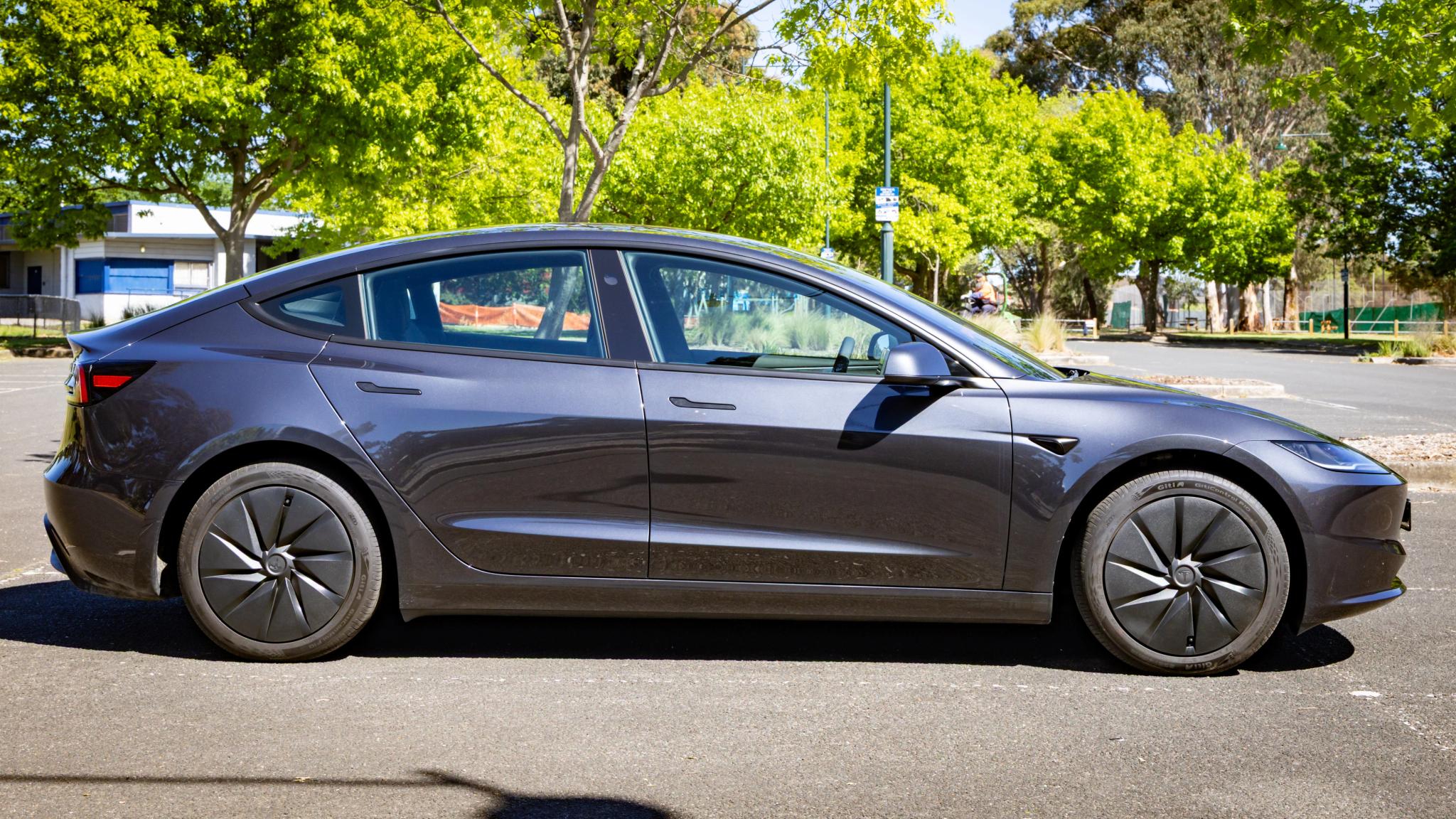
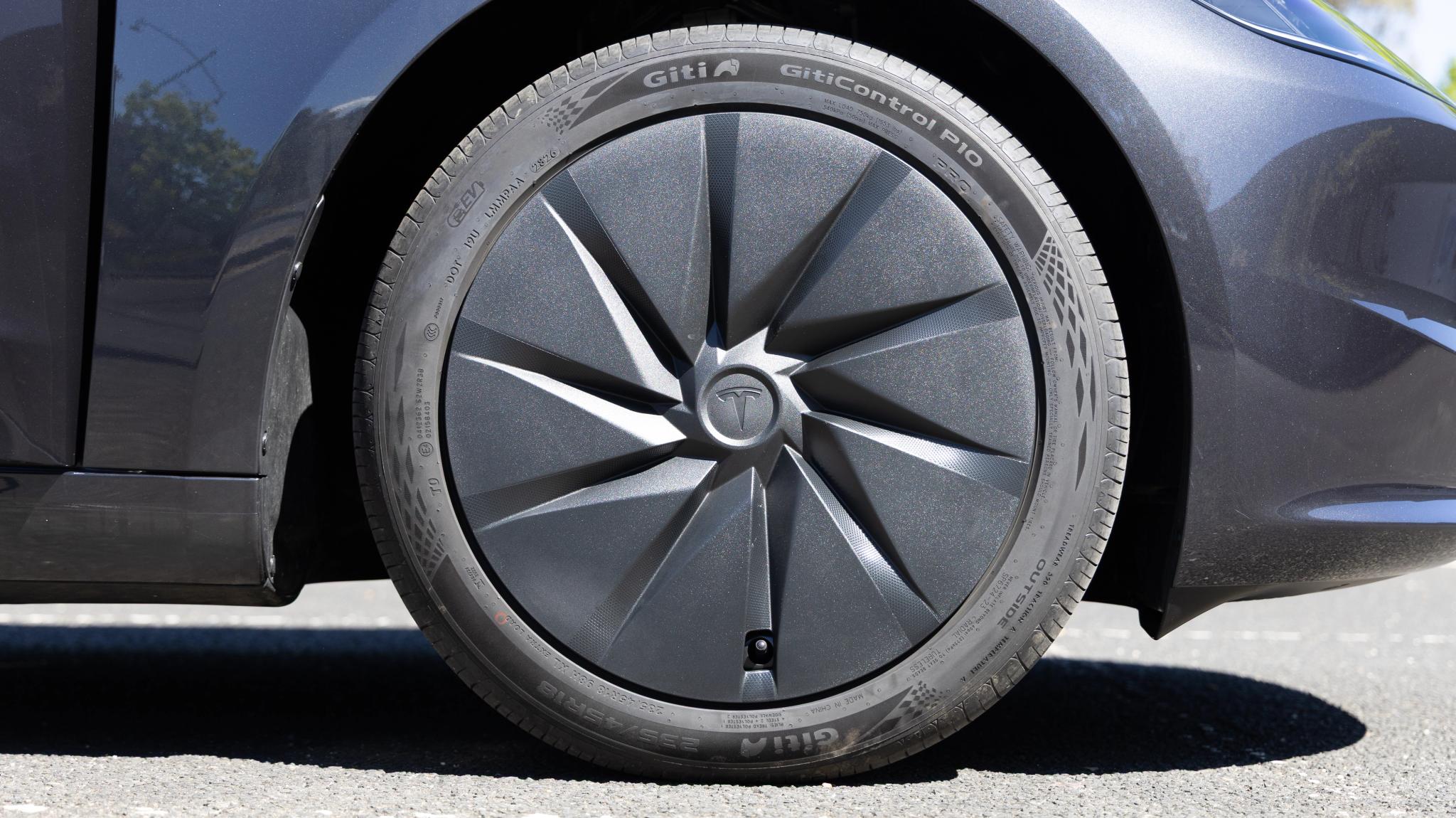
The giveaways are small. It rolls on 18 inch Prismata wheels hidden behind matte grey aero covers, the mirrors fold electrically but don’t auto dim, and the Premium’s 19 inch wheels aren’t offered. The covers look tidy, but they’re plastic, and the first close encounter with a kerb will show it.
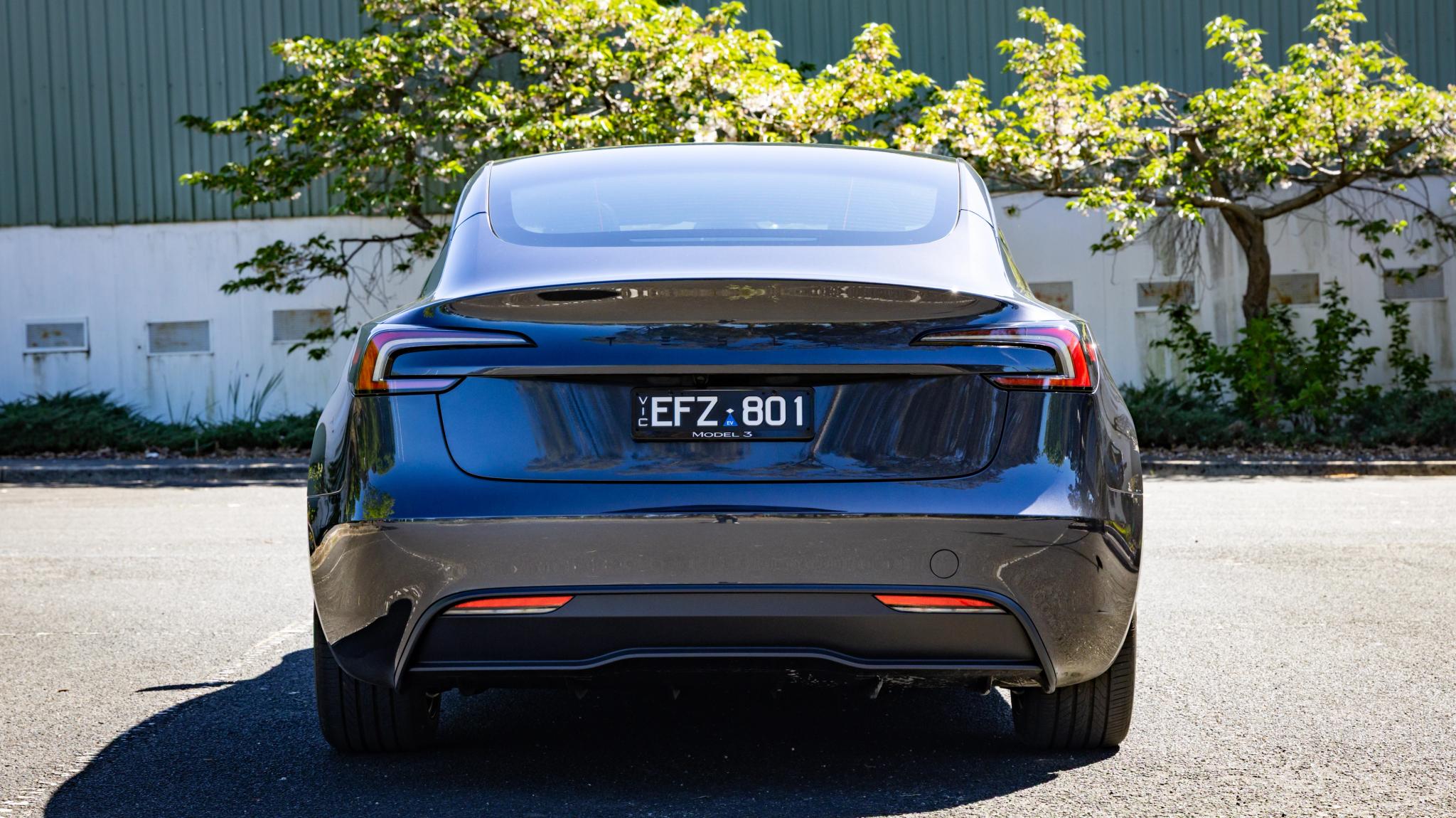
Pearl White is the only free colour, while Diamond Black costs $1500 and Stealth Grey $1900. Our car’s grey suits the smooth surfaces, but it’s a lot of money for a colour most people will struggle to name.
What is the Model 3 RWD like inside?
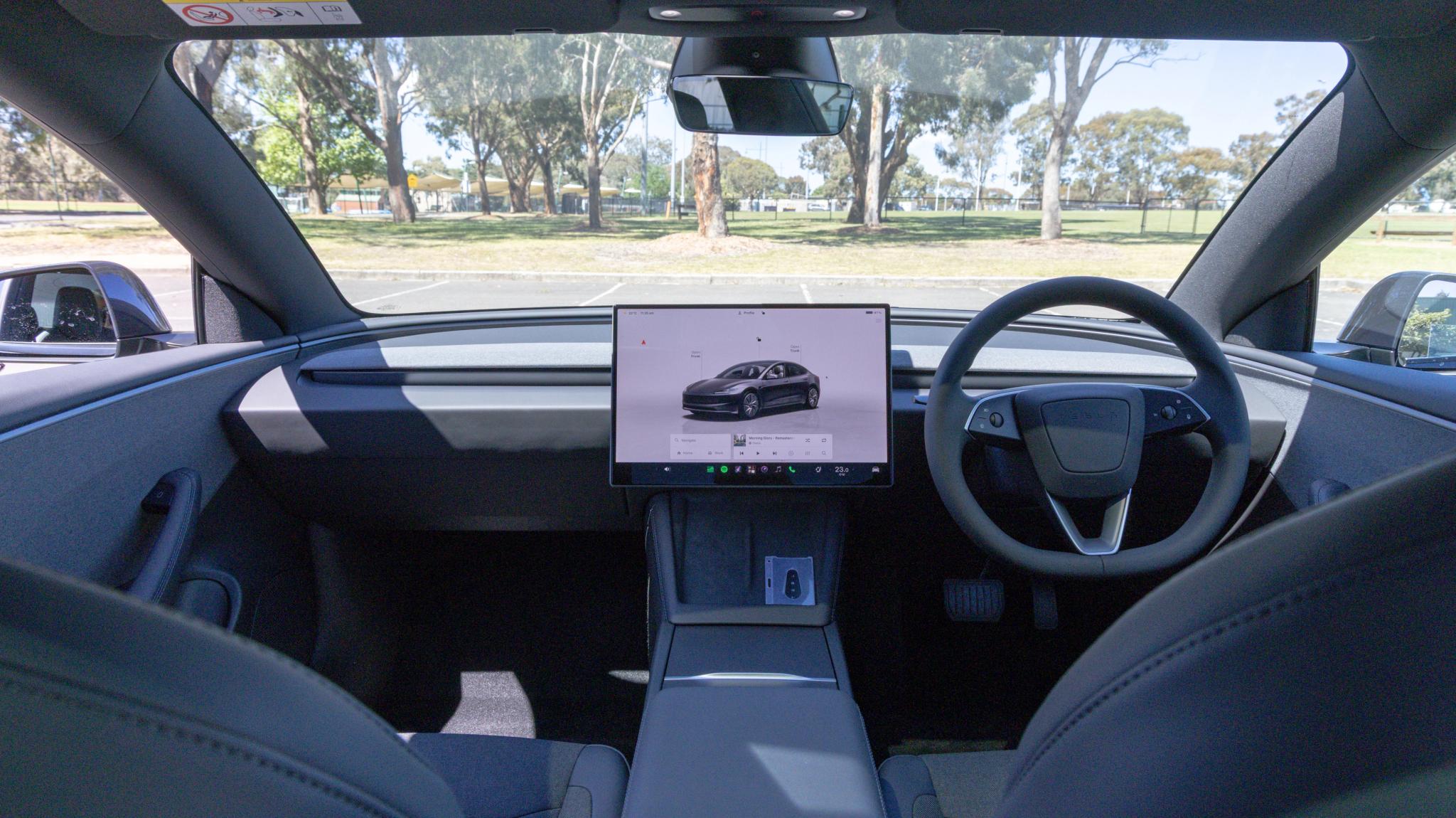
From the driver’s seat, almost nothing tells you this is the budget model. The 16 inch screen still runs the whole car, the software is fast and logical, and the cabin has the same calm, uncluttered feel as the dearer versions.
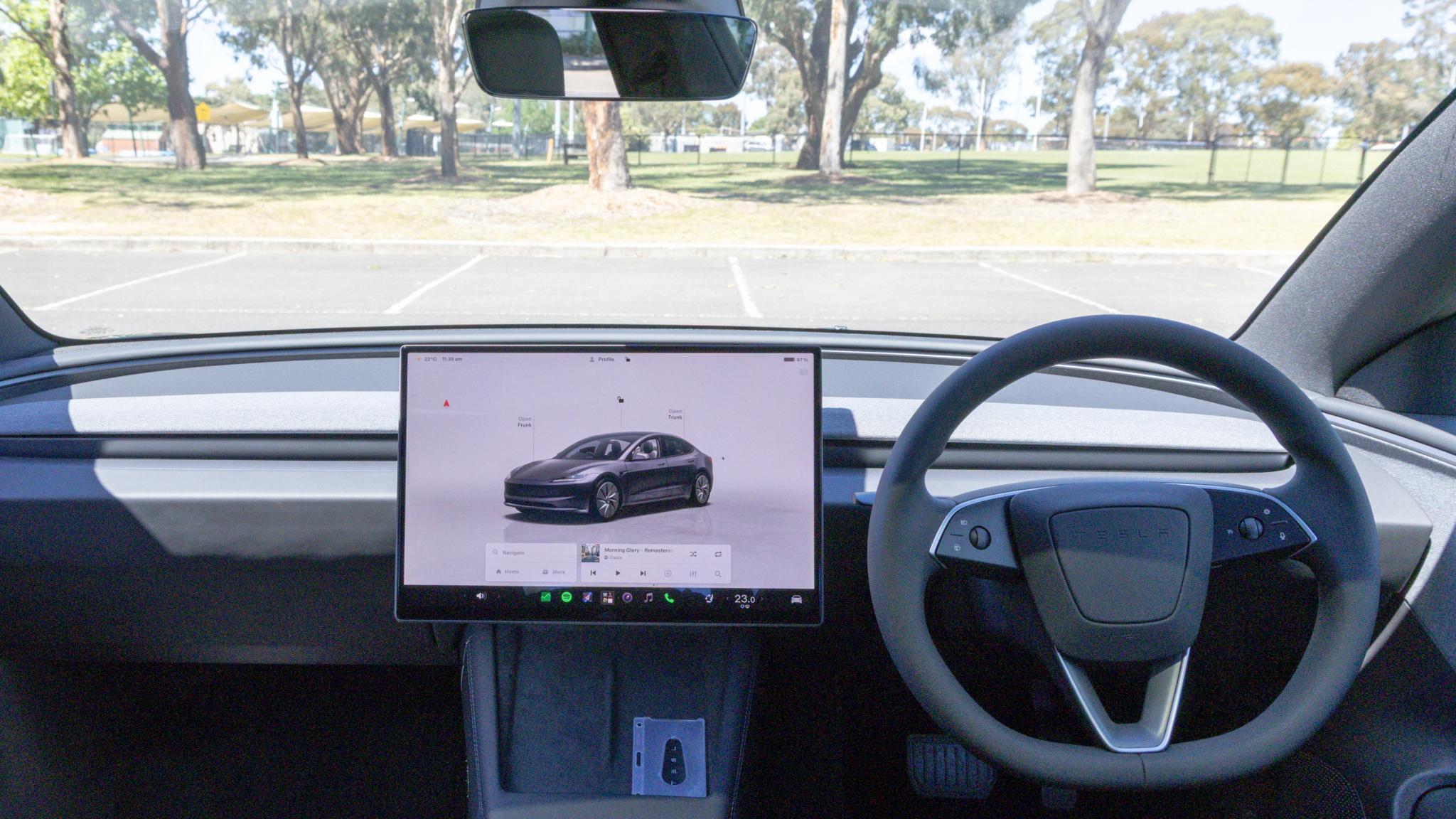
Look down, though, and the cost cutting is obvious. There are no floor mats, so you’re greeted by bare carpet, and on a $45,900 car that feels like penny pinching. Budget for a set of all weather mats on day one, because the carpet won’t survive a wet Melbourne winter of muddy shoes.
Tesla has also saved some money on the seats. The Premium’s perforated vegan leather gives way to vegan leather with textile inserts, which feels hard wearing and is kinder to bare legs on a hot day. The seats remain power adjustable, but every change goes through the touchscreen, and the steering column is adjusted by hand.
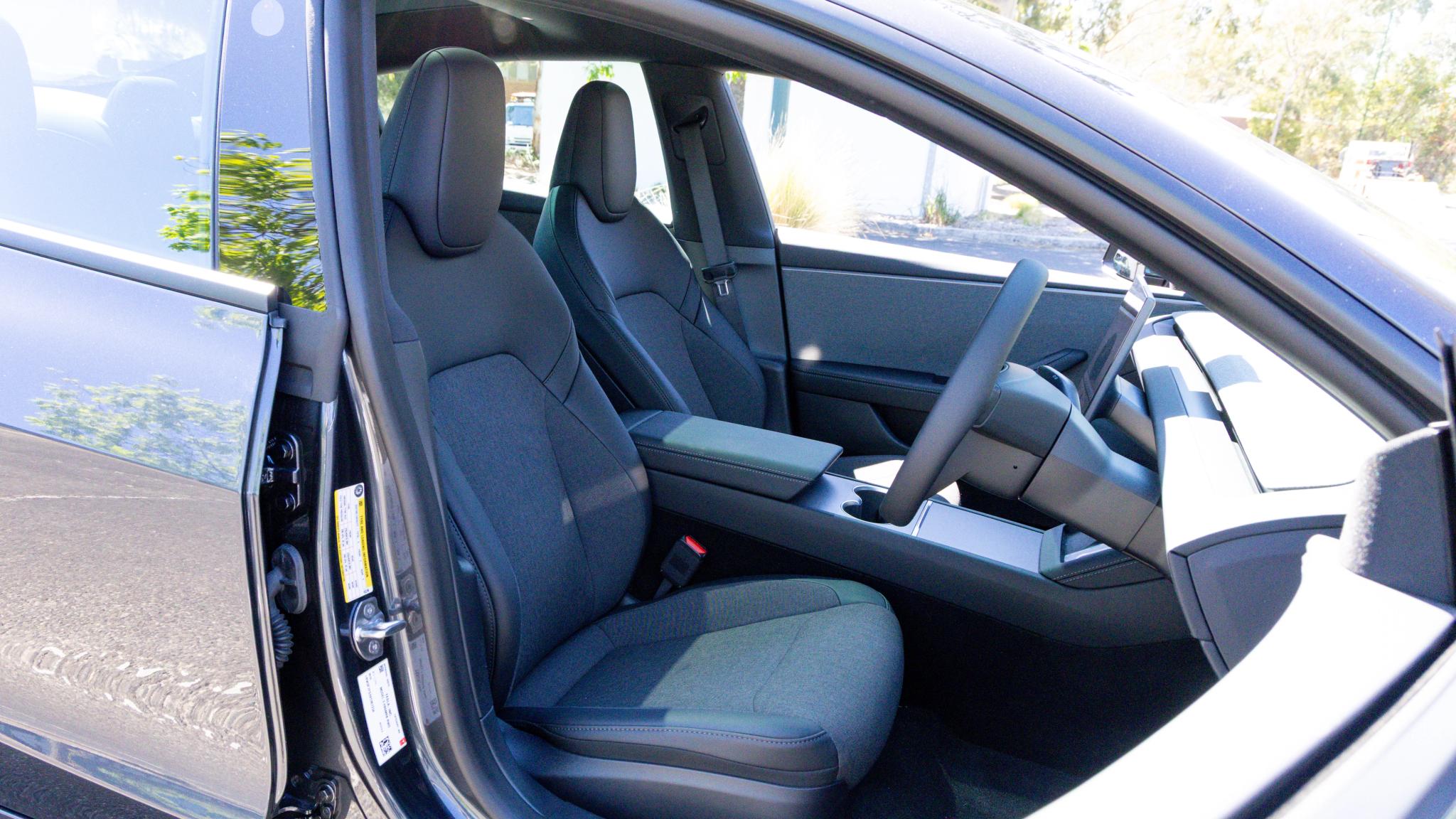
A grey textile band wraps across the dash and into the doors, and it looks more modern than the hard plastics most rivals use at this price. Audio runs through seven speakers instead of nine. It’s perfectly fine, just not memorable.
The bigger story is what’s missing. There’s no FM or DAB radio, and like every Tesla, no Apple CarPlay or Android Auto. In car streaming apps rely on mobile data through Tesla’s paid Premium Connectivity plan, or you can play music from your phone over Bluetooth. If your morning drive involves talkback or the footy on local radio, that’s a genuine change of habit.
How practical is the Model 3 RWD?
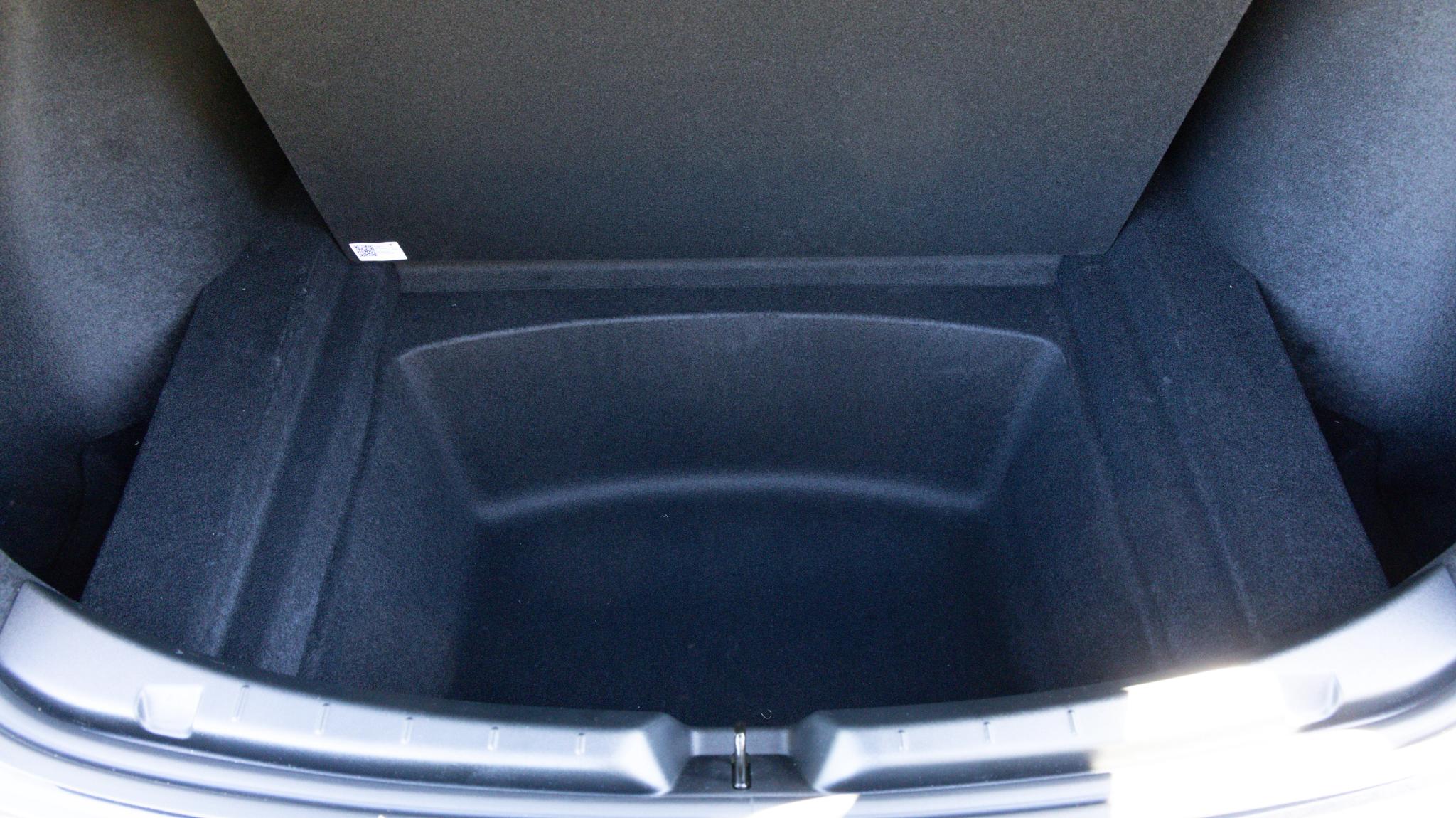
For a sedan, the Model 3 has a surprising amount of luggage space. Between the boot and the front boot there’s close to 600 litres of space, including a deep underfloor well in the boot that stops shopping bags rolling around.
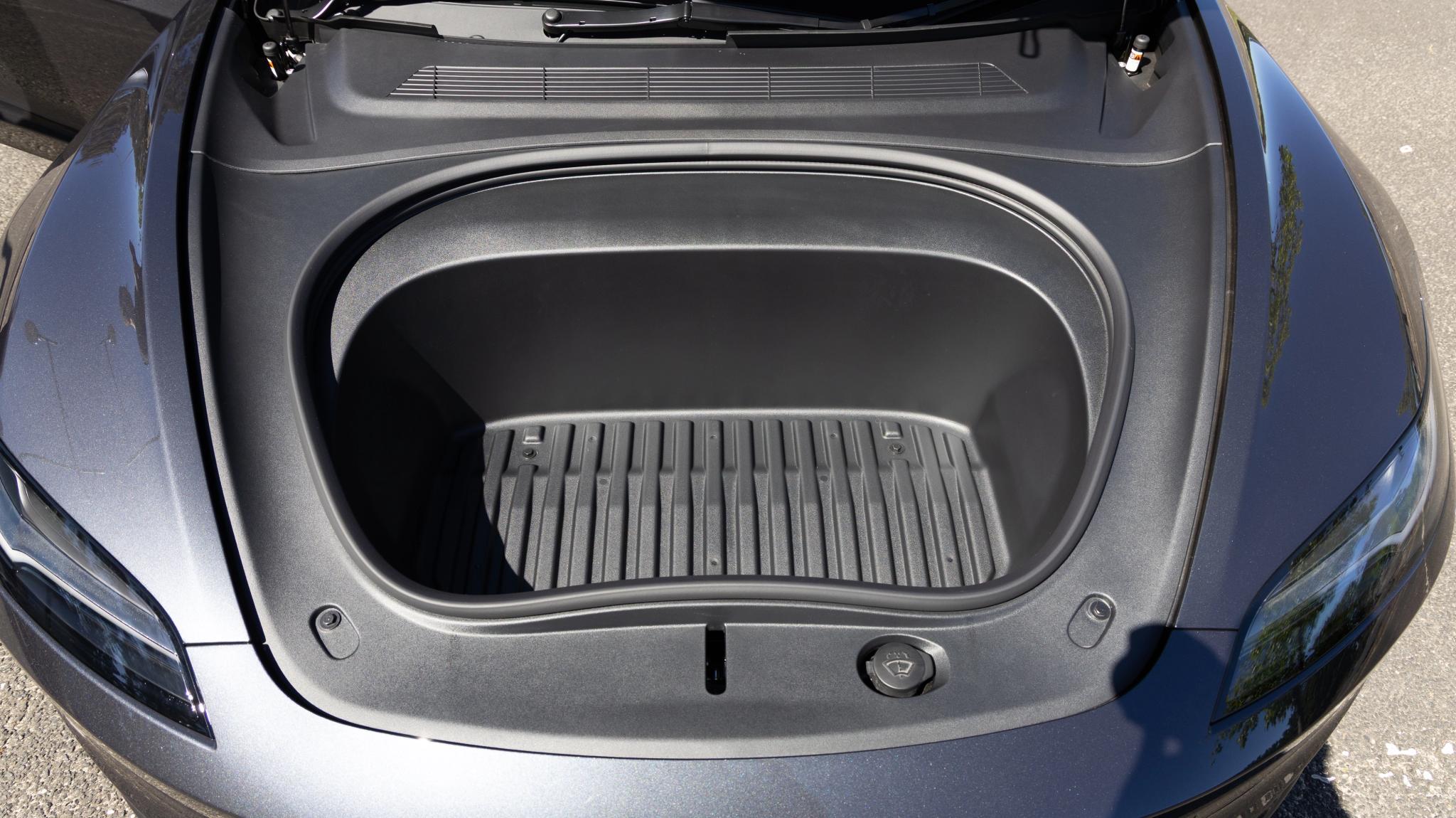
It’s still a sedan, so the boot opening limits bulky items like prams or flat pack furniture. The rear seats fold to extend the load area, and the hands free boot earns its keep when your arms are full.
Rear seat space suits adults on shorter trips, but this is where the cost cutting bites hardest. The 8.0 inch rear touchscreen is gone, so back seat passengers can no longer control their own climate or entertainment. They also lose heated seats, and the air vents are now adjusted by hand. Kids won’t miss the heating, but they’ll ask where the screen went.
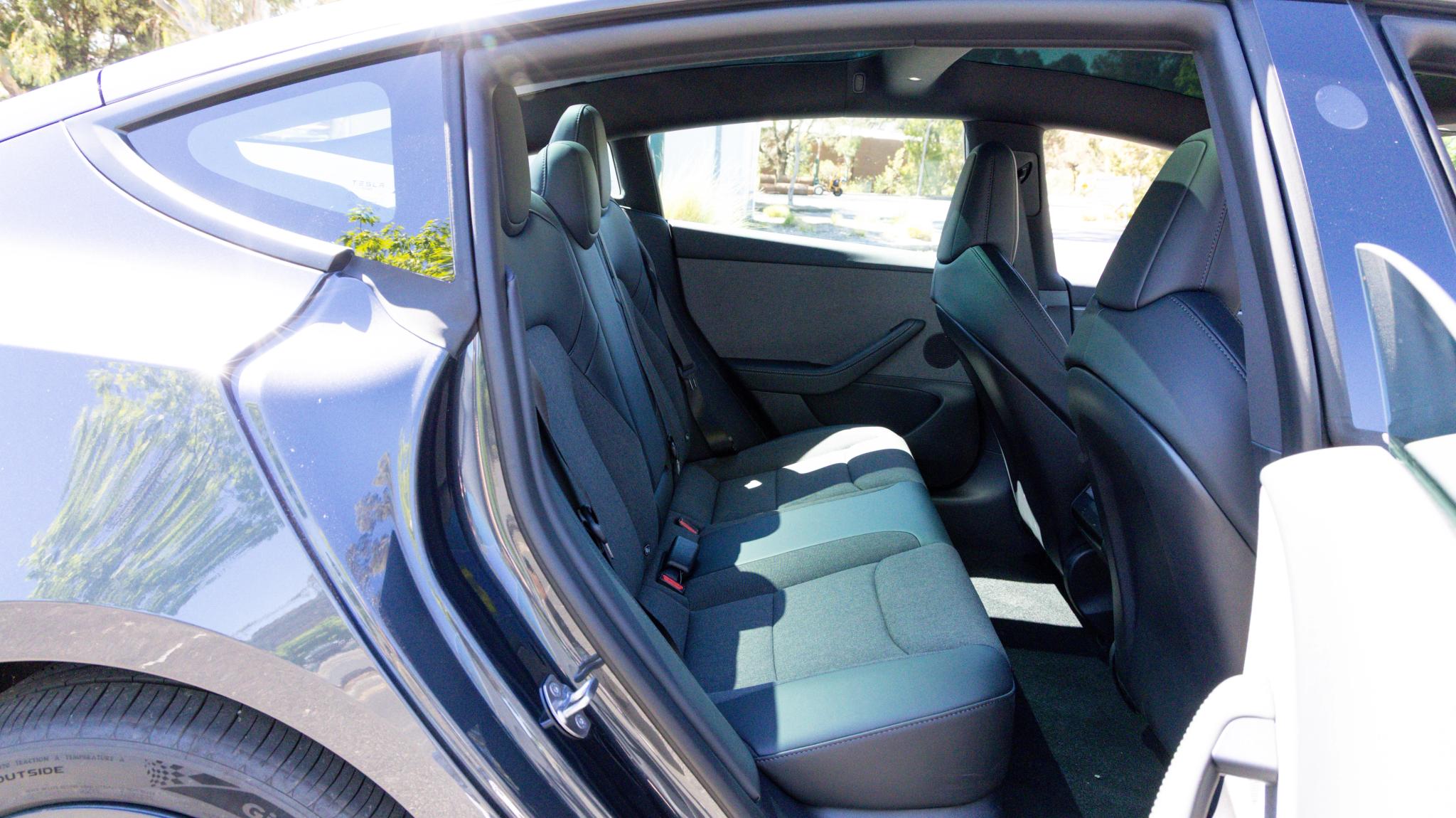
The glass roof floods the cabin with light and carries an infrared reflective coating, yet the back seat still warms up on a 38 degree afternoon. A fitted sunshade is worth buying before summer.
What is the Model 3 RWD like to drive?
This drives like a proper Model 3, not a cut price one. Squeeze the accelerator and it surges forward silently, with enough punch to merge into fast traffic or clear a slow truck without any forward planning.
The steering is quick and accurate without feeling nervous, and the car changes direction with a flatness that makes roundabouts more entertaining than they have any right to be. With the battery slung low, it feels nimble rather than heavy.
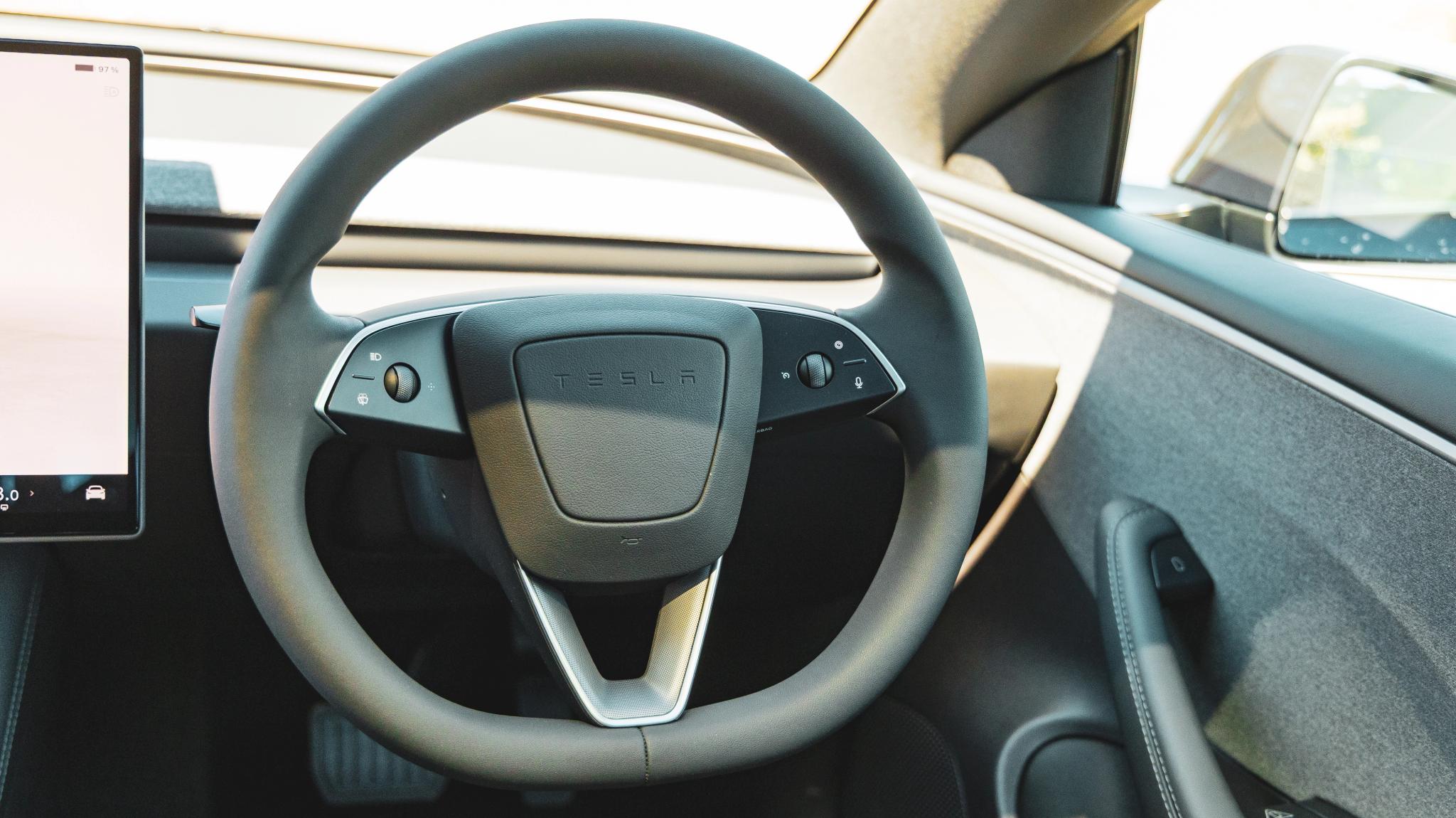
The base car uses conventional passive dampers, and they work better than I expected. Speed humps, tram tracks and broken suburban patches are absorbed with good control, and the body settles quickly rather than bobbing about.
Noise is the weak point, and the Giti GitiControl P10 tyres, in 235/45R18 sizing, are a big part of it. Smooth roads are quiet, but coarse chip highway surfaces send a steady roar through the floor. With no engine to mask it, you hear all of it, and on a long country drive over rough bitumen it wears thin.
Strong regenerative braking means you’ll rarely touch the brake pedal around town once you adjust. It takes a day or two, then conventional cars feel oddly lazy when you lift off.
How efficient is the Model 3 RWD?
Tesla claims 572km on the WLTP cycle, which is 52km more than the Premium RWD despite using the same battery. Spending $9000 less also buys you more range, and that says plenty about where the value sits in this lineup.
Our test returned 137.1Wh/km, or 13.7kWh/100km. That’s a strong result for a five seat sedan, and at that rate a full charge should cover roughly 440km in similar conditions. On a typical home electricity tariff of around 30 cents per kWh, that works out to about $4 per 100km, and much less with off peak rates or solar.
The Supercharger network remains the best reason to choose a Tesla over its rivals. Tesla claims up to 286km can be added in 15 minutes, again more than the Premium RWD. Plug in, buy a coffee, and you’re moving again before it’s cool enough to drink.
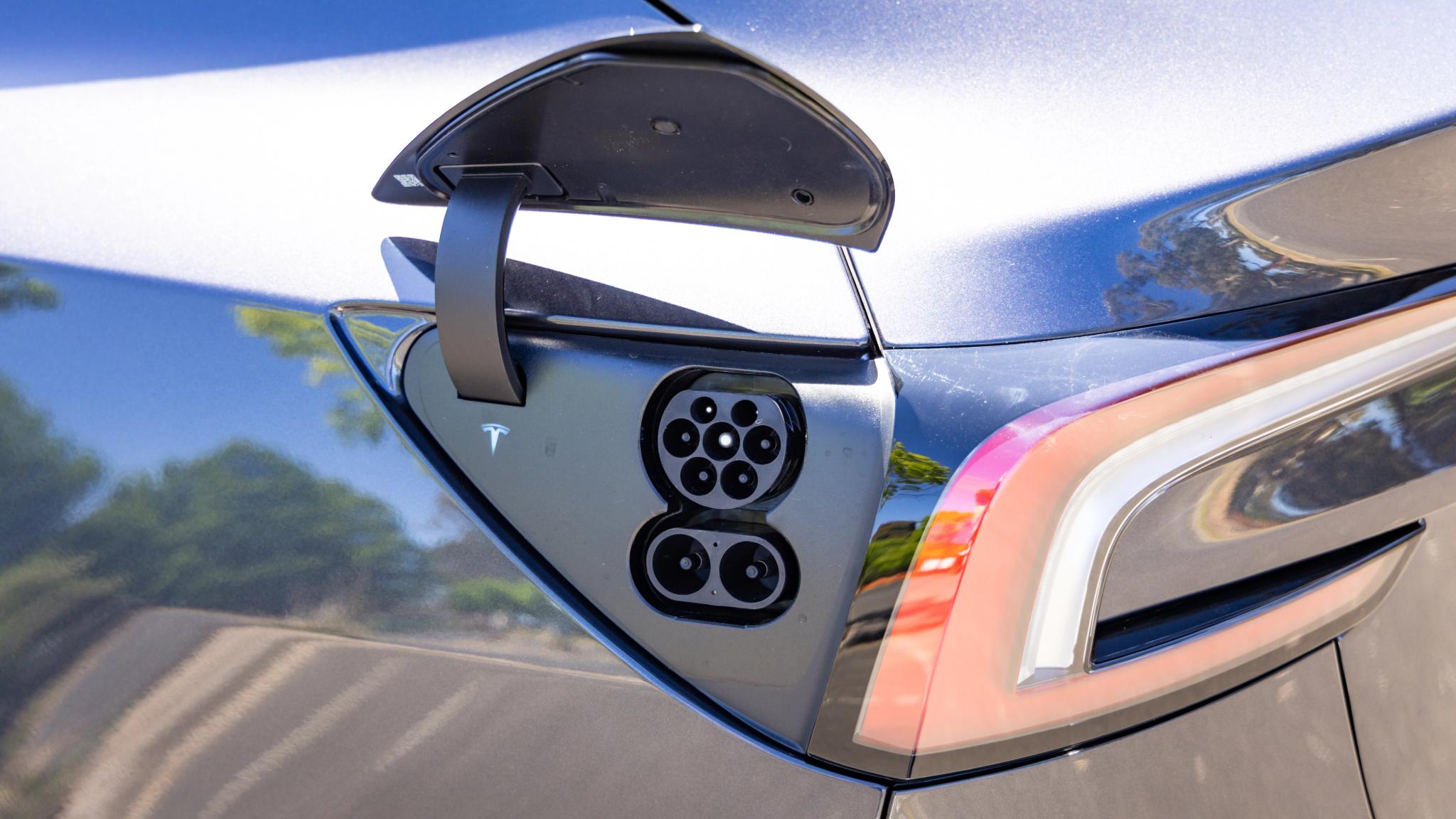
At home, a 7kW wallbox will refill the battery overnight. The lithium iron phosphate chemistry is happy being charged to 100 per cent regularly, so you can use the full range without the guilt. Every new Model 3 can also power appliances through Tesla’s Powershare system, although the outlet adapter is sold separately.
Tesla doesn’t set fixed service intervals or publish capped price servicing. The car monitors its own condition, and recommended maintenance is light, mostly tyre rotations, cabin filters and brake fluid checks. Service centres are concentrated in the capitals and backed by mobile technicians, so regional owners should check their nearest option. Rideshare and other commercial use caps the warranty at 150,000km.
| Servicing and Warranty | Model 3 RWD |
| Service interval | Condition based, no fixed schedule |
| Vehicle warranty | 5 years │ Unlimited km |
| Battery warranty | 8 years │ 160,000km |
Is the Model 3 RWD safe?
The Model 3 carries a five star ANCAP rating from 2025. Its 95 per cent child occupant protection score was the best ANCAP recorded under its 2023 to 2025 criteria. The entry model misses none of the safety hardware fitted to dearer versions.
Autonomous emergency braking, forward collision warning, blind spot collision warning and lane departure avoidance are all standard. Basic Autopilot adds adaptive cruise and lane centring, and eight exterior cameras feed the dashcam and Sentry Mode. Full Self Driving (Supervised) is an extra cost option.
The missing radio deserves a mention here too. ABC Local Radio is Australia’s official emergency broadcaster, and in fire or flood country with patchy mobile reception, a car with no tuner leaves you relying on your phone. Regional buyers should factor that in.
What are the main competitors to the Model 3 RWD?
The BYD Seal Premium costs $52,990 and offers a bigger battery, more power and a similar claimed range. It has smartphone mirroring and a broadcast radio, but its software is less polished, its fast charging is slower and it has nothing to match the Supercharger network.
The Mazda 6e GT is a $49,990 rear drive liftback, so its hatch opening swallows bulky items more easily than the Tesla’s boot. It comes with a five year unlimited km warranty and a national dealer network of around 150 sites, which will appeal to buyers who want someone local to talk to.
The Kia EV4 Air also costs $49,990 and brings Kia’s seven year warranty, smartphone mirroring and broadcast radio. It’s front wheel drive and the entry version has noticeably less range, so it’s a sensible alternative rather than a more satisfying one.
The Tesla Model Y Premium RWD starts at $58,900 and is the obvious step up if you need SUV boot space and a higher seating position. It costs $13,000 more, though, and the sedan is the better car to drive.
Should I buy the Model 3 RWD?
Yes. If price is a factor, this is the Model 3 I’d buy, and it’s the spec I’d put my own money into. It drives as well as the Premium, goes further on a charge, carries the same safety rating and costs $9000 less. Ventilated seats and a rear screen are nice, but they’re not worth that kind of money.
If budget isn’t the issue, skip the Premium RWD entirely and go straight to the Long Range. There, the extra cash buys a genuinely bigger battery and 750km of claimed range, an upgrade you’ll feel on every road trip.
The exceptions are buyers who live and drive where mobile coverage fades, and anyone who can’t live without CarPlay. For them, the Mazda or Kia makes more sense.
For everyone else, this is the most car Tesla has ever offered for the money. Spend $150 on floor mats, accept the tyre roar, and you get a sedan that’s cheaper than its rivals, better to drive than most of them, and backed by the best charging network in the country. At $45,900, I can forgive the missing equipment and the road noise. I certainly wouldn't pay another $9000 for the Premium.
VerdictThe Beep Verdict
Shane Riley
Co-founder & Director
Shane Riley is Co-founder and Director of The Beep based in Melbourne, Australia. He has 20+ years across OEM, leasing and fleet, with experience in vehicle strategy, sales and operations.
About Author