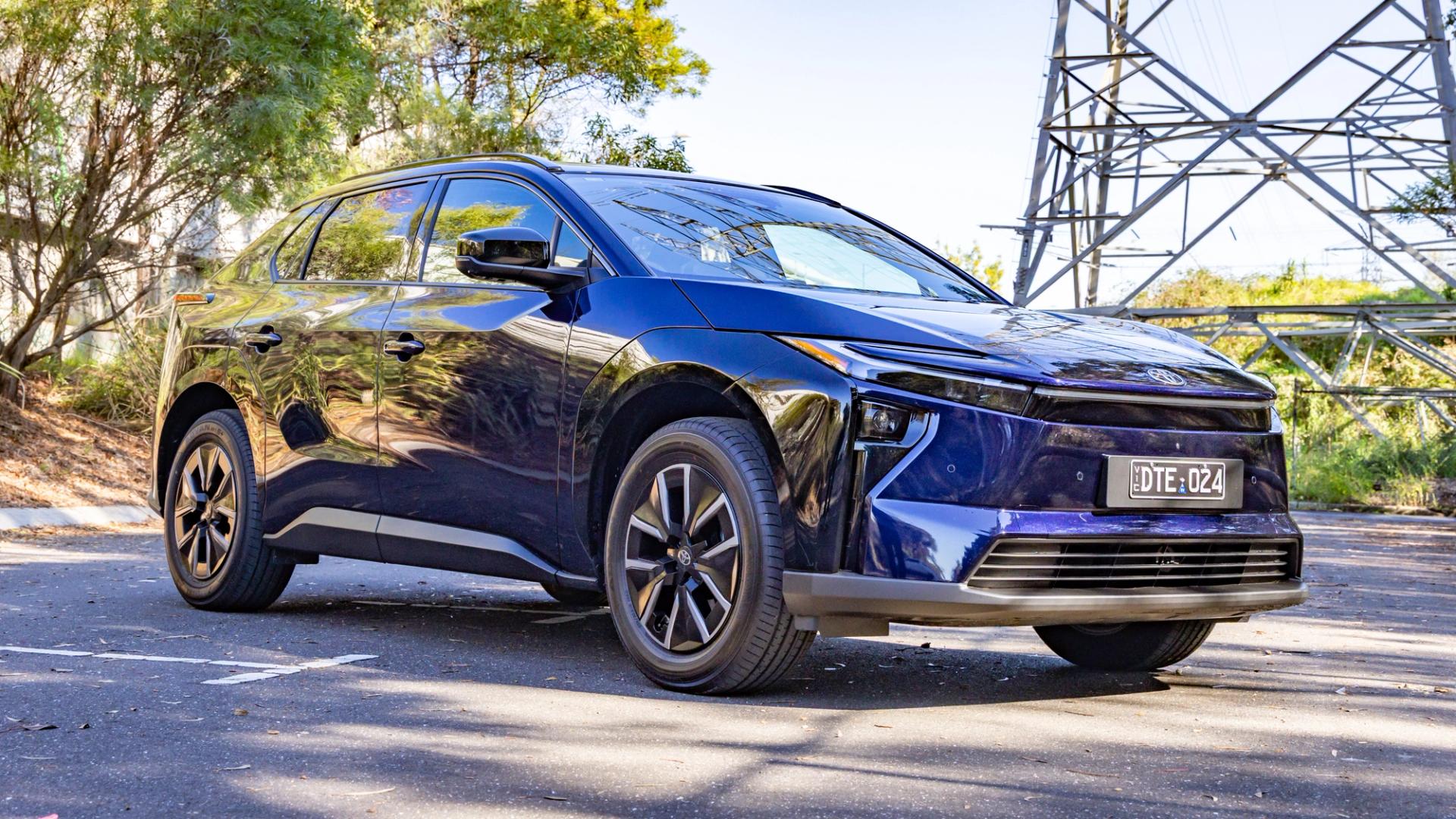
2026 Toyota RAV4 Plug-in Hybrid (PHEV) review
Toyota's first RAV4 PHEV pairs up to 121km of electric range with the most powerful RAV4 engine ever built, and the result is the best family medium SUV on sale right now, if the price doesn't scare you off.

Rob Leigh
Pros
- Up to 121km of usable electric range covers the whole week for most families
- Most powerful RAV4 ever at 227kW, yet still smooth and hushed
- Genuinely practical with a 1500W boot power outlet and a space-saver spare
Cons
- Pricey, opening near $59,000 before on-road costs
- No ANCAP safety rating at the time of writing
- Cabin plastics still feel a grade below the sticker
Our verdict
The RAV4 Plug-in Hybrid makes a lot of sense for families who want to drive on electricity most of the time without worrying about charging on longer trips. It does efficiency, practicality and everyday ease better than anything in the class, and it is the most powerful RAV4 Toyota has ever sold. The catch is the money, because the PHEV opens where a well-equipped rival tops out.
What does the Toyota RAV4 Plug-in Hybrid cost in Australia?
Toyota lists the RAV4 Plug-in Hybrid from $58,840 before on-road costs, which makes it comfortably the most expensive RAV4 in the range. There are three variants, all sharing the same 22.7kWh battery and the new plug-in system, split across front and all-wheel drive. Premium paint is a mandatory $675 extra on the XSE.
| Specifications | XSE 2WD | XSE AWD | GR Sport AWD |
| Price excluding on-roads | $58,840 | $63,340 | $66,340 |
| Powertrain | 2.5L PHEV | 2.5L PHEV | 2.5L PHEV |
| Power | 201kW | 227kW | 227kW |
| Transmission | e-CVT | e-CVT | e-CVT |
| Drivetrain | FWD | AWD | AWD |
| 0-100km/h | - | 5.8 sec | 5.8 sec |
| Fuel use (claimed) | 0.7L/100km | 0.7L/100km | 0.7L/100km |
| Electric range (WLTP) | 121km | 113km | 113km |
| Battery | DC charging | 22.7kWh | 50kW | 22.7kWh | 50kW | 22.7kWh | 50kW |
| Braked towing | 800kg | 1500kg | 1500kg |
| ANCAP | Not yet rated | Not yet rated | Not yet rated |
| Warranty | 5 years | Unlimited km | 5 years | Unlimited km | 5 years | Unlimited km |
View Toyota RAV4 driveaway pricing and specifications →
It's considerably more expensive than a regular RAV4 Hybrid or petrol Mazda CX-5, but the electric range and extra performance help justify the price.
The sticking point is the wave of cheaper Chinese plug-ins now sitting several thousand dollars below it. You pay a premium for the badge, reliability, the resale and the dealer network, and plenty of buyers will decide that premium is worth every cent. Just go in knowing you are paying it.
What does the Toyota RAV4 Plug-in Hybrid look like?
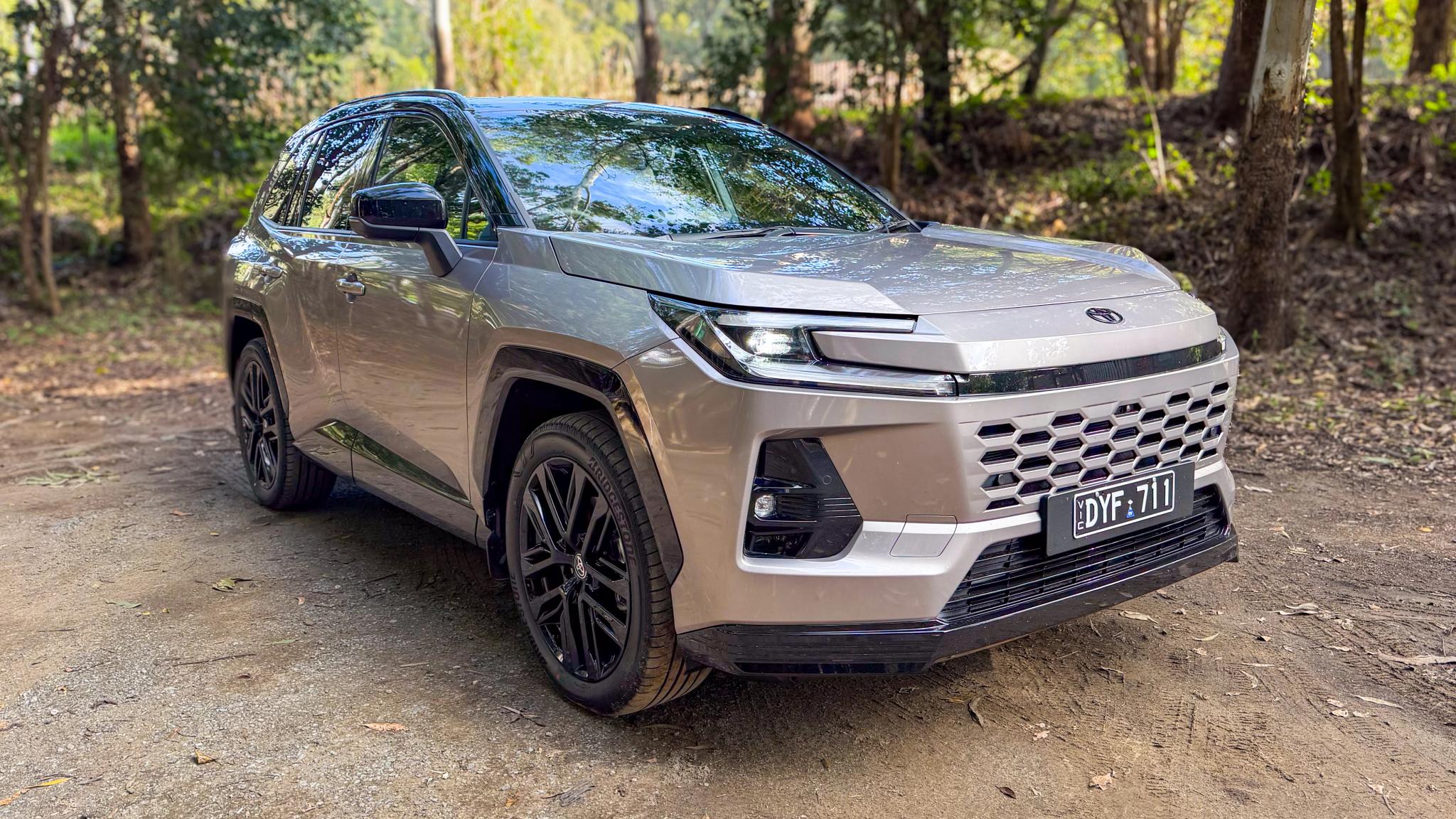
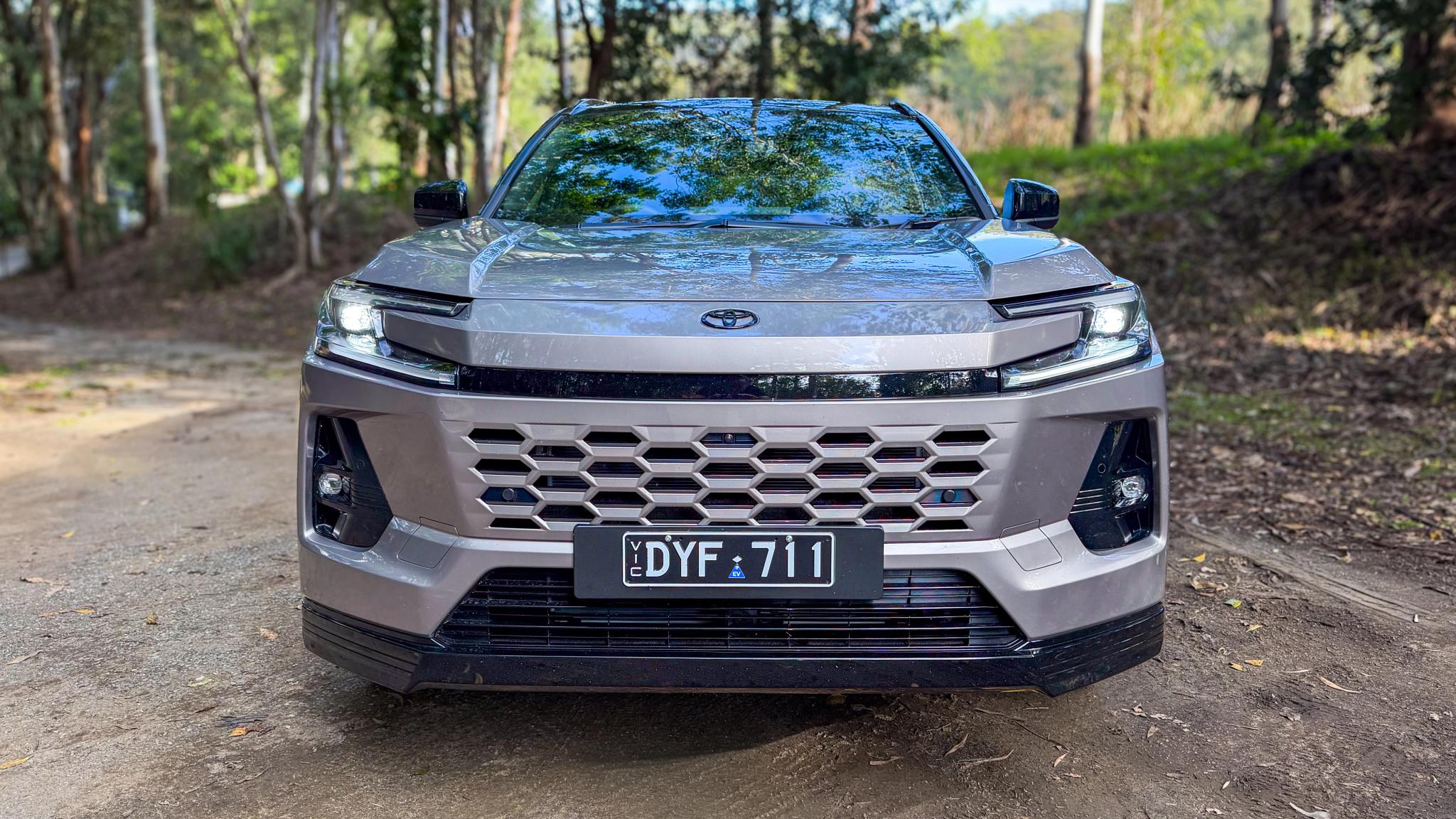
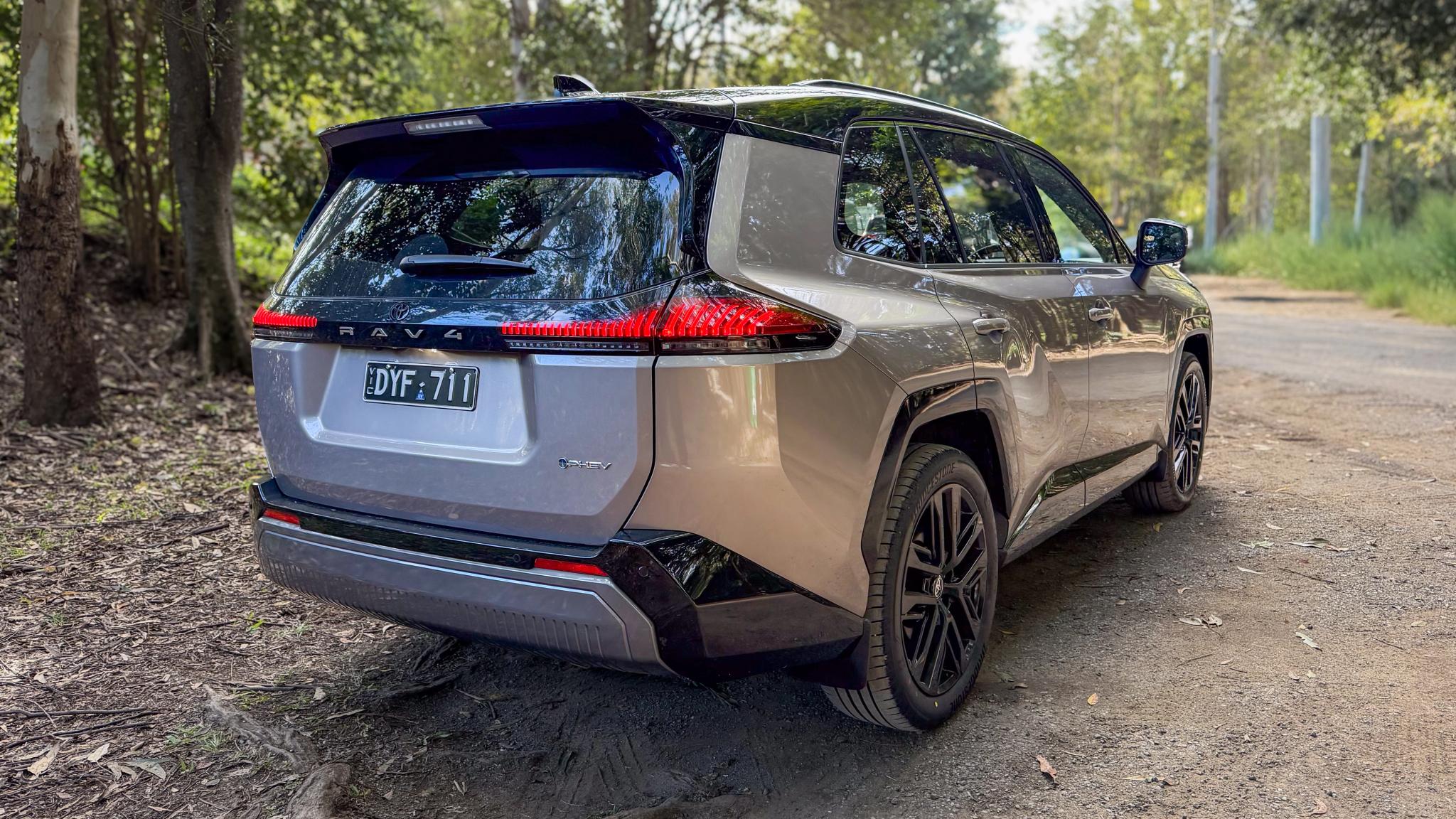
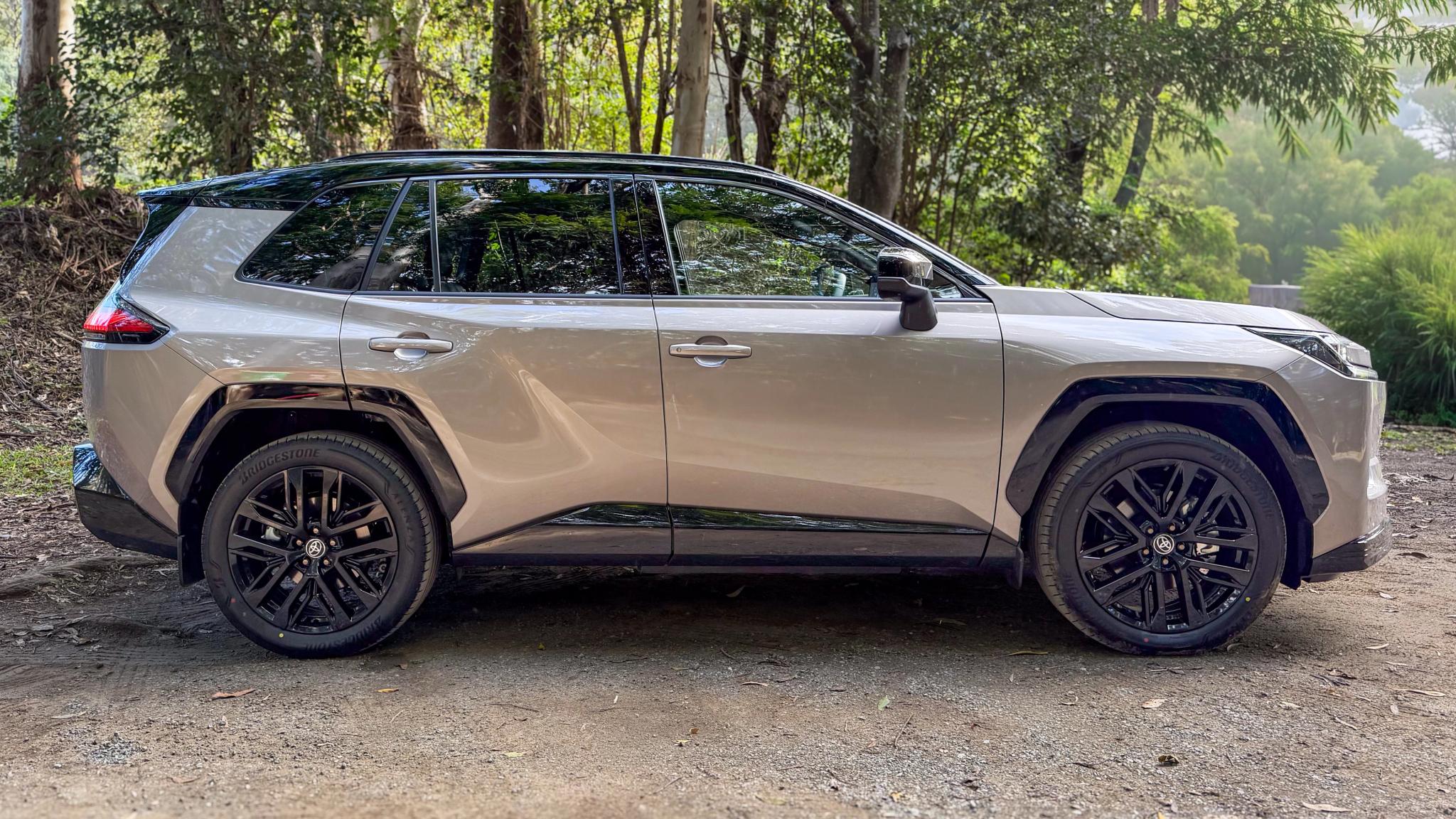
The plug-in looks much like the regular sixth-generation RAV4, with its boxier shape, sharper headlights and more aggressive front end.
The hammerhead nose, the squared-off stance and the one-piece tail lights all carry over, and it still photographs better than it has any right to.
The XSE is the volume seller and the car most buyers will actually park in the driveway. It leans into the RAV4's cleaner, more grown-up detailing with body-coloured cladding, sharp LED lighting front and rear and a smart set of alloys, and the two-tone paint option gives it a genuinely premium look for the money. I reckon the XSE is the better-looking version, especially with the optional two-tone paint.
Sitting above it, the GR Sport turns up the attitude with a blacked-out grille, a sharper lower bumper, unique lighting, wheels up to 20 inches and a 20mm wider track with performance dampers. It plants itself with a bit more menace, but none of it is shouty, and honestly the XSE gives away very little in kerb presence.
What is the Toyota RAV4 Plug-in Hybrid like inside?
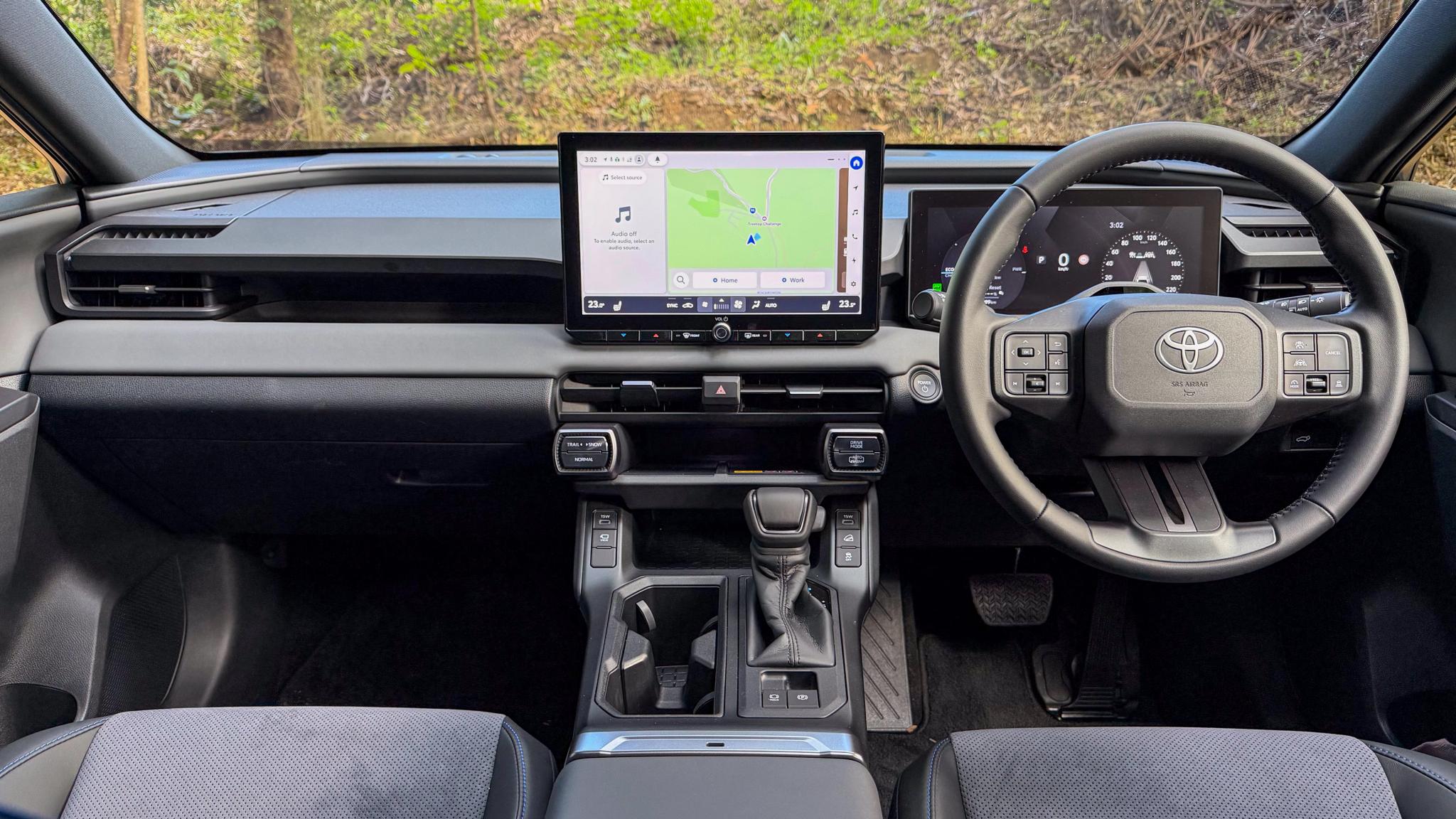
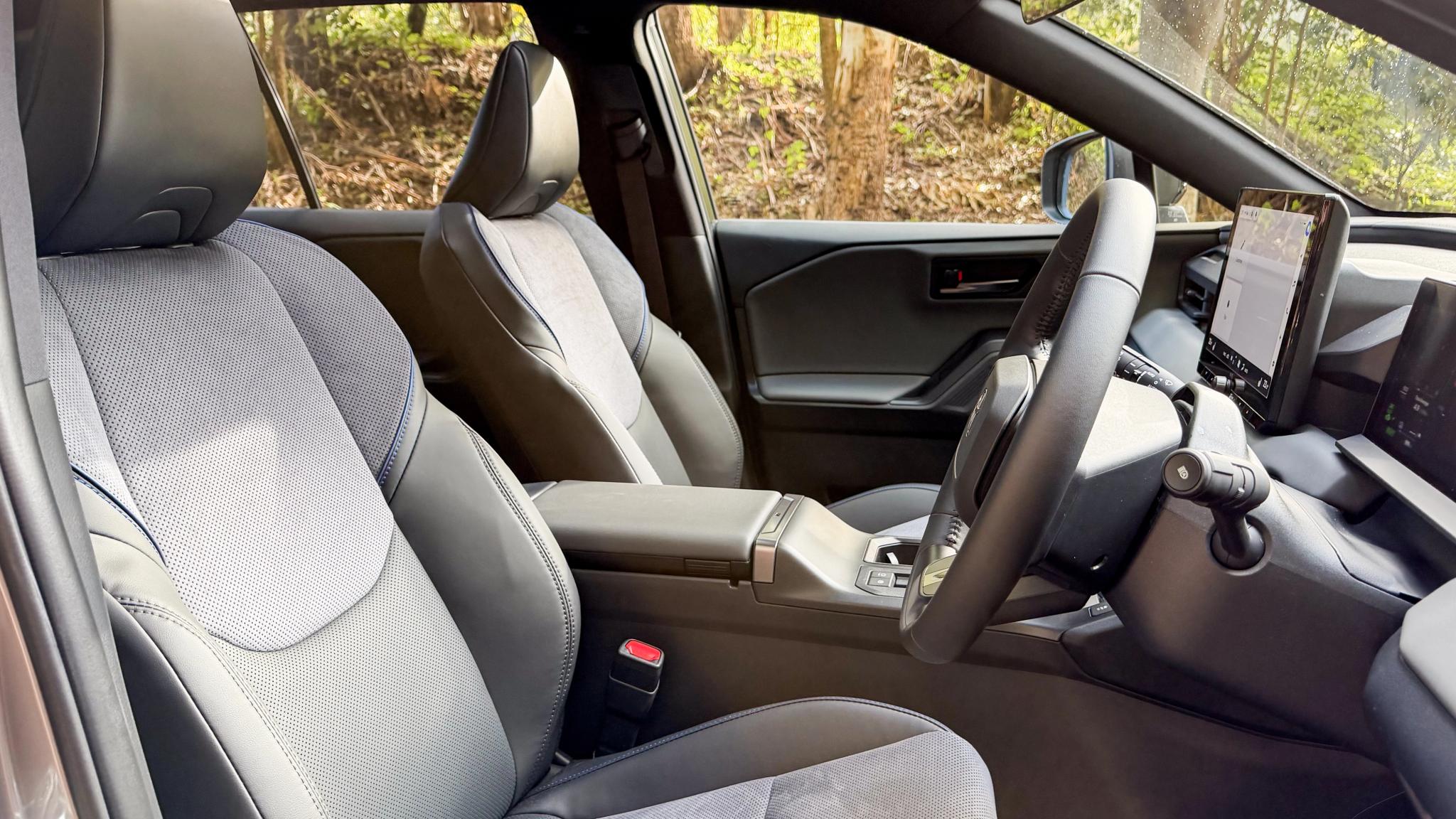
The headline change inside is the new Arene software running a crisp 12.9-inch touchscreen and a configurable 12.3-inch driver's display. It is quicker, cleaner and far less cluttered than the system it replaces, with fewer menus to dig through and battery, charging and scheduling functions that actually feel built for a plug-in rather than bolted on afterwards.
The layout is mostly a strength. There is a huge glovebox, a clever two-way centre console lid, deep door bins and chunky physical switches for the drive modes. The seats are supportive, the driving position is spot on, and vision out is good thanks to the lower dash.
The biggest miss is the same one that bugged me in the hybrid: the climate controls are buried in the touchscreen, so a quick temperature tweak means taking your eyes off the road to hunt through a menu when a simple dial or two would have solved it.
There are also still more hard, grey plastics than you want at this price, and while nothing feels flimsy, rivals are starting to wrap their cabins in softer, plusher materials for less money. The interior could feel more premium, especially considering what Toyota is charging.
You buy this car for how it works, not for how it feels to the fingertips.
How practical is the Toyota RAV4 Plug-in Hybrid?
Very, and this is where the plug-in quietly pulls ahead.
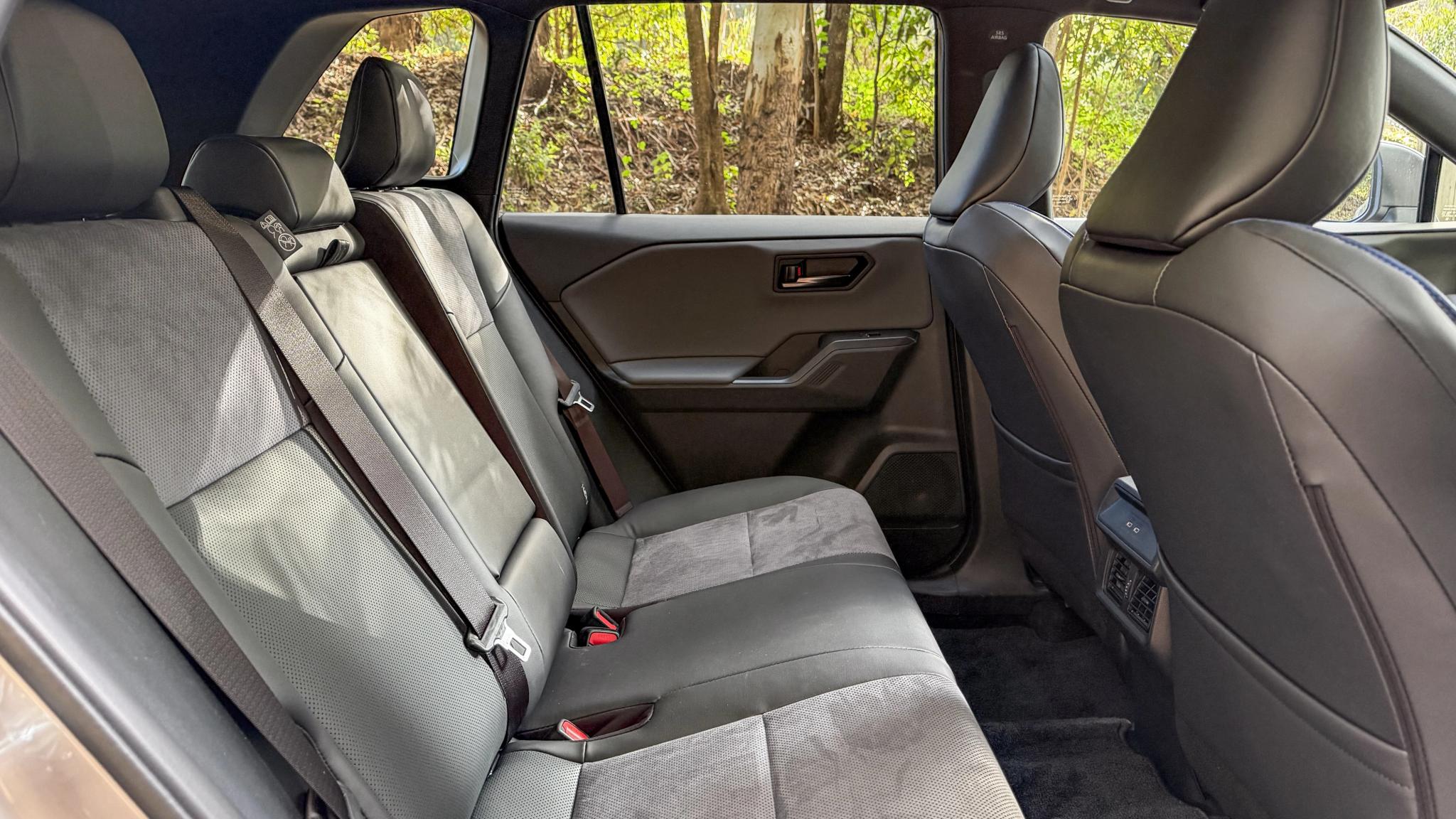
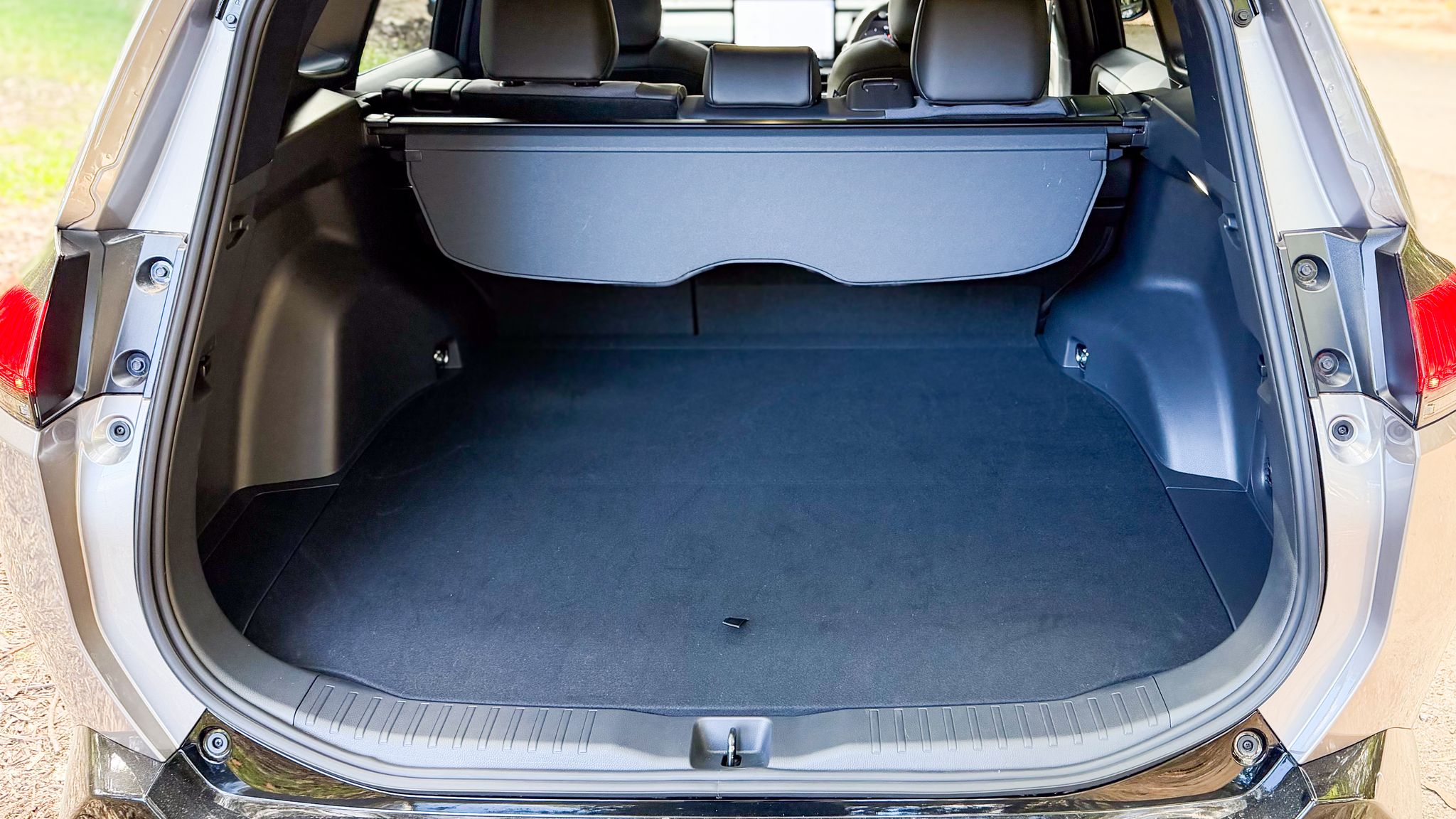
Back-seat space is generous enough for taller adults to sit behind a similarly sized driver, with rear vents, USB-C ports and a fold-down armrest. The boot is a proper family load bay, and Toyota has repackaged the battery into the floor so the plug-in gives up far less cargo room than plug-ins usually do.
Two details seal it. There is a 1500W inverter with a three-pin plug in the boot, which turns the car into a mobile power point for a camp fridge, power tools or the coffee machine at a weekend market.
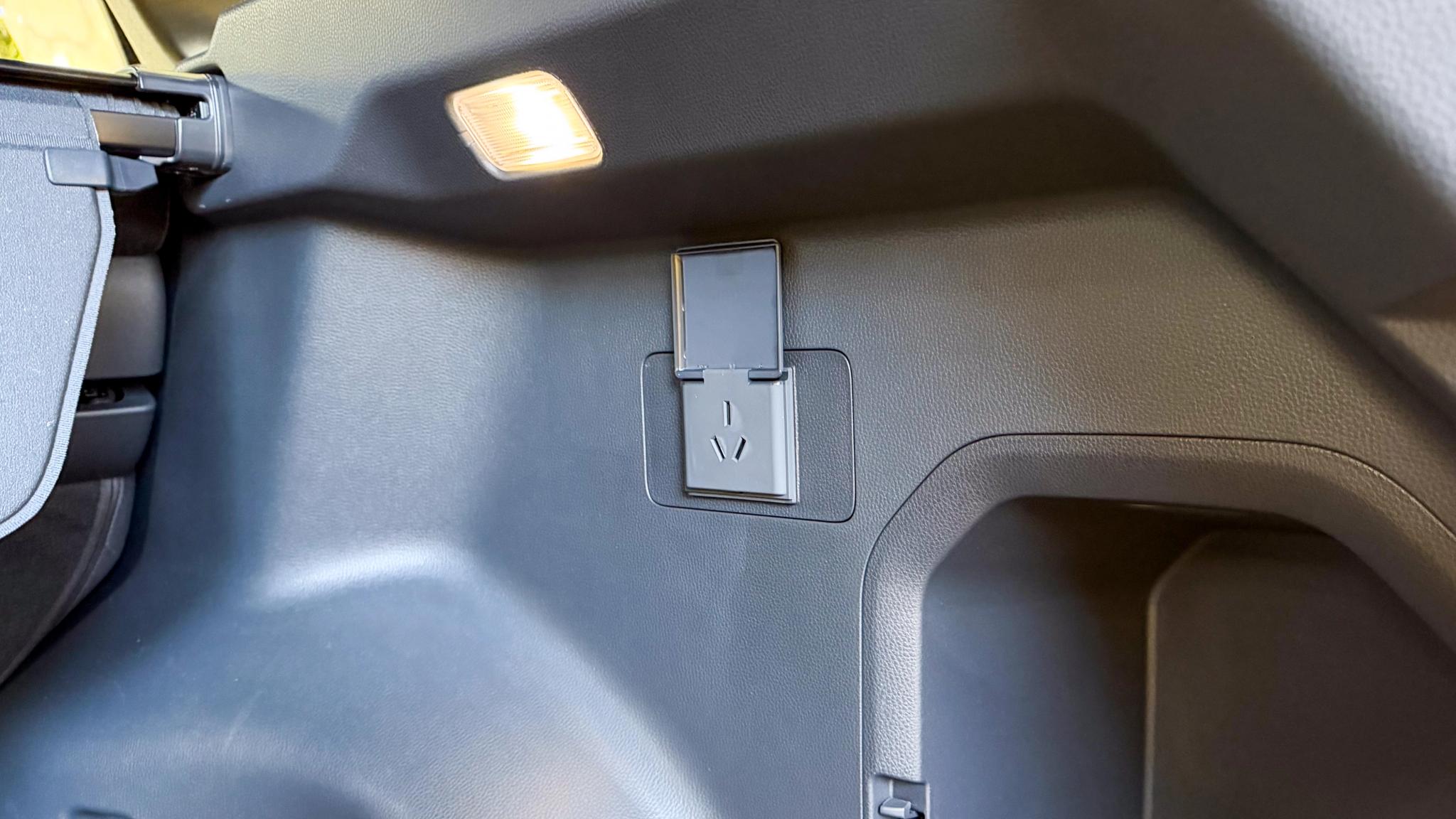
And remarkably for the class, the RAV4 PHEV is one of the only plug-in hybrids on sale with an actual spare tyre rather than a repair kit, which matters if you travel or spend time on dirt. If you plan to tow, choose an AWD version. The XSE 2WD is rated to 800kg braked, while the AWD cars handle 1500kg.
What is the Toyota RAV4 Plug-in Hybrid like to drive?
While the regular hybrid RAV4 lost power this year to meet tighter emissions rules, the plug-in goes the other way.
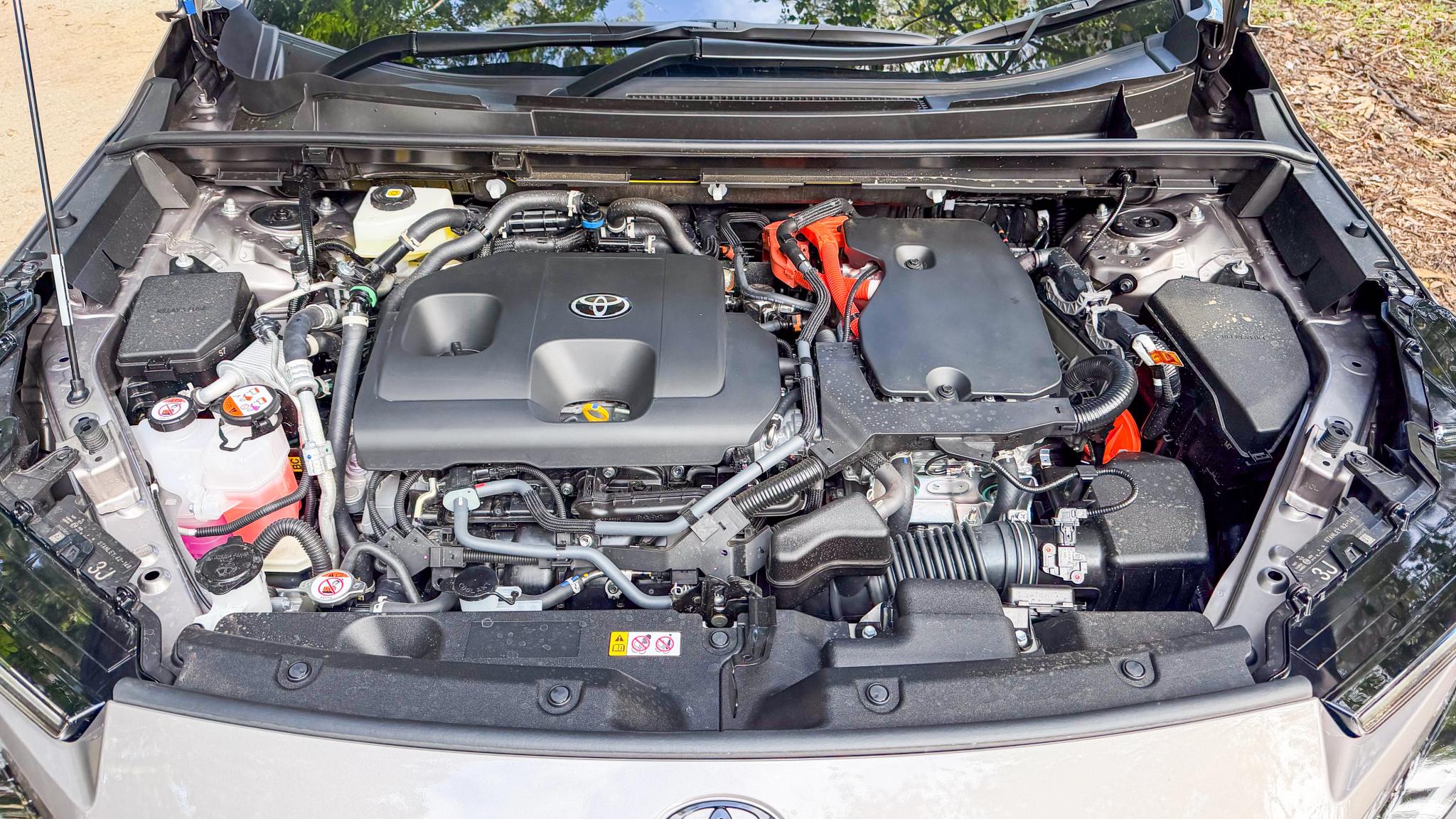
The all-wheel-drive versions make 227kW, which makes this the most powerful RAV4 ever, and you feel it. Put your foot down in the AWD versions and there's plenty of acceleration, with 0-100km/h taking just 5.8 seconds. That is quick for a family SUV, and quick enough to make overtakes and freeway merges completely stress-free.
What you notice more day to day is the calm. On a charged battery the RAV4 defaults to electric and stays there, and it is beautifully smooth and quiet in that mode, with instant, seamless response around town.
When the petrol engine does wake up, the handover is clean and the transition is genuinely hard to detect unless you are pushing hard, at which point the four-cylinder gets a little vocal.
It rides with the settled, composed feel RAV4 buyers already know, soaking up rough surfaces without fuss. The steering is meatier and more reassuring than the old car's, and the body stays tidy through corners even if it leans when you lean on it. The GR Sport's wider track and retuned dampers add a touch more precision, though the difference is subtle. This is not a car that begs to be hurled at a mountain road, and it is all the more relaxing for it.
How efficient is the Toyota RAV4 Plug-in Hybrid?
This is the whole point of the car. The 2WD offers up to 121km of electric-only range on the WLTP cycle (Toyota quotes up to 154km on the older NEDC test), with the heavier all-wheel-drive versions covering up to 113km WLTP.
In practice, that means the school run, the commute, the shops and the after-school shuttle can all happen on electricity, all week, with the petrol engine sitting idle until you point the car at a longer trip.
Charge it at home and keep your trips short and you can go weeks between visits to the bowser. Let the battery run flat and it simply carries on as a regular RAV4 hybrid, settling into the low-to-mid 5L/100km range, which is still excellent for a car this size.
It supports up to 50kW DC fast charging for a 10 to 80% top-up in about half an hour, plus 11kW three-phase AC charging at home. The DC ability is a genuine bonus at this end of the market, even if a battery this size is really designed to be topped up overnight.
Toyota’s capped-price servicing covers the first five years or 75,000km, whichever comes first, and with one of the largest dealer networks in the country, finding a service centre won’t be a problem anywhere you’re likely to drive. It’s among the cheapest servicing in the plug-in class.
| Servicing and Warranty | Toyota RAV4 PHEV |
| Service interval | 12 months | 15,000km |
| Servicing cost (5 years) | $1625 |
| Average annual cost | $325 |
| Vehicle warranty | 5 years | Unlimited km |
| Battery warranty | 10 years | Unlimited km |
The vehicle warranty extends to seven years on the driveline if you service within the Toyota network. The hybrid battery’s standard five-year cover stretches to 10 years with an annual hybrid health check. It’s a strong ownership package and the sort of thing that keeps resale values high years down the track.
Is the Toyota RAV4 Plug-in Hybrid safe?
The new RAV4 carries no ANCAP safety rating, plug-in included. The generation’s delayed launch pushed it into ANCAP’s tougher 2026 test criteria, so Toyota has made active and passive safety upgrades across the hybrid and plug-in range, reaching showrooms from late October 2026. Toyota expects that to deliver a five-star rating before the end of the year.
Cars built before the upgrade can’t be retrofitted and will stay unrated, so if a five-star rating matters to you or your fleet, make sure you’re buying one built after the update.
On equipment it wants for nothing with eight airbags including a front centre airbag, autonomous emergency braking with pedestrian, cyclist and junction detection, adaptive cruise control, blind-spot monitoring, rear cross-traffic alert and lane-keeping assist. Most of it is well judged.
The driver attention monitor on the other hand, is a nag, chiming at the briefest glance away and resetting to its most sensitive mode every time you start the car. It is the kind of thing you hope an update quietly softens.
What are the main competitors to the Toyota RAV4 Plug-in Hybrid?
The BYD Sealion 6 is considerably cheaper and probably the RAV4's biggest threat, a plug-in medium SUV opening from around $42,990 plus on-road costs and undercutting the RAV4 by a serious margin while still offering real electric-only range. It drives well and represents outstanding buying, but it trails the Toyota on cabin polish, resale and dealer reach.
The Mitsubishi Outlander PHEV is the established alternative, from around $58,990 plus on-roads, and the one to look at if you need seven seats. It is proven, well sorted and priced close to the RAV4, though its electric range and outright performance now sit a step behind Toyota's newer system.
The Mazda CX-5 is the natural cross-shop for anyone who loves the badge and it undercuts the RAV4 heavily from $39,990 plus on-roads. The catch is that the new CX-5 launches petrol-only, with a hybrid not due until 2027 and no plug-in on the horizon, so it cannot answer the RAV4's electric-driving pitch yet. Worth watching once that hybrid lands.
The Volkswagen Tiguan eHybrid is the premium European alternative, and the pick if cabin plushness and a five-star ANCAP rating matter to you, which is the one box the RAV4 cannot tick yet. It runs from $64,590 to $74,550 as a plug-in, so it opens where the RAV4 nearly tops out, and it is front-wheel drive only, with no all-wheel-drive option to answer Toyota's AWD. It feels a step above inside and charges quickly, but you pay handsomely for that polish, and Volkswagen cannot match Toyota's resale strength or long-term reliability record.
The Toyota RAV4 Hybrid is the sibling worth a hard look before you sign, from $45,990 plus on-roads. If you cannot charge at home, the standard hybrid delivers most of the frugality with none of the plugging in, and saves you thousands. The plug-in only makes sense if you will actually use its electric range.
Should I buy the RAV4 Plug-in Hybrid?
If you can charge at home, yes. This is the version of the RAV4 to buy and, right now, the best family medium SUV on sale.
You get electric running for the daily grind, petrol backup for the big trips and none of the range anxiety, wrapped in the most powerful, most refined RAV4 Toyota has built. Add the boot power outlet, the spare tyre and Toyota's ownership record, and it is a hard package to argue with.
The hesitations are real but narrow. It is expensive, the cabin could feel richer, and that missing ANCAP rating is a live concern until later this year.
If you cannot plug in at home, buy the regular hybrid and pocket the difference. Our RAV4 Hybrid review covers why it remains one of the smartest buys in the class. But for the family that will use it as intended, the plug-in is exactly the RAV4 worth waiting for. It was worth the wait.
VerdictThe Beep Verdict
Rob Leigh
Co-founder & Director
Rob Leigh is Co-founder and Director of The Beep based in Melbourne, Australia. He has 15+ years inside a major automotive OEM, specialising in product planning, pricing and vehicle strategy.
About Author